
Why Your Inner Critic Blocks Your Creativity (And the Brain Science Behind What Happens When You Ignore It)
There is a very specific moment when my inner critic likes to show up.
Not halfway through a painting. Not when I'm deciding whether to share my work publicly. It shows up right at the beginning, in that fragile space between having an idea and actually starting it. That moment when something feels exciting and alive and full of possibility.
And then the critic clears its throat.
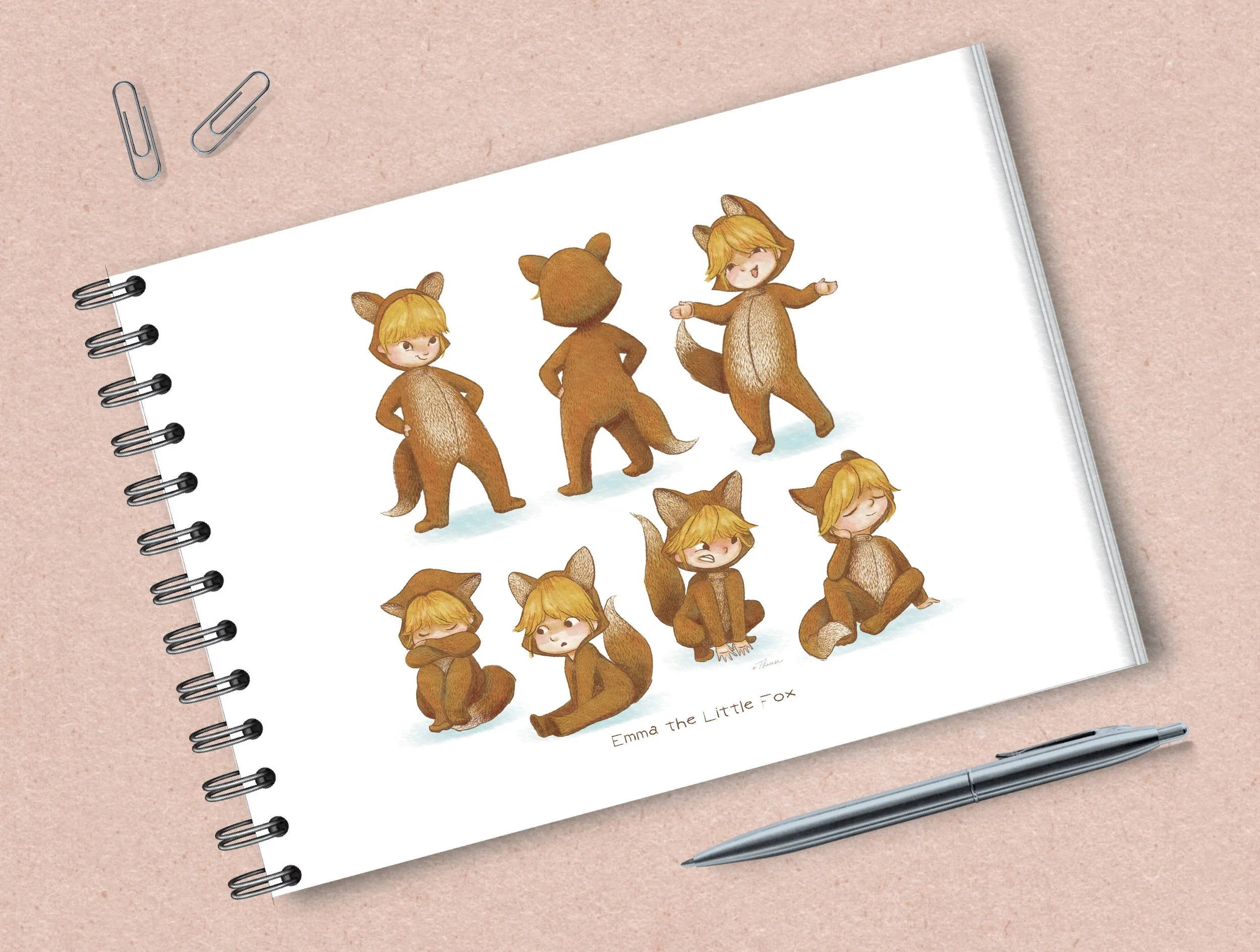
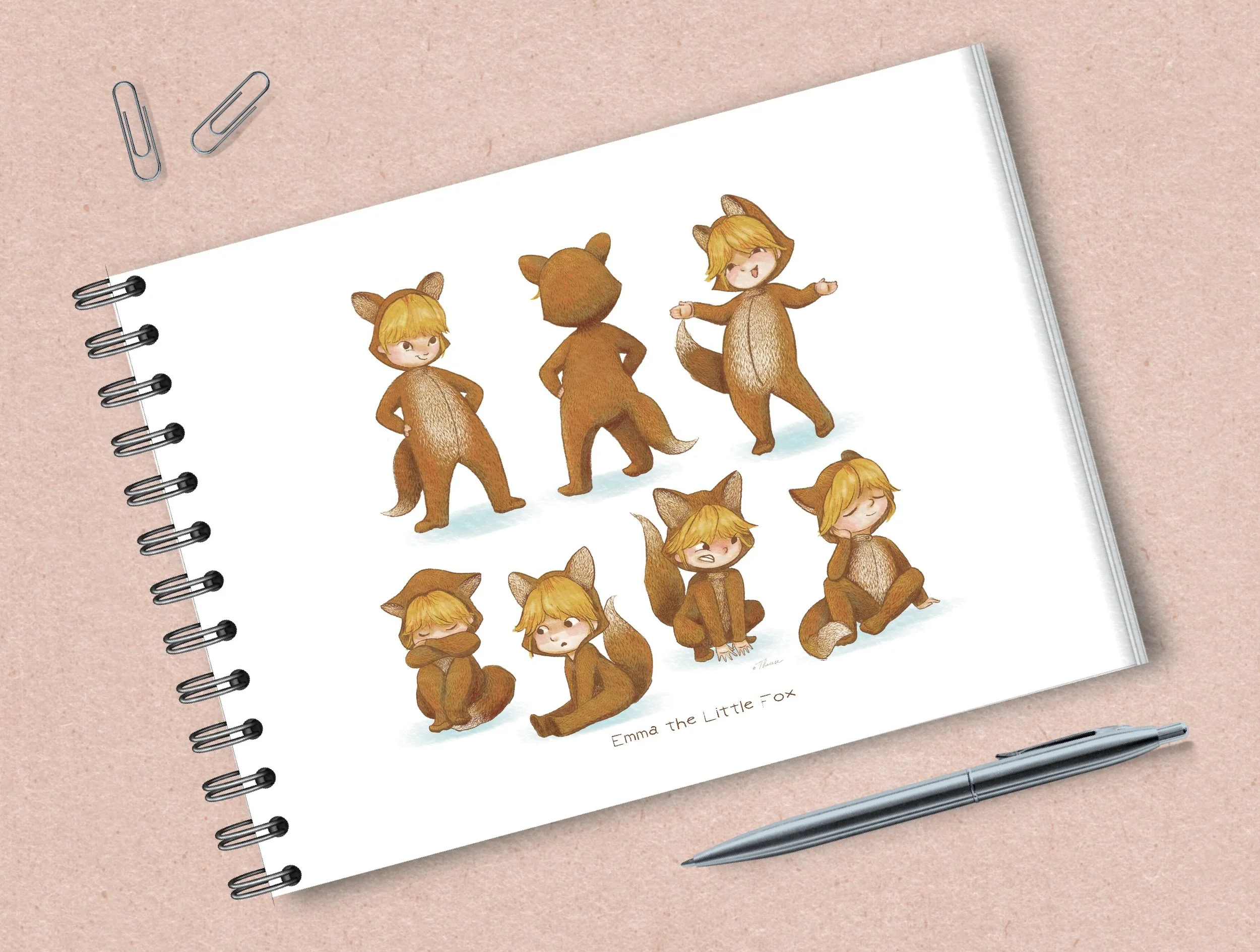
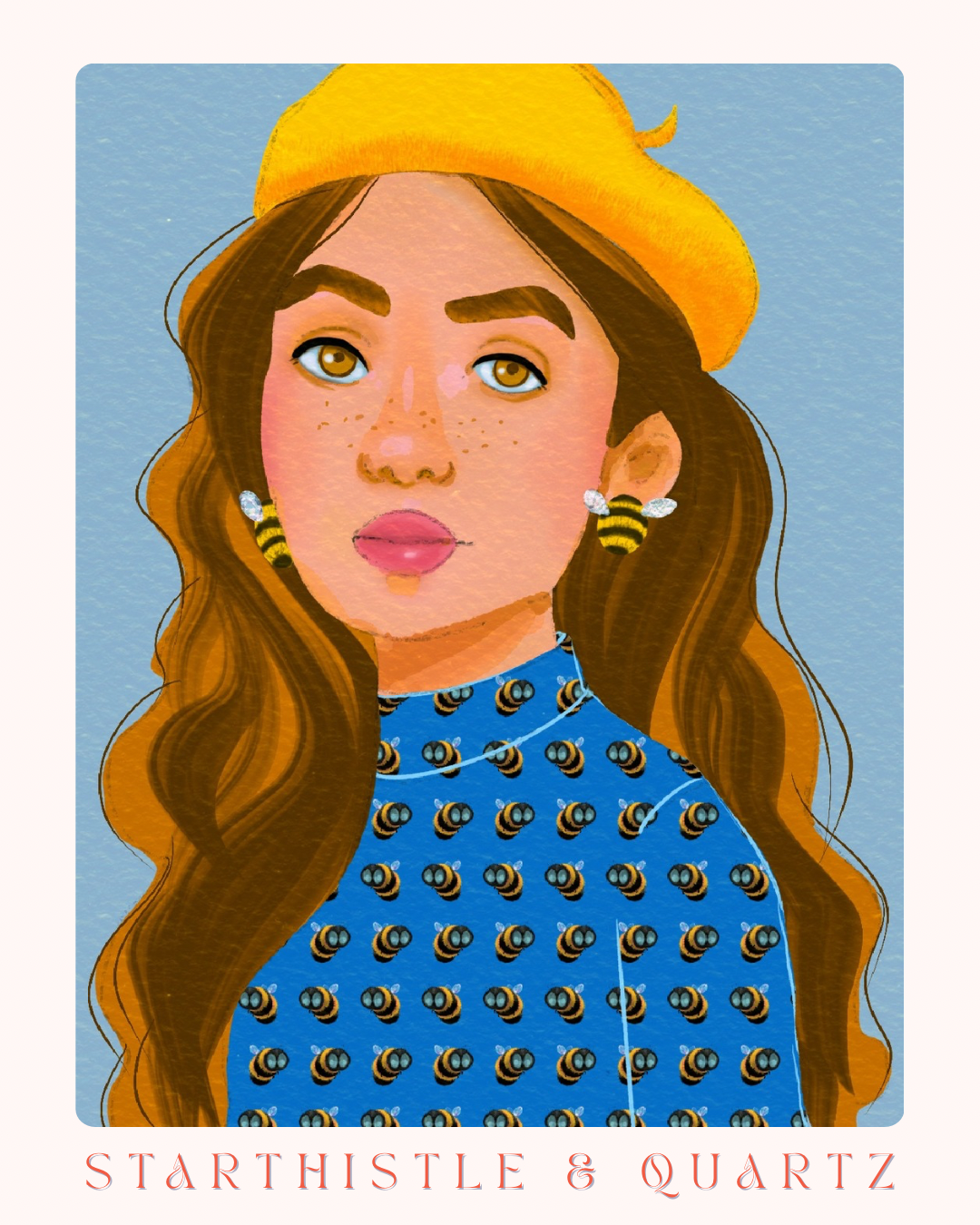
My Character Development page for my portfolio that my inner critic didn’t want me to make.
There is a very specific moment when my inner critic likes to show up.
Not halfway through a painting. Not when I'm deciding whether to share my work publicly. It shows up right at the beginning, in that fragile space between having an idea and actually starting it. That moment when something feels exciting and alive and full of possibility.
And then the critic clears its throat.
What makes mine particularly tricky is that it doesn't shout or insult me, at least not right away. It shows up sounding reasonable. Almost professional. Like an art director pulling me aside to give me some hard truths.
It says things like: you didn't go to school for illustration. You don't really know the design rules. Your composition is probably weak. You should study composition before you start this piece if you want it to be competitive.
And here's the sneaky part. That doesn't sound like an attack. It sounds like preparation. It sounds responsible. It sounds like something a serious artist would do before beginning important work.
But what I eventually realized is that this voice wasn't helping me move forward. It was quietly making sure I never began.
What the Critic Actually Does to Your Brain
When I started doing deeper work around my inner critic, I got curious about what was actually happening inside me when that voice took over. So I started researching the psychology of creativity, and what I found explained everything.
When we criticize ourselves while creating, we dysregulate our nervous system. The brain interprets harsh self-judgment as a threat. And when that happens, it shifts resources toward survival. The amygdala activates, stress hormones rise, and access to the prefrontal cortex, which is where creative thinking, imagination, flexible problem solving, and flow states actually live, decreases significantly.
In other words, the inner critic shuts down access to the exact skills it claims you don't have.
I had to sit with that for a minute when I first understood it. Because it means that every time I listened to that voice telling me I wasn't ready or skilled enough, I was actually making it harder to access the skills that were already there.
The Morning I Said "Eff It"
Here's the moment that made this real for me.
I have been building my children's book illustration portfolio, and one of the things I needed to show was that I can draw children. It's not a subject I draw very often, and the weight of how important it was to get right got my critic absolutely revved up. So I kept avoiding it. The task felt enormous and the stakes felt high and every time I sat down to try, something would pull me away.
Until one morning I did some inner work, regulated my nervous system, and decided today was the day. But I gave myself one rule: go for messy. No pressure to make anything good. Just fill one sketchbook page with a few figures, in whatever style my hand wanted to make.
Before I knew it I had filled two sketchbook pages with twelve figures, and I was actually enjoying myself. It was easy. The moment I took all the pressure off and gave myself permission to be messy, even bad, the exact opposite of what my critic predicted happened.
The skills were already there. They had been there the whole time. My critic had just been standing in the doorway blocking my access to them.
Since that day I have been developing those figures into a full character. I finished a character development page for my portfolio. And right now I am in the middle of creating a story scene with my little character interacting in her world. I have the preliminary sketches done and I keep stopping and thinking, "I can't believe I'm here. This is the place I've been trying to get to for months, and it's happening, and it's easy."
That is what becomes possible when you bypass the critic.
The Critic Isn't Gone, It's Just on a Coffee Break
I want to be honest with you about something, because I think a lot of advice around the inner critic makes it sound like you defeat it once and it disappears forever.
That hasn't been my experience.
My inner critic is still there. It's just that right now, when I acknowledge that my work is good and I feel genuinely proud and hopeful about where it's going, it knows I'm not going to listen. So it steps back. It waits. It's on a coffee break, biding its time until I feel vulnerable again.
But here's what's different now: I know what happens in my brain when I bypass its stalling techniques. I know that the voice that sounds like professional guidance is actually just fear dressed up in a blazer. And I know that the moment I ignore it and just start making something, I get access to the part of myself that can actually create.
That knowledge changes everything.
Healthy Critique Versus the Inner Critic
I don't think judgment itself is the enemy. Judgment has a place in creative work. It helps us refine, improve, and develop a stronger eye over time.
But there is a real difference between healthy critique and the inner critic.
Healthy critique sounds like: this composition could be stronger, let me look at the balance of the elements.
The inner critic sounds like: you don't know what you're doing.
One is focused on the work. The other is attacking the artist. And when our identity gets tangled up in the outcome of a piece, creativity becomes tense and defensive. But when we approach our work with curiosity and a sense of play, we relax. And when we relax, we get access to everything we've actually learned.
One Thing Worth Remembering
My thoughts are not facts. Just because a voice appears doesn't mean it's telling the truth.
If someone outside of you constantly discouraged your progress, questioned your abilities, and talked you out of starting things, you would stop listening to them pretty quickly. The inner critic deserves the same scrutiny.
You likely have more skill than you realize. But when you are stuck in perfectionism or self-criticism, you lose access to it. Your creativity lives in a part of the brain that thrives on curiosity and play, not judgment.
So the next time your inner critic tells you to wait until you're more ready, more trained, more prepared, you might try doing the opposite.
Go for messy. Fill one page. See what your hand already knows how to do.
Because the artist you've been waiting to become might already be there, just waiting for the critic to take a coffee break.
If You Want to Watch the Shaping in Real Time
I share this whole stage inside my Patreon, the works in progress, the portfolio building, the experimenting, the refining. It's not polished. It's honest. And if you're building something too, I think you'd feel right at home there.
And if you're feeling lost in the woods right now and need help reconnecting with your North Star, the Starlight Dream Lab is a beautiful place to begin. It's where we do the deeper work of remembering what you're actually building toward.
Keep going, beautiful soul.
The Sneaky Way Procrastination Shows Up for Creative People (And Why It Has Nothing to Do With Laziness)
I never thought of myself as someone who procrastinates.
Honestly, the word never even applied to me in my mind. I am always doing something. My days are full, my mind is engaged, and I am constantly working on something related to my art. So the idea that I might be avoiding the work? It genuinely never crossed my mind.
Until one morning it did.
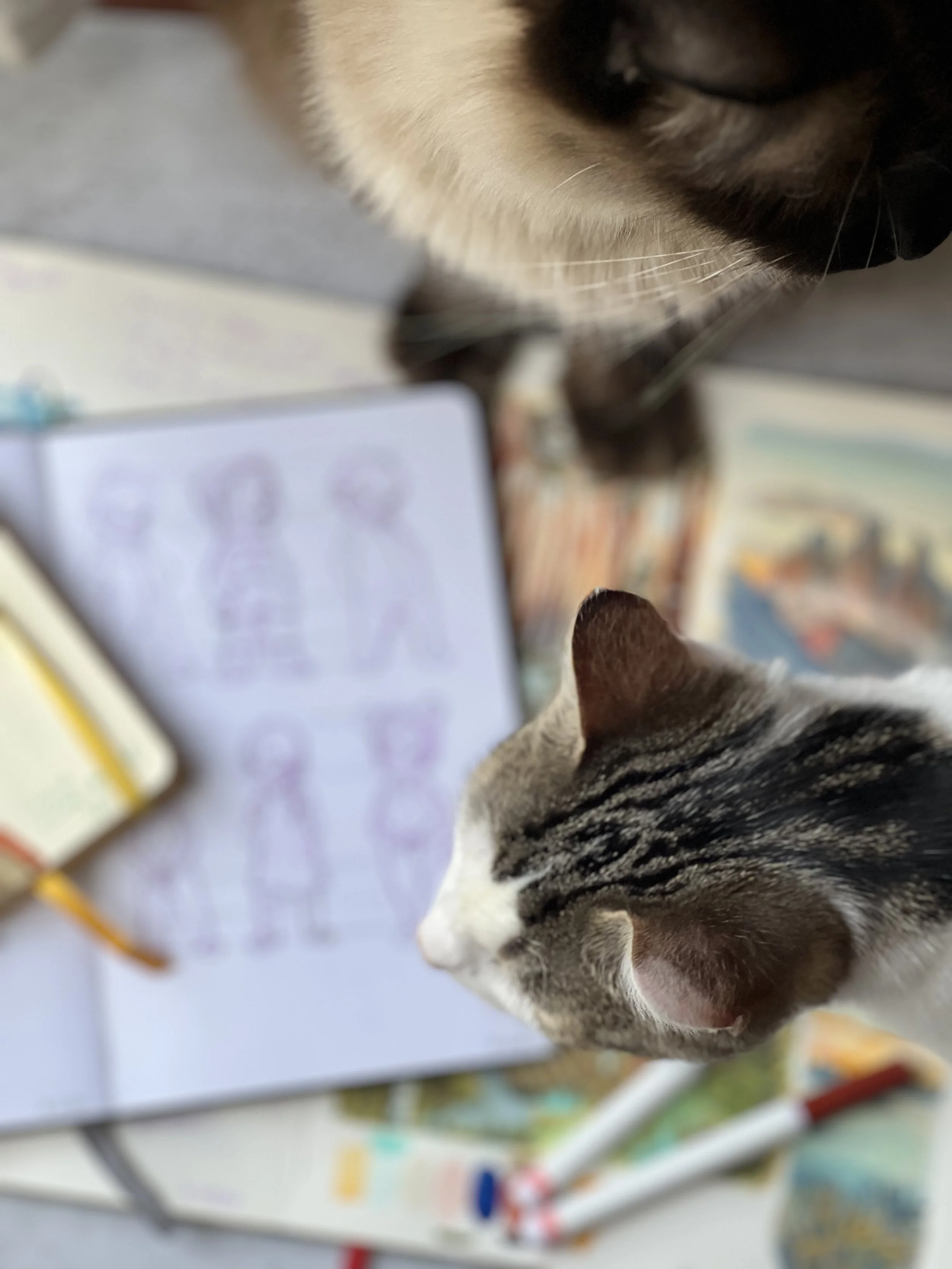
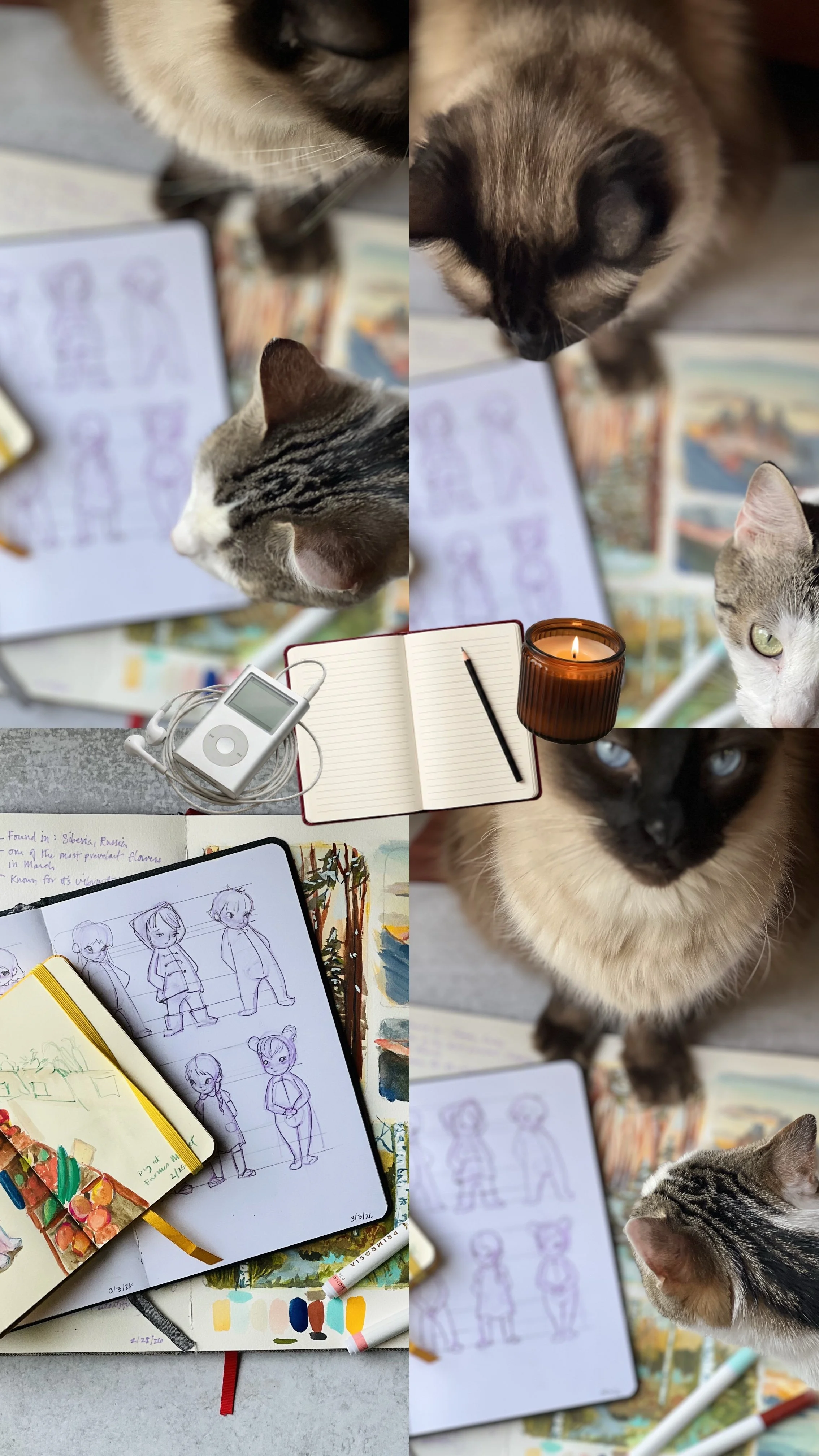
My studio assistants, Skippy & Mia, assessing my busy work.
I never thought of myself as someone who procrastinates.
Honestly, the word never even applied to me in my mind. I am always doing something. My days are full, my mind is engaged, and I am constantly working on something related to my art. So the idea that I might be avoiding the work? It genuinely never crossed my mind.
Until one morning it did.
I sat down to work on facial expressions for a character in my children's book illustration portfolio. I put in what felt like a solid hour of real work. It felt good. I felt productive. And then I stepped away, came back later that day, looked at what I'd made, and immediately hated it.
And that was it. That was the moment the spiral started.
Instead of pushing through, I went into full research paralysis. I started looking at other illustrators, other styles, trying to figure out what I liked more. I went to the bookstore a couple of times and just sat with children's books, making mental notes. And I never went back to the sketchbook. Not because I forgot. Because I felt like I had failed so hard that my own style wasn't good enough to keep going.
What I didn't realize at the time was that this wasn't an off day. This was productive procrastination. And it is so much sneakier than the regular kind.
When Avoiding the Work Looks Like Doing the Work
Here's what productive procrastination looked like for me in practice.
I knew exactly what I needed to add to my children's book portfolio. I knew the kinds of pieces art directors want to see. I had a direction. The next step was clear: sit down and make the pieces.
But instead of doing that, I kept circling around it. I would do practice runs. I would research illustration styles. I would find a class to take, and then while taking that class I would realize I needed to work on color values, so I would find a class on that. Then I would decide my light and shadow work needed improvement digitally, so I would look for a class on that too.
Every single step felt important. Every step felt like growth.
But at the end of the week, the portfolio pieces still didn't exist.
I was moving constantly. Just not forward.
And on top of that, I was also trying to build a surface design portfolio at the same time, because that also felt important and like it was going to lead somewhere. So now I had two directions pulling at me, and I was making very little real progress in either one.
Hamster wheel. Lots of motion, almost no traction.
The Fear Underneath the Busyness
When I finally sat down and journaled about what was actually happening, something uncomfortable became very clear.
My procrastination isn't laziness. It's perfectionism. And underneath the perfectionism is fear.
Here's the specific fear, the one I hadn't quite named yet: right now, I can hide behind an excuse. I've already been submitting myself for children's illustration work, and when I don't hear back, I can tell myself it's because my portfolio isn't quite presenting what art directors are looking for yet. That excuse is actually a comfort. It gives me somewhere to put the rejection that isn't about me.
But the moment I build the portfolio I know they want to see, the moment I truly put my best work forward, I lose that excuse. And then the answer becomes real. What if I do everything right, and they still don't hire me?
That is a vulnerable place to stand.
And so instead of standing there, I kept refining. I kept preparing. I kept waiting to be ready, even though "ready" didn't have a name or a face or a finish line. It was just this vague feeling of not good enough yet, and I kept chasing it.
The Moment I Caught Myself
What finally broke the cycle was journaling.
When I sat down and wrote honestly about what I had been doing with my time, it became very clear very fast. I could see the difference between real work and work that mimics real work. Research can look like progress. Classes can look like progress. Practice runs can look like progress. But at some point you have to stop preparing and start producing.
And what I saw in my journal was that I had been letting my inner critic decide when I was allowed to move forward. I was waiting for her to give me permission to be good enough, and she was never going to give it to me.
That realization landed hard. And it moved me immediately.
What I Do Once I See It
Once I recognize I'm in productive procrastination mode, I do two things right away.
First, I give myself a specific deadline. Not "sometime soon" but an actual date.
Second, I narrow the task down to one clear, concrete action. Not "work on my portfolio" but something like "create one piece showing character interaction in a children's book scene." That kind of specificity breaks the spell. The resistance starts to dissolve because the task is no longer this big shapeless scary thing. It's just one thing.
And I move into it.
One Question That Always Helps Me Reset
When I catch myself spinning in preparation mode, I ask myself this:
What is the real work I am avoiding right now?
Not the practice. Not the research. Not the preparation. The real work.
And once I answer that honestly, I always know exactly what to do next.
If this resonates with you, if you've been feeling busy but somehow stuck, you might not be procrastinating the way you think. You might just be circling the work you care about most. And that makes a lot of sense, because the work that matters most to us is also the work that makes us the most vulnerable.
You're not behind. You're not lazy. You might just be waiting for permission that only you can give yourself.
If You Want to Watch the Shaping in Real Time
I share this whole stage inside my Patreon, the works in progress, the portfolio building, the experimenting, the refining. It's not polished. It's honest. And if you're building something too, I think you'd feel right at home there.
And if you're feeling lost in the woods right now and need help reconnecting with your North Star, the Starlight Dream Lab is a beautiful place to begin. It's where we do the deeper work of remembering what you're actually building toward.
Keep going, beautiful soul.
Why Trusting Your Art Process Is So Hard (And What to Do When You Can't See the Outcome Yet)
This week, I ruined a painting. Or at least, that's what it felt like in the moment.
I was working on an owl butterfly hybrid, a barn owl face painted over India ink, with washes of watercolor and gouache layered on top. The ink is my base layer. It's a process I love. And then, right in the middle of the face (which is supposed to be almost white, the way barn owls are), a big splash of black ink landed exactly where I didn't want it.
See? You would never know that I dripped ink all over his face!
This week, I ruined a painting. Or at least, that's what it felt like in the moment.
I was working on an owl butterfly hybrid, a barn owl face painted over India ink, with washes of watercolor and gouache layered on top. The ink is my base layer. It's a process I love. And then, right in the middle of the face (which is supposed to be almost white, the way barn owls are), a big splash of black ink landed exactly where I didn't want it.
I couldn't wipe it up. India ink is immediate and permanent on paper. So I had to make a choice: panic, tear the page out, start over, or trust the process and keep going.
I kept going. I filled in the rest of the face with the dark ink, reminded myself that gouache is opaque (it can cover anything), and decided to see what happened.
What happened is that it became one of the moodiest, most atmospheric pieces I've made. The dark underlayer gave it depth. It enhanced the evening feeling I was going for, something I couldn't have planned if I tried.
But here's the thing: I could only trust the process because I knew something. I knew gouache could cover it. I knew the ink would add depth. I had enough experience to take the leap.
What do you do when you don't have that certainty? What do you do when you're in the middle and you genuinely cannot predict the outcome?
The Middle Is Genuinely Unpredictable (And That's Not a Personal Flaw)
I want to be honest with you about something, because I think a lot of artist advice glosses over this part: trusting the process doesn't mean you know how it ends. It means you stay in it anyway, without that guarantee.
Right now, I'm working toward licensing my artwork. And there are weeks where I feel completely aligned, clear on my direction, energized, confident. And then there are weeks where I'm scrolling, comparing, questioning whether any of this is actually going anywhere.
The thought that lands hardest during those doubt-weeks isn't loud or dramatic. It's quiet and it sounds educated. It sounds like: what if no one wants this? What if I can't actually make a living doing this?
That thought brings exhaustion with it. And the exhaustion can start to feel like a signal, like maybe it's your nervous system telling you something is wrong. But I've started to wonder if exhaustion in the middle might actually be a sign that you are working toward something real. Something that matters enough to scare you.
What "Trusting the Process" Actually Requires
I used to think trusting the process was a mindset thing, like if I believed hard enough, the doubt would go away. It doesn't work like that, at least not for me.
What I've found is that trust isn't the absence of doubt. It's showing up in the presence of it.
With my painting, I trusted the process because I had a technical foundation to lean on. I knew what gouache could do. In the bigger picture of building a creative career, the equivalent of that technical foundation is consistency. Every day I show up and make something, I'm adding to what I know. I'm sharpening my eye. I'm expanding what I'm capable of. I'm building a body of work that compounds over time.
The process only works if you stay in it long enough for it to work. And staying in it is the hard part, especially when you are squarely in the middle and the outcome is genuinely unknown.
Rejection as Direction, Not Verdict
Something has shifted in me around rejection lately. It doesn't feel as final as it used to.
A "no" tells me something. It makes me look closer at my work. It makes me tighten, refine, and adjust. It's uncomfortable, genuinely uncomfortable, but it's also useful information. Like the splash of black ink: it doesn't mean the painting is ruined. It means I have to find a new way through.
I think the artists who make it are not the ones who avoid rejection. They're the ones who learn to read it differently. Not as a verdict on their worth, but as a signal about direction.
When You Feel Like You've Ruined Everything: A Practical Reset
When I hit that moment in a painting where I'm sure I've destroyed it, I've learned to do one thing: walk away. Sometimes I move to another piece. Sometimes I sleep on it. And almost always, when I come back with fresh eyes, I can see the path forward.
The "ruin" is almost never actual ruin. It's usually over-focus. It's my brain being too close to the work for too long.
The same is true in bigger creative seasons. If you're feeling like everything is falling apart or stalling out, it's worth asking: when did I last actually step back? Not quit, just breathe. Reset your nervous system. Come back with distance.
Exhaustion can masquerade as failure. Confusion can masquerade as incompetence. Give yourself the chance to tell the difference before you make any decisions about stopping.
If You're in the Middle Right Now
If you're applying and hearing nothing back. If you're creating consistently but can't see the traction yet. If you're doubting whether your work is good enough, or whether you started too late, or whether anyone actually wants what you're making, I want to say this clearly:
The middle is supposed to feel like this. It is not a sign you are doing it wrong.
You cannot see the outcome from inside the process. That's not a flaw in you, it's just the nature of the middle. The barn owl face was solid black before it was a moody, atmospheric painting. You can't always know what something is becoming while it's still being made.
What I know is that I'm still here. Still painting, still applying, still refining, still showing up on the days when I can't see where it's going. And I believe, genuinely, that the showing up is what builds the path. Not before you walk it. While you walk it.
Keep going, beautiful soul.
If You Want to Watch the Shaping in Real Time
I share this whole stage inside my Patreon, the works in progress, the portfolio building, the experimenting, the refining. It's not polished. It's honest. And if you're building something too, I think you'd feel right at home there.
And if you're feeling lost in the woods right now and need help reconnecting with your North Star, the Starlight Dream Lab is a beautiful place to begin. It's where we do the deeper work of remembering what you're actually building toward.
How to Find Your Art Style When You Like Too Many Things
If you’ve ever thought, “I like too many things, I’ll never find my art style,” I want you to take a breath right now.
Because what if the problem isn’t that you like too many things…
What if the problem is that you’ve been taught the wrong order?
For a long time, I believed I needed to figure out my style first before I could put myself out into the world as an artist. Before I could show my work. Before I could pursue licensing, illustration, or meaningful opportunities.
And without realizing it, finding my style became a barrier between me and actually doing the work.
That belief quietly feeds perfectionism.
It delays momentum.
And it keeps artists endlessly “preparing” instead of participating.
If that sounds familiar, this post is for you.
(And Why Liking Many Things Is Not the Problem)

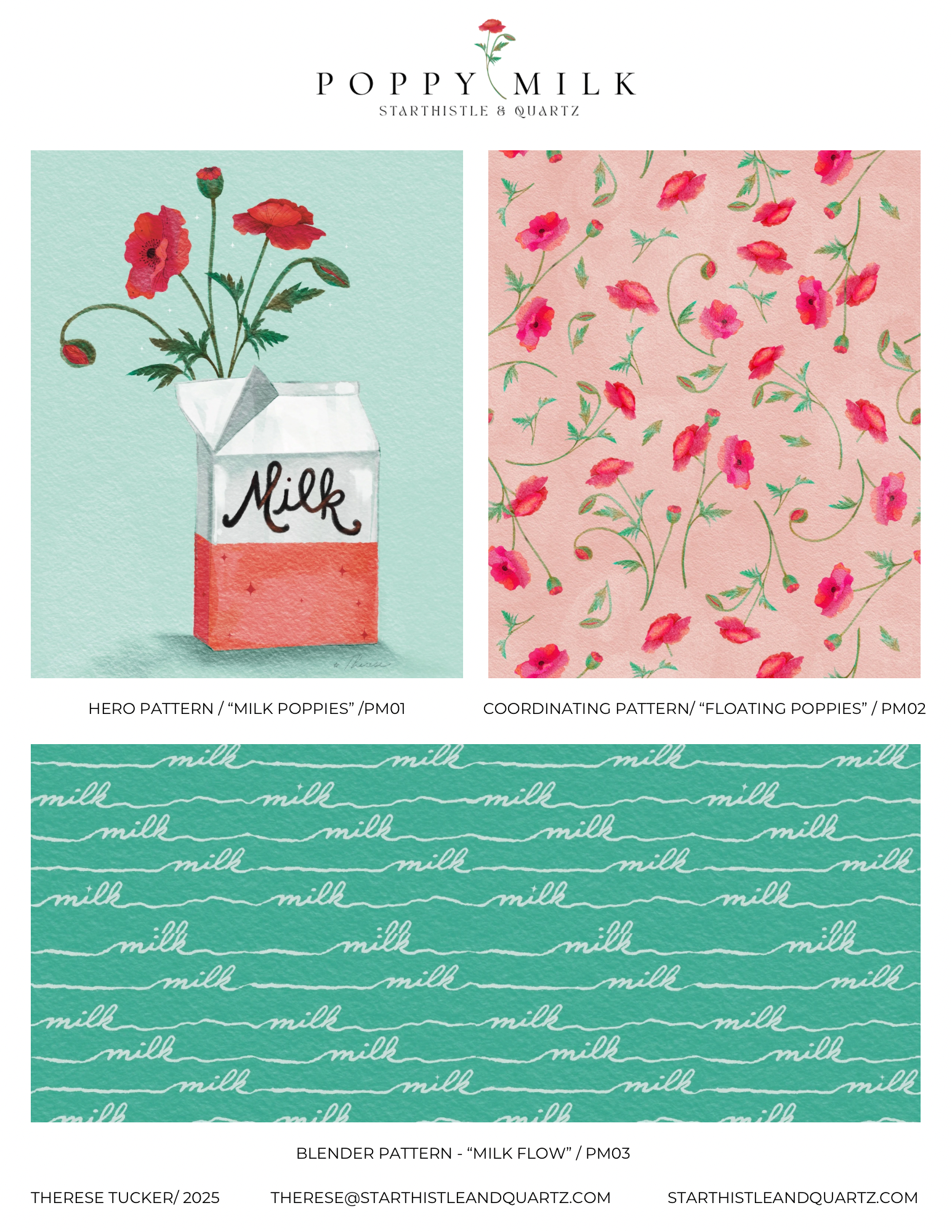
My “Poppy Milk” mini collection from 2025
If you’ve ever thought, “I like too many things , I guess I’ll never find my art style,” I want you to take a breath right now.
Because what if the problem isn’t that you like too many things…
What if the problem is that you’ve been taught the wrong order?
For a long time, I believed I needed to figure out my style first before I could put myself out into the world as an artist. Before I could show my work. Before I could pursue licensing, illustration, or meaningful opportunities.
And without realizing it, finding my style became a barrier between me and actually doing the work.
That belief quietly feeds perfectionism.
It delays momentum.
And it keeps artists endlessly “preparing” instead of participating.
If that sounds familiar, this post is for you.
When “Finding Your Style” Becomes a Trap
Here’s something I don’t hear talked about enough:
A huge part of discovering your style doesn’t happen in private.
It happens after you put your work out into the world.
It happens when:
You notice which pieces people respond to (and which they don’t)
You feel into what doesn’t feel aligned anymore
You receive feedback, even neutral or confusing feedback
You realize what’s missing from your portfolio
You see patterns in what you keep returning to
You can’t get that information by waiting until everything feels perfect.
And yet, many artists treat style like a gatekeeper:
“Once I figure this out, then I’ll be ready.”
In my experience, it’s the opposite.
Readiness comes from repetition, exposure, and choice, not certainty.
Liking Many Things Doesn’t Mean You’re Unfocused
For a long time, I interpreted my wide range of interests as a flaw.
I love:
Gouache and mixed media
Digital illustration and surface design
Animals, women, florals
Mythical, whimsical, storybook worlds
Minimal, chic aesthetics and rich, narrative depth
Children’s books and licensing art for everyday objects
At one point, all of that felt like evidence that I lacked direction.
Now I see it differently.
Liking many things usually means:
You have a wide field of vision
You’re sensitive to nuance
You’re capable of world-building, not just one-off images
You’re meant to work relationally, not narrowly
It doesn’t mean you lack direction.
It means you need cohesion, not restriction.
The Shift That Changed Everything: Working in Collections
The biggest breakthrough in my creative process came when I stopped asking:
“What is my style?”
And started asking:
“What story am I telling, and how can these pieces belong together?”
Working in collections changed everything.
Before that, I created mostly one-off pieces:
Intuitive bursts of inspiration
Beautiful moments, but disconnected
Little momentum
No clear throughline for my audience (or myself)
Once I began working in collections, clarity followed naturally.
Not because I forced a style, but because I made consistent choices.
My Current Framework (You Can Borrow This)
Here’s the simple framework I use now:
Theme → Constraints → Story → Exploration
Instead of waiting for inspiration to strike perfectly, I begin with structure that still allows play.
1. Start with a Theme
This might be:
A place (the woods, a village, the night)
A concept (time of day, seasons, mythology)
A feeling (quiet magic, nostalgia, wonder)
Right now, my Patreon collection Moonrise Menagerie is built around woodland settings, mythic animals, and the progression of time across a single day.
2. Add Constraints (This Is Where Style Begins)
Constraints reduce pressure and increase cohesion.
The things I consciously limit:
Color palette (this is always my doorway in)
Location or setting
Tools & materials (very limited brushes or media)
Motifs (animals, flowers, stars, repeated symbols)
Texture & line weight
When you remove infinite options, your preferences start to speak.
3. Let the Story Lead
Instead of asking, “Am I good enough?”
I ask, “What am I trying to give?”
That shift moves the focus:
Away from self-judgment
Toward connection
Toward the viewer’s experience
Story creates momentum. Style follows.
4. Keep Composition Flexible
I intentionally leave room for play.
I might have a loose idea, but I allow:
Accidents
Discoveries
Adjustments mid-process
Some of my strongest moments happen because I didn’t over-plan.
Why This Quietly Teaches You Your Style
Style isn’t a single decision.
It’s the accumulation of small preferences repeated consistently.
Over time, I noticed:
I reach for the same tools because my hand responds well to them
I layer color in a specific order
I return to warmth, softness, and gentle symbolism
Stars, woodland elements, and nurturing tones appear again and again
I didn’t force these choices.
They emerged because I stayed with the work longer.
That’s the real secret.
What Changed Emotionally When I Stopped “Picking the Right Thing”
I became:
More relaxed
More confident
Less afraid of feedback
More willing to share imperfect work
Feedback became a friend, not a threat.
A “no” stopped feeling like rejection and started feeling like information.
And information builds discernment.
If You Love Too Many Things, Try This This Week
Here are a few gentle, practical starting points:
✨ Option 1: Split the Playground
Give each style its own container:
One sketchbook for minimalist/decorative work
One sketchbook for story-driven illustration
Let each space be cohesive on its own.
✨ Option 2: Repeat One Subject Three Times
Draw the same subject:
In three styles
Or with three color palettes
Or using three tools
Notice which version feels the most alive in your body.
✨ Option 3: Stay With One Piece Longer
Instead of starting something new:
Recreate it again
Adjust one variable
Refine, don’t abandon
Repetition builds confidence faster than novelty.
Style Is a Byproduct, Not the Starting Point
If there’s one thing I want you to remember, it’s this:
Style comes from consistent choices made in motion, not from waiting until you feel ready.
You don’t need to choose one love.
You need to choose a container.
And then let your preferences reveal themselves.
Want to Watch This Process Unfold in Real Time?
Inside my Patreon, I’m currently building an ongoing collection called Moonrise Menagerie: a year-long series exploring woodland worlds, mythic animals, and the subtle magic of time passing.
If you join before the end of February, you’ll receive:
The February postcard and/or sticker
Behind-the-scenes process
How I make cohesive choices without forcing style
If you love woods, magic, and watching a world come together piece by piece, you’ll feel right at home.
How Creating Art in Collections Helps You Find Your Style (Without Forcing It)
For a long time, I thought my art style was something I was supposed to discover, like it was hiding somewhere just out of reach.
I believed that once I figured out my style, everything else would fall into place. The confidence. The clarity. The sense of direction. The feeling of finally knowing what I was doing.
But what I’ve learned, through years of creating, experimenting, doubting, recommitting, and showing up anyway, is that style isn’t something you find first. It’s something that forms while you’re busy making meaningful work.
And for me, the biggest shift didn’t come from trying harder to “define” my style.
It came when I started creating in collections.
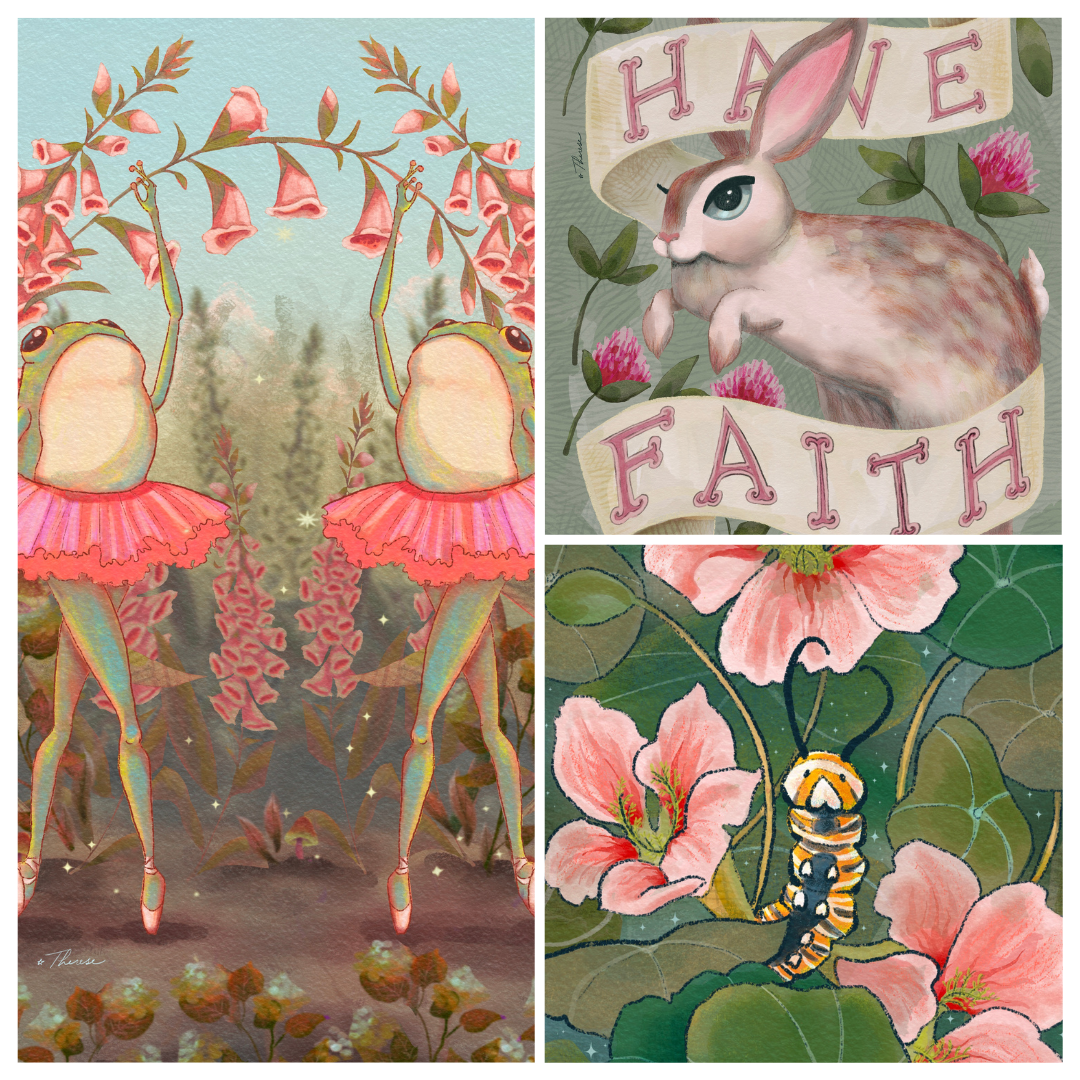
Pieces from my Botanical Beasties Collection 2025.
For a long time, I thought my art style was something I was supposed to discover like it was hiding somewhere just out of reach.
I believed that once I figured out my style, everything else would fall into place. That it would lead to my confidence, and clarity, giving me a sense of direction. I wanted the feeling of finally knowing what I was doing.
But what I’ve learned, through years of creating, experimenting, doubting, recommitting, and showing up anyway, is that style isn’t something you find first. It’s something that forms while you’re busy making meaningful work.
And for me, the biggest shift didn’t come from trying harder to “define” my style.
It came when I started creating in collections.
When Art Is Intuitive… but Scattered
Before I worked in collections, my creative process looked like this:
Inspiration would strike.
I’d make a piece.
I’d love the act of creating it.
Then I’d move on to the next idea.
As an intuitive, right-brained artist, this felt natural. Magical, even.
But over time, something felt off.
When I looked at my work as a whole, it felt scattered and disconnected. Like a series of beautiful moments that didn’t quite speak to each other.
And more importantly, I had no real sense of what my audience wanted from me.
It turned out, I didn’t lack creativity or even skill, I was actually lacking continuity.
Why Style Feels So Elusive When You’re Making One-Off Pieces
Here’s something I wish more artists talked about:
When you only create one-off pieces, you never stay with an idea long enough for your style to reveal itself.
Style doesn’t come from a single piece.
It comes from repeated choices.
When every artwork starts from scratch (with new colors, new tools, new moods, new methods) you don’t give your instincts time to deepen. You’re always beginning again.
Working in collections changed that for me completely.
What Creating Collections Gave Me (That I Didn’t Expect)
When I committed to telling a story over multiple pieces, something surprising happened:
I stopped obsessing over whether my work was “good enough.”
Instead, I started asking better questions:
What connects these pieces?
What feeling do I want someone to have when they see them together?
What choices need to stay consistent so the story makes sense?
And quietly, without forcing anything, my style began to emerge.
Not because I chased it, but because I stayed with something long enough to understand it.
Why Collections Reduce the Pressure of “Finding Your Style”
Here’s the revelatory part most artists don’t hear:
Style is a byproduct of consistency, not a prerequisite for it.
When you work in collections, your focus shifts from:
“What am I good at?”
to:
“What am I trying to give?”
You start by gathering:
a limited color palette
a recurring subject or motif
a setting or world
an emotional tone
a loose narrative arc
Suddenly, it’s no longer about proving yourself, instead It’s about serving the story.
And in serving the story, your preferences start to repeat themselves:
the same brushes
the same tools
the same layering order
the same line weight
the same kinds of shapes
the same color relationships
That repetition is style.
Style Is Not Just Something That Happens, It’s Also a Choice
This was another big realization for me:
Yes, style develops through practice.
But style also develops through decision-making.
Every time you choose:
which tools you use
which ones you don’t
which colors you return to
which processes feel natural to your hands
…you are actively shaping your style.
Working in collections made this visible.
Instead of experimenting endlessly, I started committing to a small set of choices and letting those choices teach me who I am as an artist.
My Doorway Into Every Collection: Color
Everyone has a doorway.
Mine is color.
Color is how I enter a story.
It’s how I feel my way forward.
Before I think about technique or polish, I ask:
What colors belong in this world?
Limiting my palette was the first thing that made my work feel cohesive.
If you’re just starting a collection, I always recommend this:
Choose 7 colors or fewer
Or even start with just 2–3
You’ll be amazed how quickly everything begins to speak the same language.
Real Examples From My Recent Collections
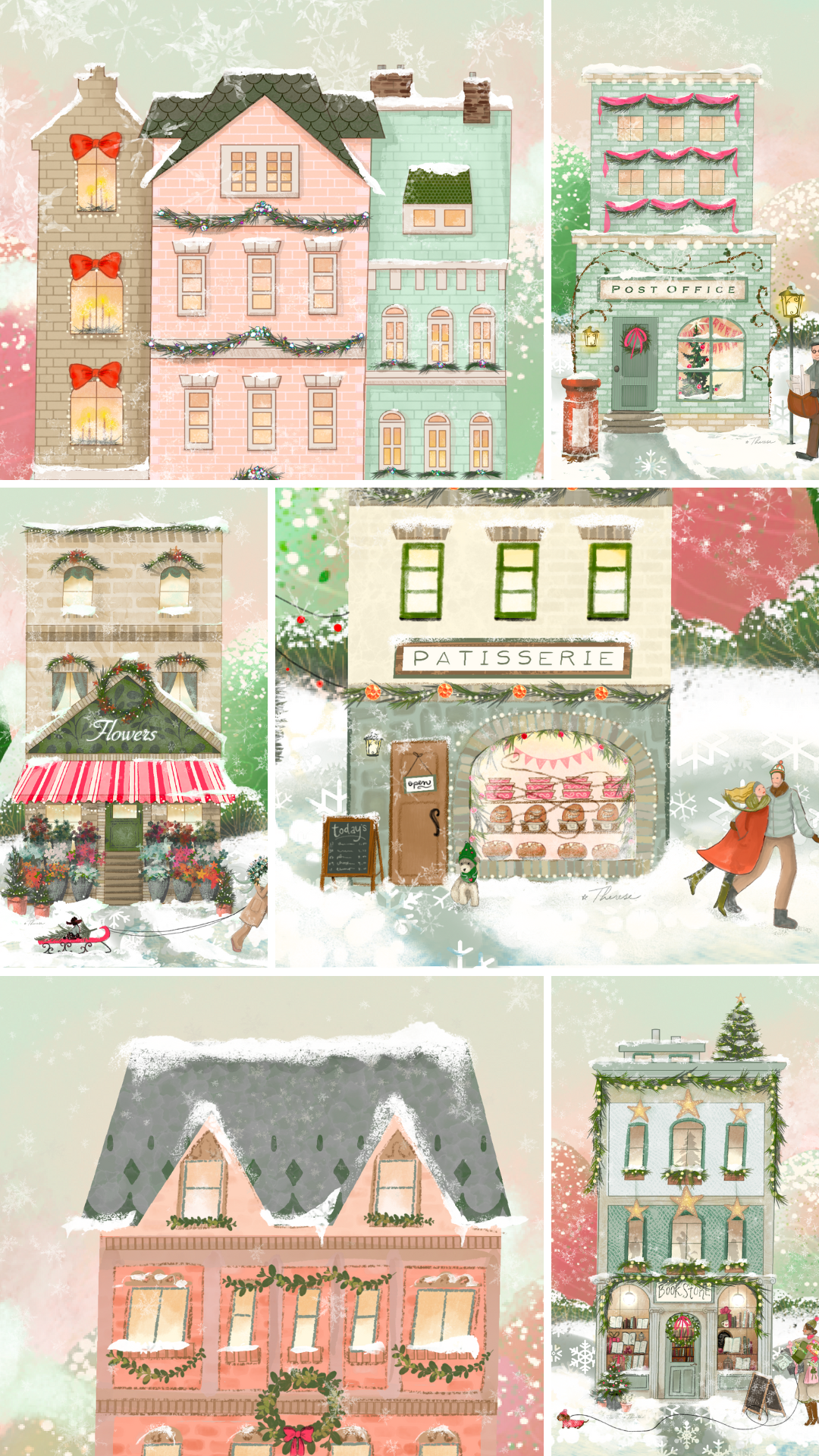
When I created my Christmas Village (Tinseltown 2025):
every building shared the same palette
every scene included people and dogs
the background texture was reused across pieces

With Scary & Sweet:
Victorian wallpaper
oval frames
named characters
a portrait-gallery feel (think Haunted Mansion)
And now with Moonrise Menagerie on Patreon:
woodland settings
animals + flowers
a mythic tone
and each piece representing a different time of day
Each collection taught me something new, not by accident, but by design.
One of the Biggest Gifts of Working in Collections
Here’s something I didn’t expect:
It made self-critique easier and kinder.
When a piece felt off, it was obvious why.
And because it was part of a larger whole, fixing it felt constructive instead of personal.
Collections turn criticism into curiosity.
They help you ask:
What does this piece need to belong here?
If You’re Struggling With Style, Start Here
If you remember only one thing from this post, let it be this:
Style is a byproduct. Not the starting point.
If you want to begin:
Start with a 3-piece mini collection
Choose one motif
Choose a limited color palette
Let repetition teach you
Consistency builds confidence.
Confidence builds clarity.
Clarity builds style.
Want to See This Process in Real Time?
Inside my Patreon, I’m currently creating a year-long collection called Moonrise Menagerie and sharing my decisions, missteps, revisions, and breakthroughs as they happen.
If you want to:
watch a collection unfold from the inside
understand how cohesive bodies of work are built
and see how style emerges through story
👉 Join me on Patreon and follow the journey from the very beginning.
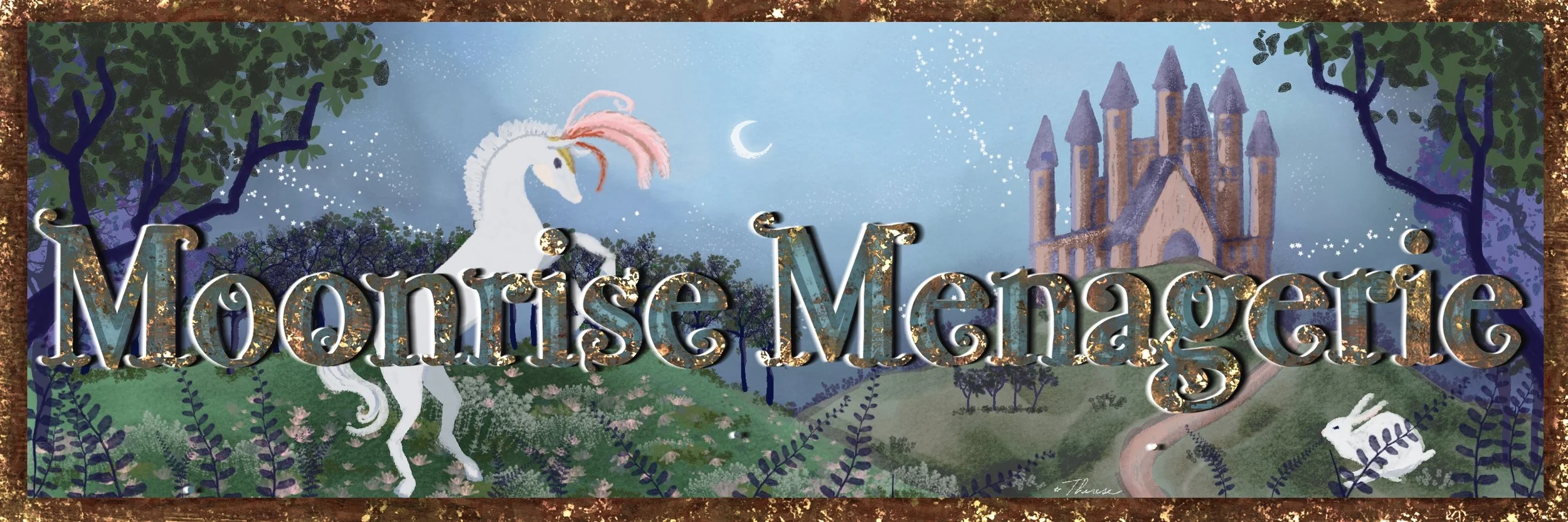
Moonrise Menagerie: A Year of Magic in the Making
Every year, I love to begin with intention, and this year, I’m setting that intention through art.
Let me introduce you to Moonrise Menagerie: a twelve-part collection unfolding month by month on Patreon in 2026. Each painting will be a gentle portal: a woodland scene that combines one animal, one flower, and a specific time of day. Together, they’ll tell a story of cycles, symbols, and quiet moments of connection.
If you’ve followed my work for a while, you know that I don’t just paint pictures I also channel messages.
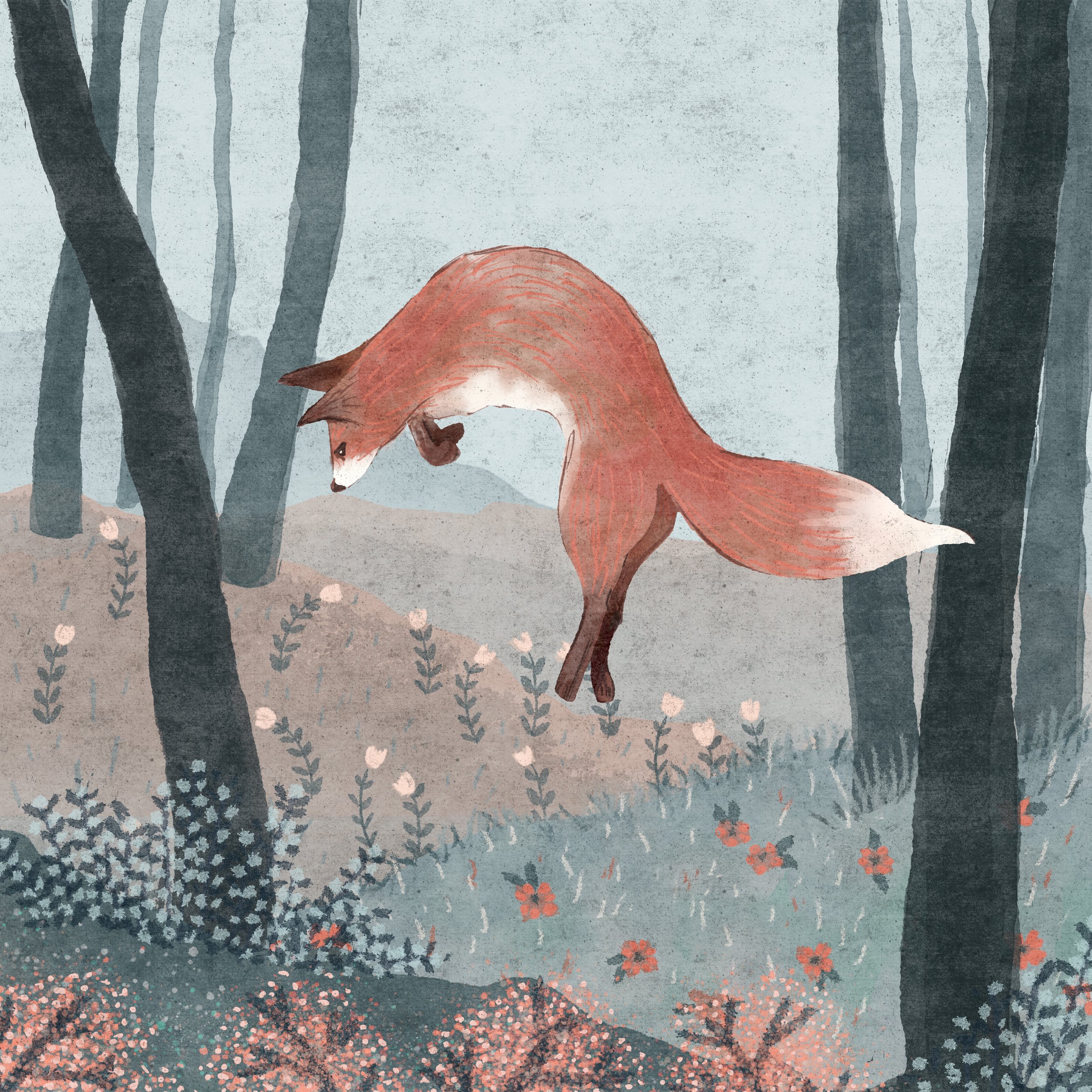
The official poster for Moonrise Menagerie
Every year, I love to begin with intention and this year, I’m setting that intention through art.
Let me introduce you to Moonrise Menagerie: a twelve-part collection unfolding month by month on Patreon in 2026. Each painting will be a gentle portal: a woodland scene that combines one animal, one flower, and a specific time of day. Together, they’ll tell a story of cycles, symbols, and quiet moments of connection.
If you’ve followed my work for a while, you know that I don’t just paint pictures, I also channel messages. These aren’t just animals or plants plucked at random. Every combination is intentional, and each one holds a message. I want every image to feel like the universe whispering something personal and timely to you. That’s the heart of this series:
✨ magic that meets you where you are.
Why “Moonrise Menagerie”?
I’m a lover of alliteration, and this phrase floated to me almost like a spell.
“Moonrise” felt right because it signals something rising gently, an ongoing story, a light that emerges through the dark, a rhythm we can feel but not control.
“Menagerie” brings the sense of a magical collection of beings. Each one holds mythic energy and presence. It feels alive.
What You’ll Find in Each Chapter
Each month in Moonrise Menagerie features:
A woodland-inspired scene
One animal guide
One seasonal or symbolic flower
A specific time of day (sunrise, moonrise, twilight, etc.)
Every combination is designed to:
Spark the imagination
Activate a sense of symbolic resonance
Remind you that the natural world is full of meaning
The themes are personal to me, but universal in spirit. This is a story you can find yourself inside of.
A Teaser for January: “Starlight Hour”
We begin our year in the far north, in the stillness of Alaska’s boreal forest. The first chapter takes place in Starlight Hour: that deep, quiet time when the sky turns its darkest blue and the stars feel closest.
There’s a special animal and flower that live in this place and I can’t wait to share them with my patrons first. You’ll see the full reveal there, along with a channeled note, a tiny palette card, and more behind-the-scenes peeks.
How to Join the Adventure
The first sticker and postcard mailers go out at the end of January.
If you join a mail tier before January 31, you’ll receive:
January’s original postcard print
A matching sticker
Access to WIPs, lore, swatch cards, and gentle surprises all year long
✨ Patreon is the only way to collect the full Moonrise Menagerie.
You’ll be able to see the full set grow month by month—culminating in a complete 12-part journey by the end of the year.
Join Patreon here →
Or hop on the Art & Soul Journal email list to follow the journey.
A Final Thought
More than anything, this collection is about remembering your inner world and reconnecting to nature’s quiet invitations. These aren’t just paintings. They’re conversations with your soul.
Whether you collect the series or simply follow along, I hope Moonrise Menagerie brings a bit more beauty, wonder, and intentionality to your year.
The Power of a Creative Reset: Why I’m Reshaping My Patreon for 2026
I’ve always had a bit of a “jump first, figure it out as I go” pattern in my creative life and that’s definitely been true of my Patreon. I’m the kind of artist who learns by doing, which means that each year I’ve learned something new about what it means to not only make art, but to share it in a way that feels aligned with my values and with my audience.
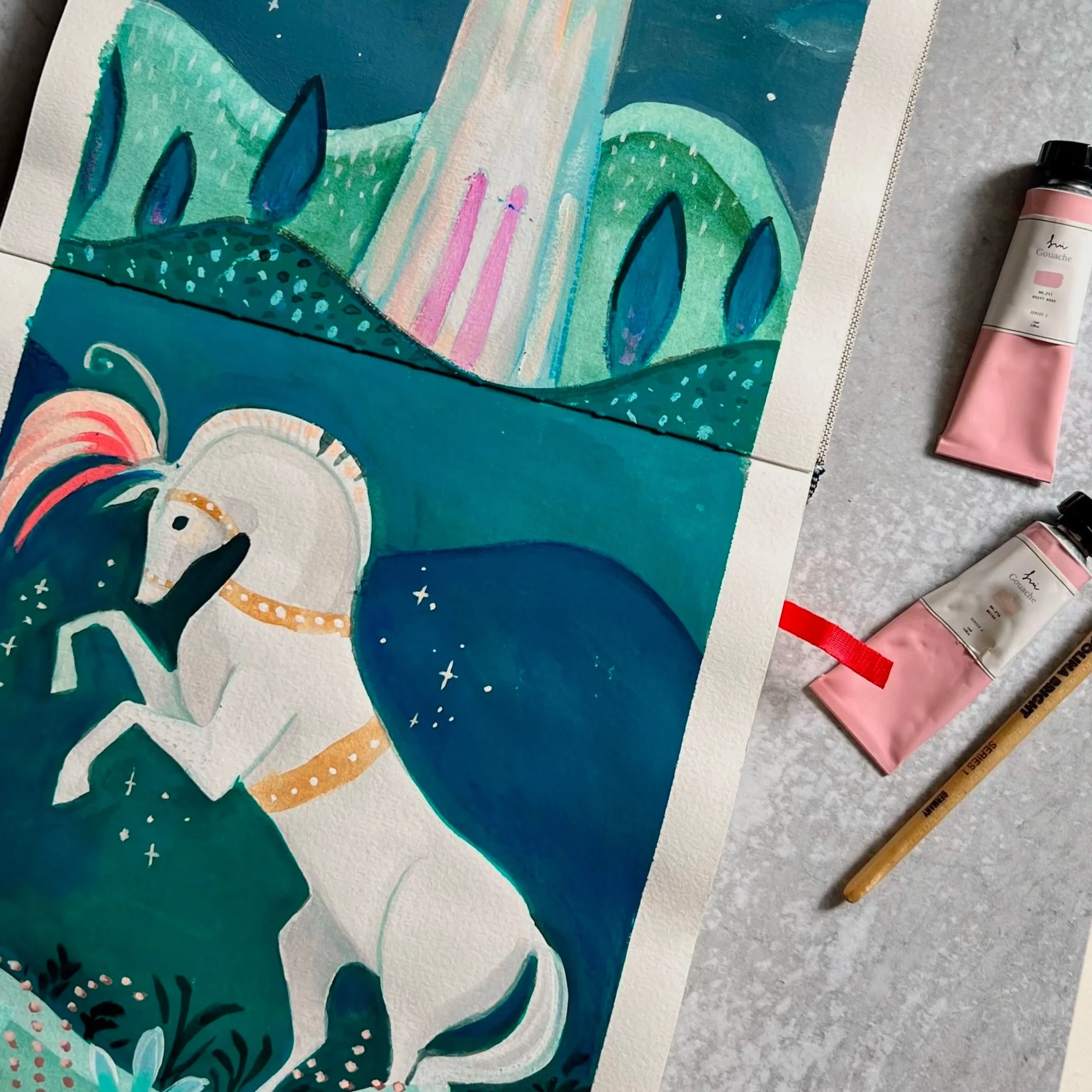
2025 Sketchbook practice of Mary Blair inspired art.
I’ve always had a bit of a “jump first, figure it out as I go” pattern in my creative life, and that’s definitely been true of my Patreon. I’m the kind of artist who learns by doing, which means that each year I’ve learned something new about what it means to not only make art, but to share it in a way that feels aligned with my values and with my audience.
This year, I’m implementing one of the biggest shifts yet and it’s already starting to feel like a complete energetic upgrade.
A Fresh Approach (and a Beautiful Source of Inspiration)
Recently, I came across an incredible artist on Instagram, @rayleearts , who shared how she structures her Patreon around an annual theme. Each month becomes a new chapter in that theme, and by the end of the year, she’s built a cohesive 12-month body of work. Even more brilliant? She turns those pieces into a calendar, so the story lives on in a tangible form.
This clicked something into place for me.
As much as I’ve loved offering spontaneous rewards, I realized something was missing: cohesion.
A unifying theme. A guiding thread. Something for my patrons to follow along with, and something for me to grow with, too.
What’s Staying (and What’s Changing)
The rewards themselves ( stickers, & postcards) aren’t going anywhere. But in 2026, they’ll all live within a single magical, whimsical, seasonally-aligned theme. I won’t spoil it here (my patrons will hear it first, of course), but I can tell you this: it’s full of charm, storytelling, and wonder.
Even though I’m a little nervous (I’ve never created a full 12-piece collection before) I’m also incredibly excited. I want this to be a year where I build something I’m deeply proud of, piece by piece, with my patrons right there beside me.
More Than a Collection, It’s a Journey
In the past, my offerings were more like a “pick-and-mix” so each month was unique and often unrelated to the last. This new structure creates a much clearer experience for everyone involved. You’ll still be surprised by the details, but the direction will feel beautifully grounded.
If you fall in love with the first piece of the year, you’ll love the journey we’re about to take together.
I’ve learned that people connect to what they can follow. As a creator, I used to focus on novelty like what’s next, what’s different, what haven’t I tried yet? But this year, I want to focus on depth. I want to bring you into the process with me. I want this year to feel like we’re co-travelers through a magical little world, not just visitors passing through.
Want to Join Me?
If you want to be part of this year-long journey and collect each piece as it’s released, join me on Patreon especially before January 31st, 2026. You’ll be the first to know what the new theme is, and you’ll receive limited-edition monthly rewards that won’t be offered anywhere else.
You can also sign up for my Art & Soul mailing list here where I’ll be sharing what happens after each piece debuts on Patreon. (Hint: some of them may take on new life in ways you won’t want to miss.)
This year, I’m not just making art — I’m building a story. And I’d love for you to be part of it.
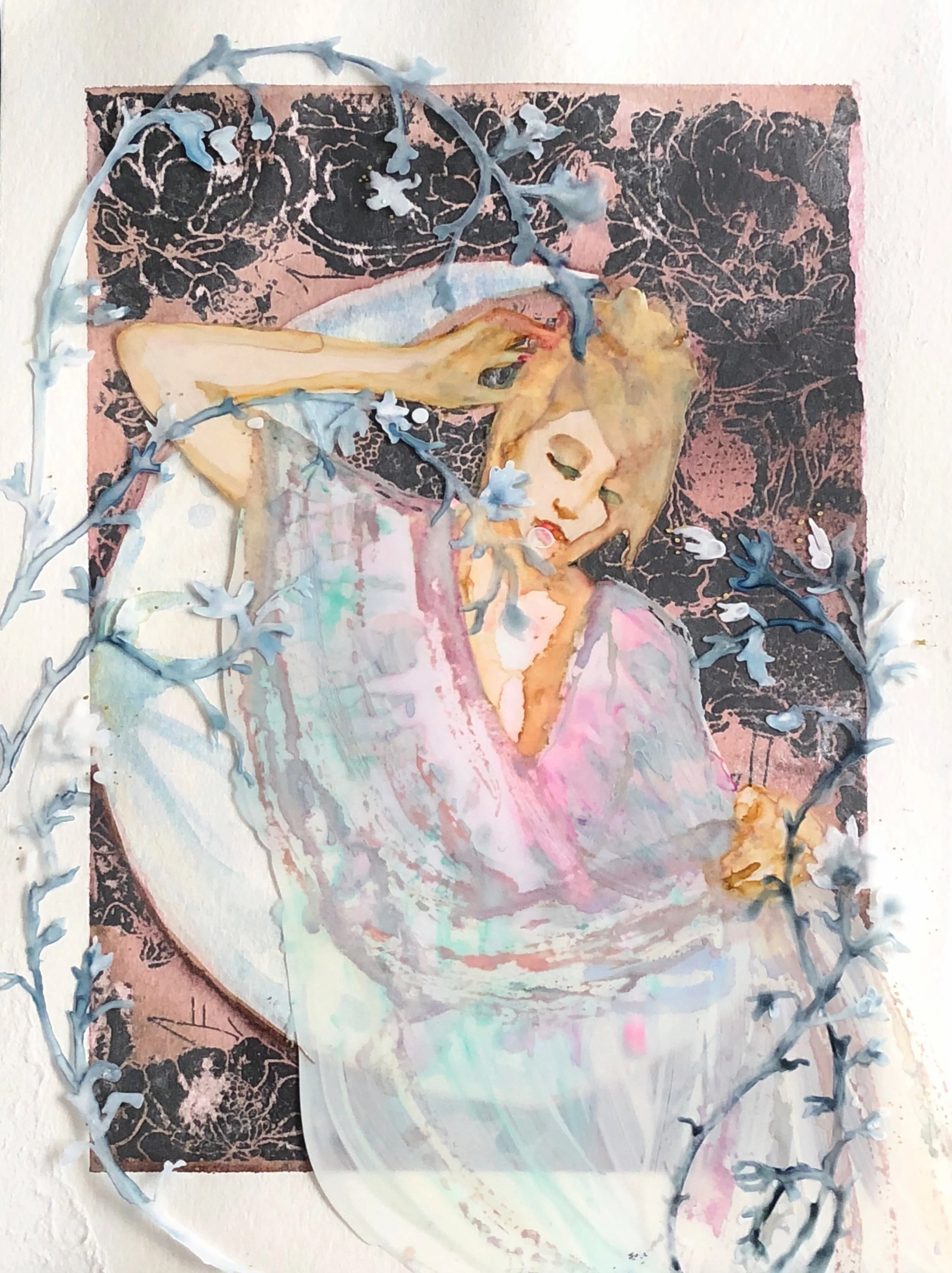
When Inspiration Comes at Night, but You Need Sleep
For the past few years, my creative ritual has looked the same: the house is quiet, the lights are low, and I slip into my little art world long after the day has ended.
Since 2019, I’ve done most of my artwork at night, after homeschooling, after coaching, after motherhood. It started as a way to make sure I created daily. But over time, it became a pattern so automatic that it started to feel like my inspiration only lived in those late hours.
But recently, I’ve felt the cost of this routine.
What happens when sleep can’t wait any longer?
Learning to Shift My Creative Rhythm Without Losing My Muse
For the past few years, my creative ritual has looked the same: the house is quiet, the lights are low, and I slip into my little art world long after the day has ended.
Since 2019, I’ve done most of my artwork at night, after homeschooling, after coaching, after motherhood. It started as a way to make sure I created daily. But over time, it became a pattern so automatic that it started to feel like my inspiration only lived in those late hours.
But recently, I’ve felt the cost of this routine.
Why I’m Rethinking My Creative Schedule
Doing art late at night worked… until it didn’t.
I found myself going to bed at 1:00 or 2:00 a.m. more often than not. And while my art was flowing, my health was quietly asking for help. My sleep suffered. My hormones felt off. My body was telling me what my creative mind didn’t want to hear: this isn’t sustainable.
I knew I needed to shift.
But when you’ve trained your nervous system to link inspiration with the dark hours, change can feel more complicated than just “go to bed earlier.” I wasn’t just battling schedule change, I was trying to rewrite a neural groove that said “this is when the magic happens.”
The Emotional Tug-of-War
I’m not grieving my old routine. But I do miss the easy flow of creativity I used to find at night.
Trying to shift my schedule has come with unexpected friction. Because I homeschool, our shared family space is constantly buzzing with activity, and it’s also where I create. Finding a new time and a new emotional rhythm for my art has been more challenging than I expected.
And while there’s a small voice inside that whispers, what if the inspiration doesn’t come earlier in the day? I know that’s just fear, not fact. Creative inspiration can live anywhere. It just needs new pathways.
Rebuilding a Rhythm That Honors My Body
Right now, I’m experimenting with gentler routines. I’m allowing myself to rest more, get better sleep, and explore what it would mean to create during the light hours instead of the dark.
I haven’t cracked the code yet, but I’m asking new questions:
What if a morning walk opened my creative channel?
What if I set up a small, mobile sketching station away from the main study space?
What if “daily art” could be redefined, not by time spent, but by presence?
I’ve always known my body is part of my art practice. It’s not just my hands that create, it’s my whole nervous system, my energy field, my breath. So I’m listening. I’m learning. And I’m letting my body be my guide.
What I’m Learning (Even Without Daily Art Time)
Even though I haven’t been creating as frequently as I used to, I’m learning that rest is part of the creative process. It’s giving me more clarity, more energy, and more access to the kind of work I want to create, not just the work I feel pressured to complete.
Sleep is not a threat to creativity. It’s an ally.
When I care for my body, I’m caring for my channel. And when I nurture my channel, I deepen my art.
For Artists Trying to Shift Their Rhythm
If you’re trying to shift your own creative rhythm maybe to care for your health, make more space for family, or honor a new season of life. I want to say this:
It’s okay if things feel off right now. You are not broken. Your creativity is not lost.
You’re just rewiring.
Changing your habits might mean you miss a few days. You might feel like you’ve “fallen behind.” But nothing is lost. Every pause is part of a larger rhythm. Every change is an opportunity to build something better.
Your body is a sacred part of your creative practice. Treat it with care. Give yourself permission to make new promises to yourself, ones that honor where you are now.
Want to See How This Unfolds?
If you’re curious how I’m shifting my rhythm in real time, come join me on Patreon I share the behind-the-scenes of my process as I rework my schedule, my art time, and how I build my creative life around both vision and well-being.
And if you’d like to explore how to gently rewire your own patterns using visualization and somatic dreaming, the Starlight Dream Lab is a beautiful free tool to help you align your big dream with your nervous system and begin installing the creative habits that actually serve you.
Final Thought
Making beautiful work is not about pushing harder. It’s about listening deeper. Sometimes the most radical act of creativity is to choose rest, reset, and trust that inspiration will find you again.
Because it will.
You are still an artist, even when you’re sleeping.
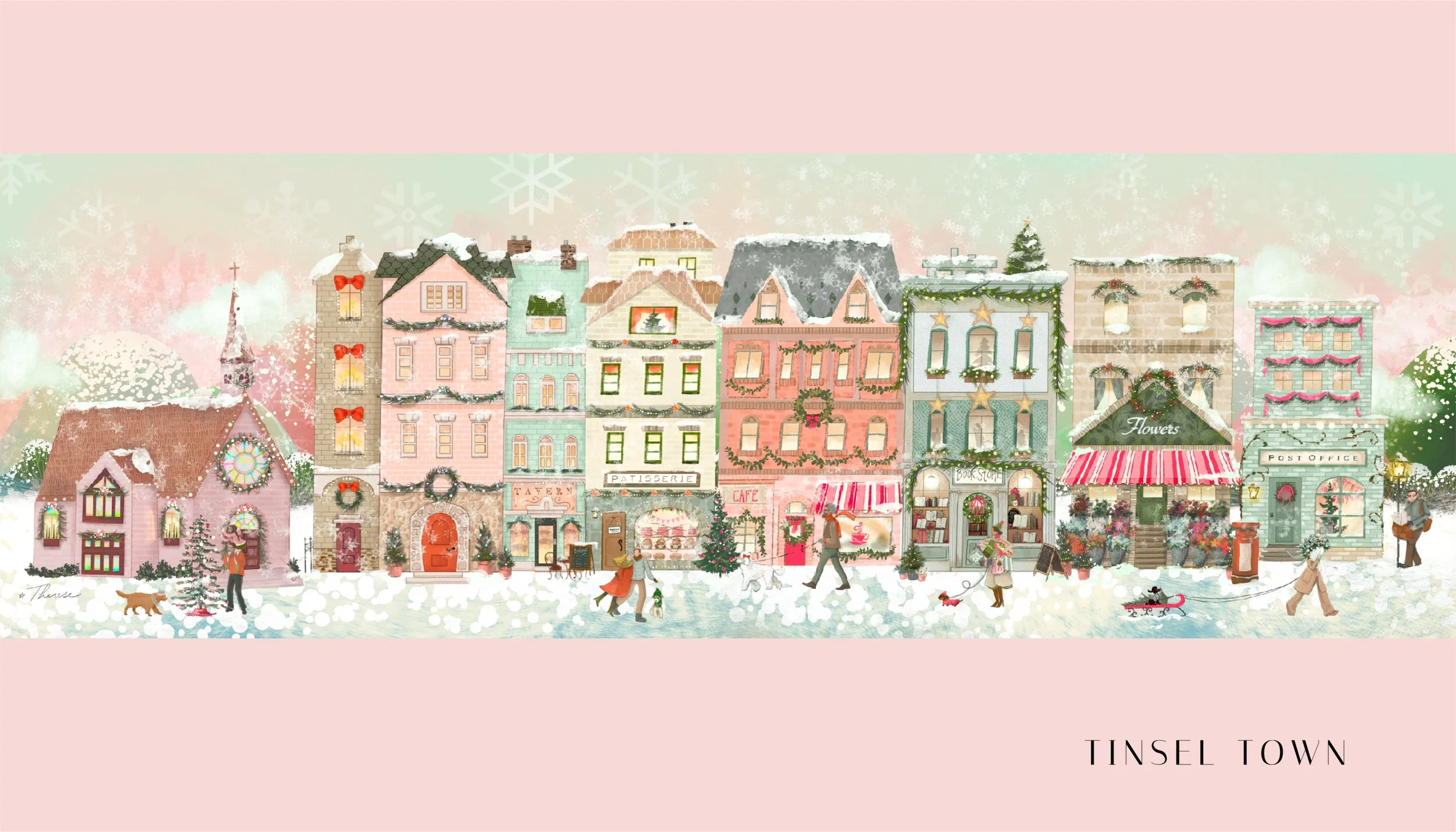
Building Tinsel Town: How a Christmas Village Helped Me Step into My Style
There’s something magical about creating a world from scratch.
This December, I joined the #TinselTown2025 challenge on Instagram, hosted by a wonderful group of illustrators (listed below), and something clicked. I love drawing and painting brownstones, so the idea of building my own illustrated Christmas village? It was an instant yes.
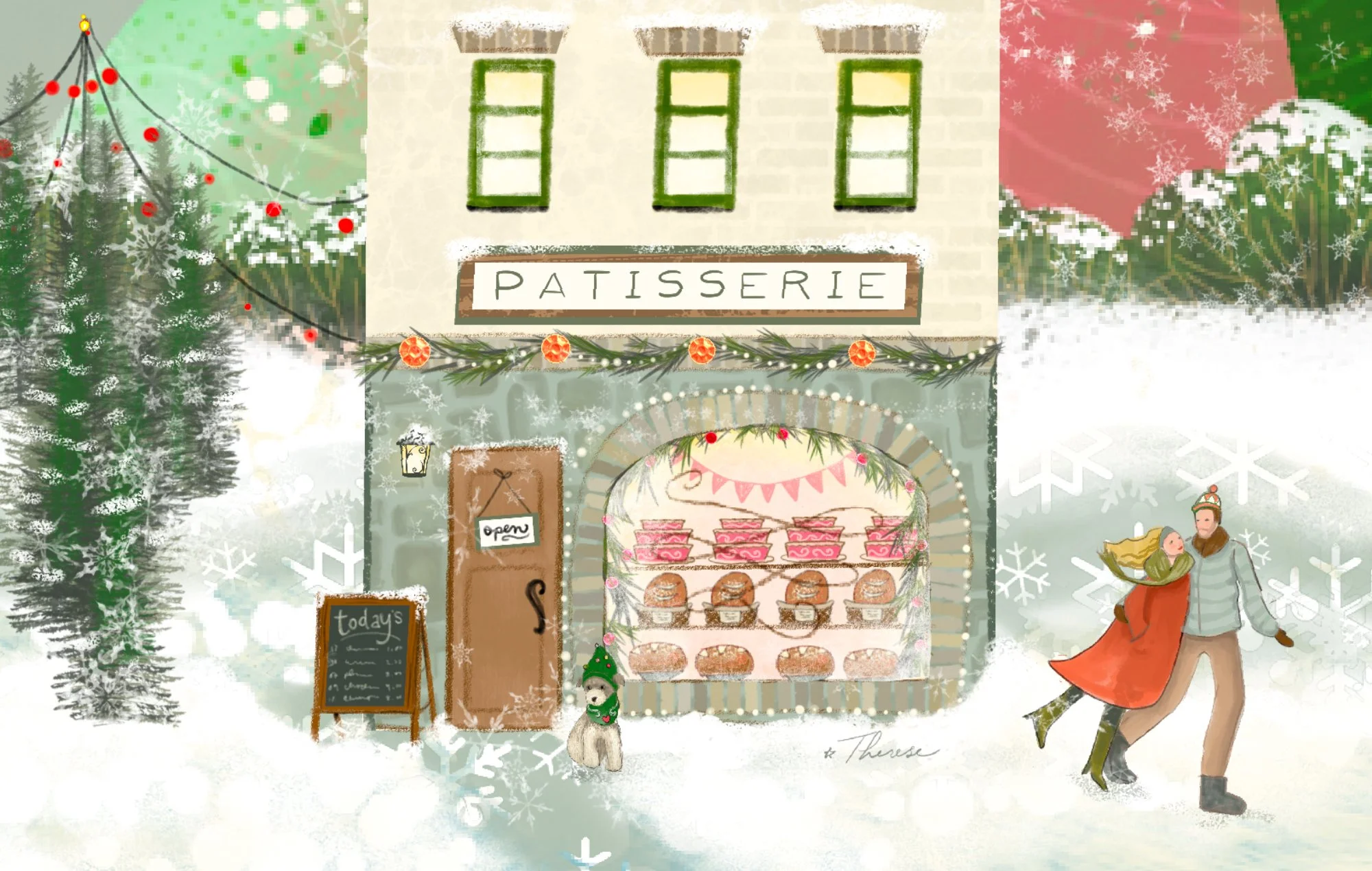
“Gumdrop Village” by Therese Tucker for the #tinseltown2025 art challenge.
There’s something magical about creating a world from scratch.
This December, I joined the #TinselTown2025 challenge on Instagram, hosted by a wonderful group of illustrators (listed below), and something clicked. I love drawing and painting brownstones, so the idea of building my own illustrated Christmas village? It was an instant yes.
At the start, my only real plan was to fill my village with beautiful brownstones. That was it. No master strategy. Just a desire to follow my joy.
🎨 Inspired by Brooklyn (and a Little Wes Anderson Magic)
My time living near Park Slope in Brooklyn gave me all the nostalgic material I needed: snowy walks with my husband, beautifully lit windows, wreaths on front doors, and the hum of cozy cafes tucked between brownstones. I also pulled color inspiration from The Grand Budapest Hotel (Wes Anderson's genius never fails me). I chose a palette that felt slightly vintage, slightly sweet, and full of charm and I stuck to it all the way through.
Each piece was drawn digitally in Procreate using gouache, ink, and pencil brushes. I gave every building its own personality and a canine companion because every great town deserves dogs. 🐾
📚 My Favorite Building? The Bookstore.
While I loved every part of this piece, the bookstore became my favorite. It was inspired by a real memory — visiting the Barnes & Noble in Union Square ( though this version is purely imagined.) There’s something about the elegant arches, the stone columns, and the woman standing outside holding her packages that feels like me. She’s done shopping... but she’s still looking for the perfect book.
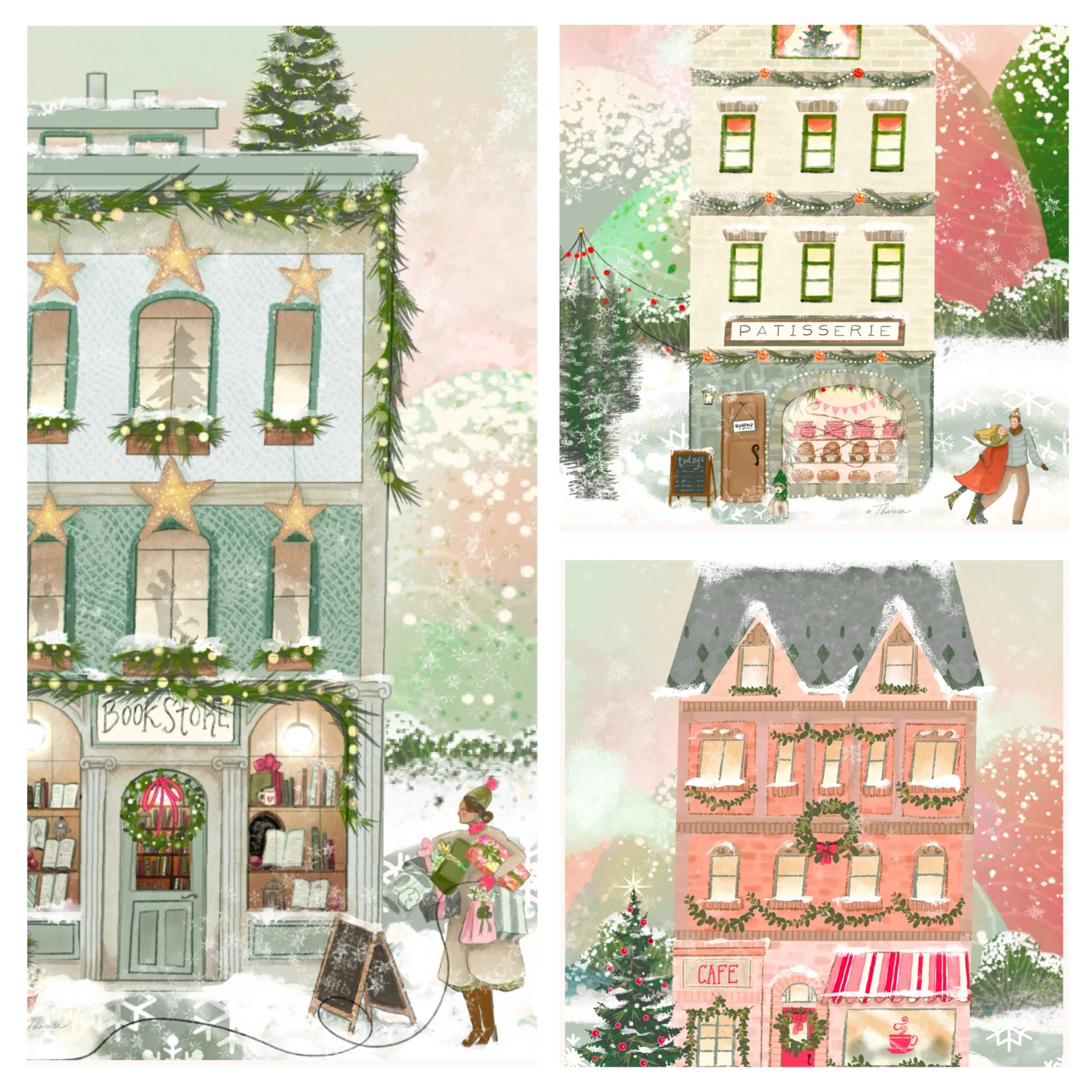
It was hard to choose a favorite…
In the end, the bookstore won my heart from the star ornaments, to the little details of books, pots of ink and presents.
It was little vignettes like that one that ended up surprising me most.
🧠 What I Learned While Building Tinsel Town
I’m better at storytelling than I realized. Creating each building felt like writing a short scene.
My style is getting more cohesive, my linework is more delicate and intentional.
I love working with a limited color palette. It makes decisions easier and results stronger.
I found a workflow that works for me: blocking in shapes before sketching feels natural and satisfying.
I want to start documenting my creative process like a recipe. That’s now on my to-do list.
And even though I didn’t get to paint every building I hoped to (time was tight!), I’m genuinely proud of what came through. Sharing a horizontal panoramic piece on Instagram wasn’t seamless, but the kind response made it all worthwhile.
🧁 What I Hope You Feel When You See Tinsel Town
Whimsical nostalgia. That feeling you get when you watch a Wes Anderson film with everything in its place, gently charming, and a little bit dreamlike.
This village is my love letter to Brooklyn, to winter walks, to festive windows, and to the slow beauty of building something one brick at a time.
🧁 What’s Next + Where to Find More
🎁 Limited Edition Alert!
A print and sticker from my Tinsel Town collection will be available exclusively to my Patreon patrons for December. Join before December 31st and it’s yours too!
🎄 Want to see more of the process?
Follow me on Instagram @starthistle.and.quartz — I shared the buildings in real time over there.
❄️ Special Thanks
A big thank you to the hosts of the #TinselTown2025 challenge for inspiring this magical project:
Creating from My Channel: What It’s Like to Receive Art Spiritually
There’s something indescribable that happens when I create from my intuitive channel , a deep sense of ease, connection, and purpose that reminds me my art isn’t just coming from me, it’s coming through me.
Over the years, I’ve come to understand that my most resonant, collected, and deeply felt pieces arrive when I allow myself to open, receive, and let Source energy flow through my hands.
In this post, I want to share what that experience is really like, not just the outcome, but the energetic receiving process behind the art.
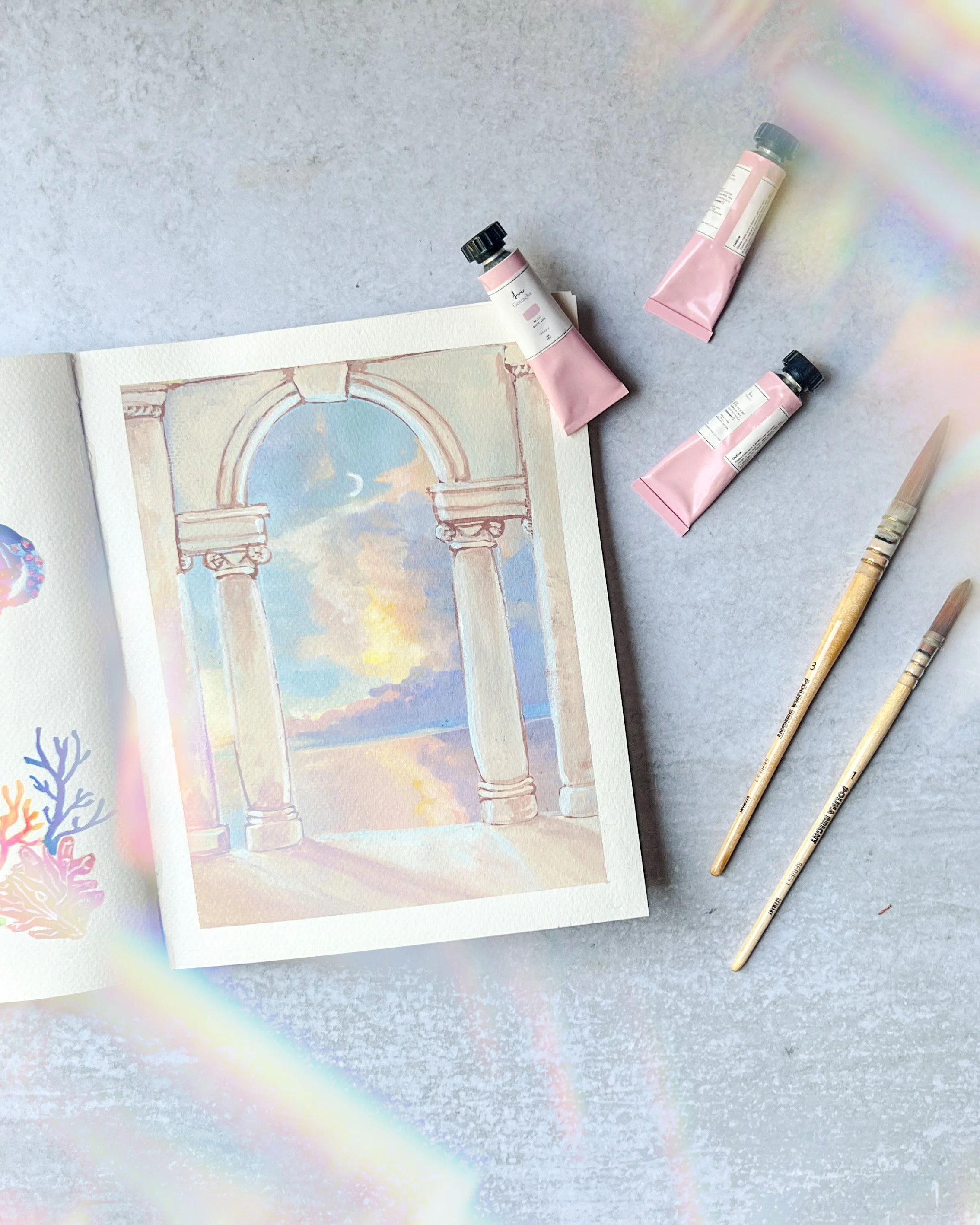
A dreamy little painting from my 2024 gouache sketchbook.
There’s something indescribable that happens when I create from my intuitive channel ; a deep sense of ease, connection, and purpose that reminds me my art isn’t just coming from me, it’s coming through me.
Over the years, I’ve come to understand that my most resonant, collected, and deeply felt pieces arrive when I allow myself to open, receive, and let Source energy flow through my hands.
In this post, I want to share what that experience is really like — not just the outcome, but the energetic receiving process behind the art.
Receiving the Vision
When a piece wants to come through, I often receive it as a vision. The image arrives in my mind's eye fully formed complete with its layers, textures, and energy. It’s more than a concept, I feel the experience.
The feeling of receiving it is similar to sliding into a hot bath: deep relaxation, openness, and a quiet certainty. These visions often arrive in the liminal moments, during meditation, after I’ve moved my body, or just before sleep and in dreams. My nervous system needs to be relaxed and open, otherwise I can't hear the whispers of my creative channel.
Sometimes I even receive instructions, like a tutorial from Spirit. Over a decade ago, I was shown in a dream exactly how to create a painting on wood and finish it with beeswax. I remember being confused in the dream, and the scene literally rewound and slowed down so I could understand it more clearly. That painting sold immediately. I’ve never forgotten that moment.
Channeled Art Feels Effortless
There’s a distinct difference between trying to think up an idea and receiving one. When I try to create from effort, it feels tight in my body. I overanalyze. The inner critic gets louder.
But when I channel it flows. There’s no “trying” involved. The piece unfolds organically, and I feel connected, curious, and excited. My job becomes simply to stay open and keep going until it’s complete.
How I Open My Channel
I don’t need a big ritual to connect, just presence and preparation. I always start by moving my body first. I’ve learned that moving the body moves the mind and movement opens my channel far more effectively than stillness alone.
Once my body is relaxed, I may sit in meditation or simply remain in a state of quiet receptivity. I’ve also had incredible moments right before waking up or during sleep where pieces arrive as full downloads. These are the pieces that feel sacred, almost like gifts.
The Pieces Always Find the Right People
The most magical thing about creating this way is that the right people always seem to find the work.
Many times, collectors will share with me that a painting felt like it was made just for them. Sometimes these are pieces I never fully understood until someone else told me what it meant to them, how the symbols and colors held significance I hadn’t even considered. That’s the moment I’m reminded again: I’m not the source of my work. I’m the channel.
That’s why I’ve always said: I’m not the artist. I’m the paintbrush Source chooses to use for this particular work.
Why This Matters to Other Creatives
If you’re an artist, a visionary, a soul-driven creator… this is your permission slip to stop forcing and start feeling.
Your best work doesn’t come from the ego, it comes from the part of you that knows. Your inner mystic. Your intuitive self. Your higher guidance. And the more you open to that, the more easeful, connected, and impactful your art becomes.
You are a channel. And your job isn’t to be perfect, it’s just to be open.
Want to Strengthen Your Connection to Source?
If this post lit something up inside you, here are three ways you can go deeper with me:
💌 Join Patreon — where I share my process in real time and let you vote on the characters and pieces that get created.
🌠 Download the Starlight Dream Lab — a free guide to help you uncover your big dream and connect with your higher creative vision.
🌟 Join the Epic Year Workshop — to map out your dream life and creative goals using soul-aligned tools like numerology and astrology.
Final Thought
You’re not imagining it , your visions are real. Your art matters. And every time you create with intention, you become a bridge between the visible and invisible worlds.
Keep your channel open.
Keep your heart open.
The work will find its way through you and to the people who need it most.
Why You’re More Ready Than You Think: A Love Note to Artists Who Doubt Themselves
If you’ve been quietly wondering whether you’re too far behind, not talented enough, or still too unclear to really step into your dream as an artist, I want you to know something from the deepest part of my heart:
You are more ready than you think.
I know those thoughts. I’ve had them too. The ones that whisper:
“What if I’m not good enough to sell my work?”
“My style isn’t clear enough yet…”
“There’s still so much I need to learn.”
“Other artists are miles ahead of me.”
They sound so logical. So reasonable. So convincing.
But just because a thought feels true doesn’t mean it is.
My open letter for the creatives wondering if they’re behind, or not good enough…
Dear Artist,
If you’ve been quietly wondering whether you’re too far behind, not talented enough, or still too unclear to really step into your dream as an artist, I want you to know something from the deepest part of my heart:
You are more ready than you think.
I know those thoughts. I’ve had them too. The ones that whisper:
“What if I’m not good enough to sell my work?”
“My style isn’t clear enough yet…”
“There’s still so much I need to learn.”
“Other artists are miles ahead of me.”
They sound so logical. So reasonable. So convincing.
But just because a thought feels true doesn’t mean it is.
In fact, I want to gently offer this:
Self-doubt often shows up right before we’re about to grow. Not because we’re failing, but because we’re expanding.
Growth feels unfamiliar.
You might be standing in the middle of your next level right now and not even know it because you’re still waiting for it to feel safe. Or perfect. Or polished.
But here’s the truth:
Your style is not hiding from you. Nope, not even close.
Actually, it’s being shaped by everything you’re doing right now.
All those quick sketches? They’re helping.
Every unfinished piece? It counts.
And all the tiny decisions about what colors, textures, and characters you’re drawn to? That’s your style, showing you where it lives.
Style isn’t a mystery to be solved, it’s a pattern of preferences that emerge from action and play. It’s born from permission, not pressure.
And that voice telling you you’re not ready? That’s not your highest self.
It’s a ghost of a past belief that somehow you just were not enough. That’s the part of you that wants to be perfect before it allows you to be seen, simply to protect you.
But here’s the thing...
There is someone out there right now who is looking for the exact kind of art that only you can create, the kind that hasn’t been “overworked,” or “over-trained,” or “perfected” into something generic or robotic.
They’re looking for your color sensibility.
Those quirky lines you love to draw.
Your tender characters.
They are looking for your perspective and voice.
And they will only find it if you keep going.
Gentle Journal Prompt
Take a deep breath, and ask yourself:
What if I’m not behind at all? What if I’m exactly where I’m meant to be and my dream is already unfolding through me?
Let that question sit in your body.
Then, just write. Let it move through you.
Affirmation to Keep Close
“Every piece I create brings me closer to the artist I’m becoming. I don’t have to be perfect, I just have to keep showing up.”
Keep Growing with Me
If this letter landed in your heart, there are a few beautiful ways you can walk this creative path more deeply with me:
🎨 Patreon: Join my behind-the-scenes art journey from sketches to finished pieces, and receive monthly rewards like stickers, postcards, and art prints that carry intention and magic.
🌙 Starlight Dream Lab (Free Tool): Discover your big creative dream helping to anchor it into your nervous system. This tool is for artists who feel something BIG inside, but can’t quite name it yet.
🌟 Epic Year Express: A self-paced workshop that helps you turn your big soul-aligned dream into a strategy you can actually follow. Especially made for sensitive creatives and intuitive thinkers.
Final Thought
If you can imagine the life you want to live and the art you want to make, or the world you want to build, it’s not because you’re delusional or unrealistic…
It’s because you’re being shown what’s possible.
You are a creator. You are already doing it.
And no matter where you are in the journey, someone out there is grateful you haven’t given up.
💖
With love & belief in you,
Therese
Walking Two Creative Paths: Storytelling & Surface Design
For the longest time, I thought I had to choose.
Was I going to be a children’s book illustrator—or a surface designer?
I’ve always known that my art had a certain magical, whimsical energy. I’ve worked hard to refine my voice, understand my style, and commit to consistent practice. But even with all that effort, I still felt stuck in one major area: what to focus on.
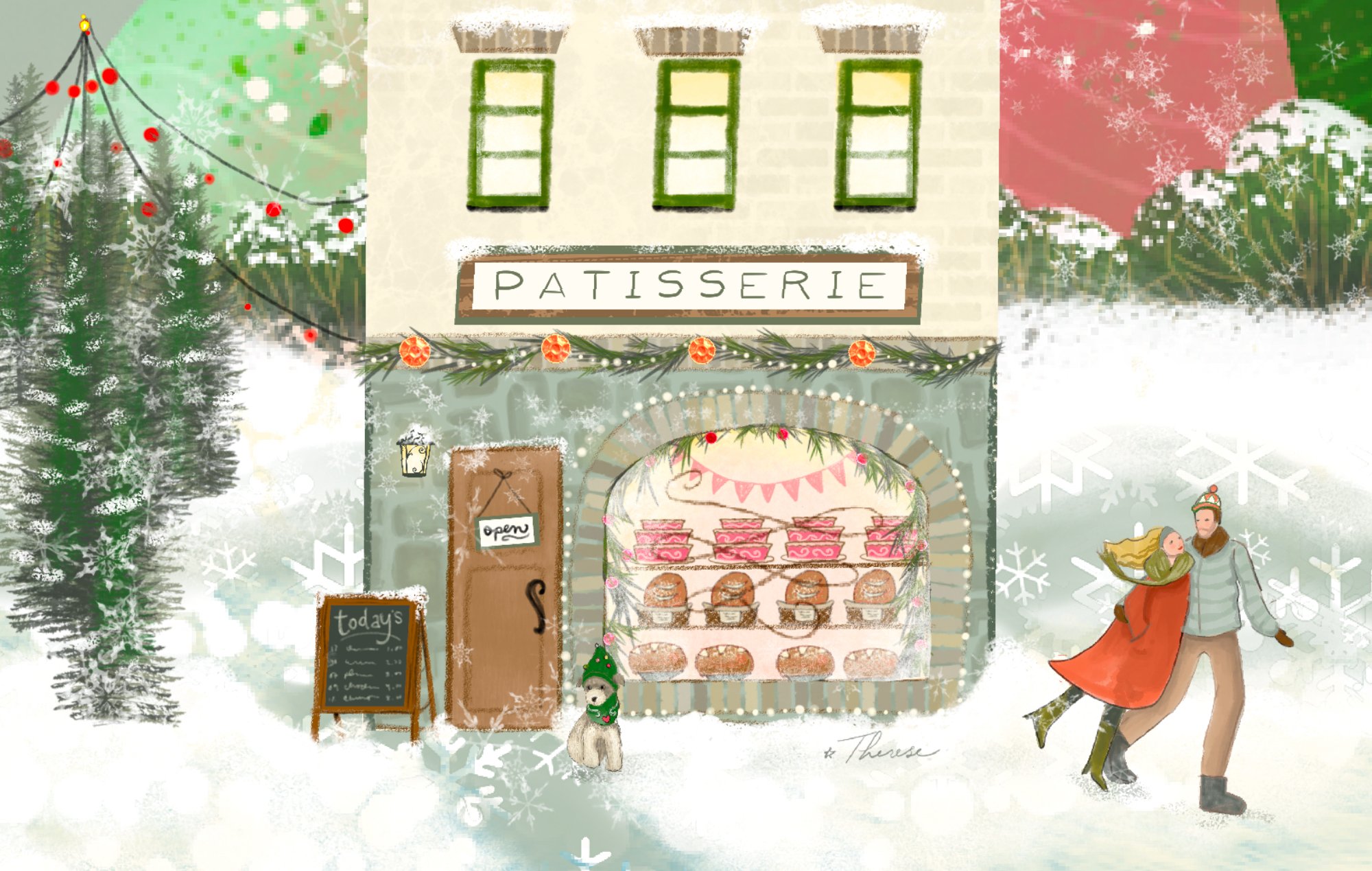
A closeup peak at “Blissful Bakery” by Therese Tucker for the #TinselTown2025 challenge.
Why I’m Building Two Portfolios Instead of Just One
For the longest time, I thought I had to choose.
Was I going to be a children’s book illustrator, or a surface designer?
I’ve always known that my art had a certain magical, whimsical energy. I’ve worked hard to refine my voice, understand my style, and commit to consistent practice. But even with all that effort, I still felt stuck in one major area: what to focus on.
I saw illustrators creating dreamy picture books and imagined my work bringing characters to life on the page. Then I'd see surface designers turning art into fabric, stationery, and home goods and I felt pulled in that direction, too. I felt a deep love for both paths… and a persistent belief that I could only choose one.
Until one day, I came across a YouTube video by Mel Armstrong.
She said something that cracked everything open for me:
"You can absolutely build both portfolios. You don’t have to choose.”
It was such a simple statement, but it blew my mind. Her words gave me permission to do what my intuition had been telling me all along: that my creativity doesn’t need to be confined to one box. It’s okay to walk both paths and let them inform one another.
A Quick Shout-Out to Mel Armstrong
If you’re not familiar with her work, Mel Armstrong is a children’s book illustrator and surface pattern designer with a truly distinctive style. She’s built a creative business around doing both and I just want to say thank you, Mel, for sharing that insight. It helped me find peace, clarity, and direction in what had felt like an overwhelming fork in the road.
My Dual-Path Art Vision
So here’s what I’m working on now:
Path One: Storytelling Illustration
I’m building a portfolio of work that feels like it belongs in a beautiful picture book with pieces that carry emotion, whimsy, narrative, and heart. These characters often arrive intuitively. Sometimes I dream them. Sometimes they speak before they fully appear. I know that this part of my work is deeply tied to my mission: to create art that opens portals, sparks remembrance, and connects the viewer to something deeper.
Path Two: Surface Design
I’m also building collections of repeat patterns, seasonal illustrations, and motif-driven art that could live beautifully on fabric, stationery, wallpaper, home goods, and giftware. This path feels more grounded and product-oriented, and I find joy in the way it allows me to think in terms of collections, utility, and design.
Rather than seeing this as a conflict of direction, I now see it as a spectrum of creativity: two ways that my art can live in the world. And truthfully, many of the artists I admire most do exactly this: they have both a story-driven and a product-driven side to their art business.
Trusting Intuition to Lead the Way
This shift didn’t come from a perfect business plan.
It came from listening inward. From noticing the projects that felt alive. From trusting that what brings joy to me is likely what will resonate most with others.
I’m no longer trying to shove myself into a neat niche or force clarity from the outside in. I’m following what wants to be expressed and honoring the full spectrum of creative expression that flows through me.
That doesn’t mean I won’t be strategic or intentional. I’m still creating two portfolios. I’m still thinking about markets, formats, and licensing. But I’m doing so with a sense of permission. Giving myself permission to build an art career that reflects the multitudes within me.
For the Creatives Who Can’t Pick One Thing
If you’ve ever felt torn between two creative paths, I want you to know:
You don’t have to choose. You can build both. You can find the threads that connect them.
And you can trust that your unique mix of gifts will lead to something beautiful.
I'm using the Epic Year Workshop (my signature yearly planning experience) to help me bring this dual-path dream into form and if you're curious about building a vision for your own creative future, you’re invited to join me.
You can also follow along on Patreon, where I share behind-the-scenes looks at both portfolios as they unfold.
This is a new season of creative alignment for me—and I'm so excited to walk this path.
How to Develop a Growth Mindset as an Artist (And Why It’s More Important Than Talent)
There’s a quiet revolution that happens when an artist shifts from asking, “Am I good enough?” to asking, “How can I grow from this?” That’s the difference a growth mindset can make. In this post, I want to share what this shift looks like in real time: the messy, hopeful, vulnerable truth about creating art when your inner critic is loud, your skills are evolving, and your dreams are huge.
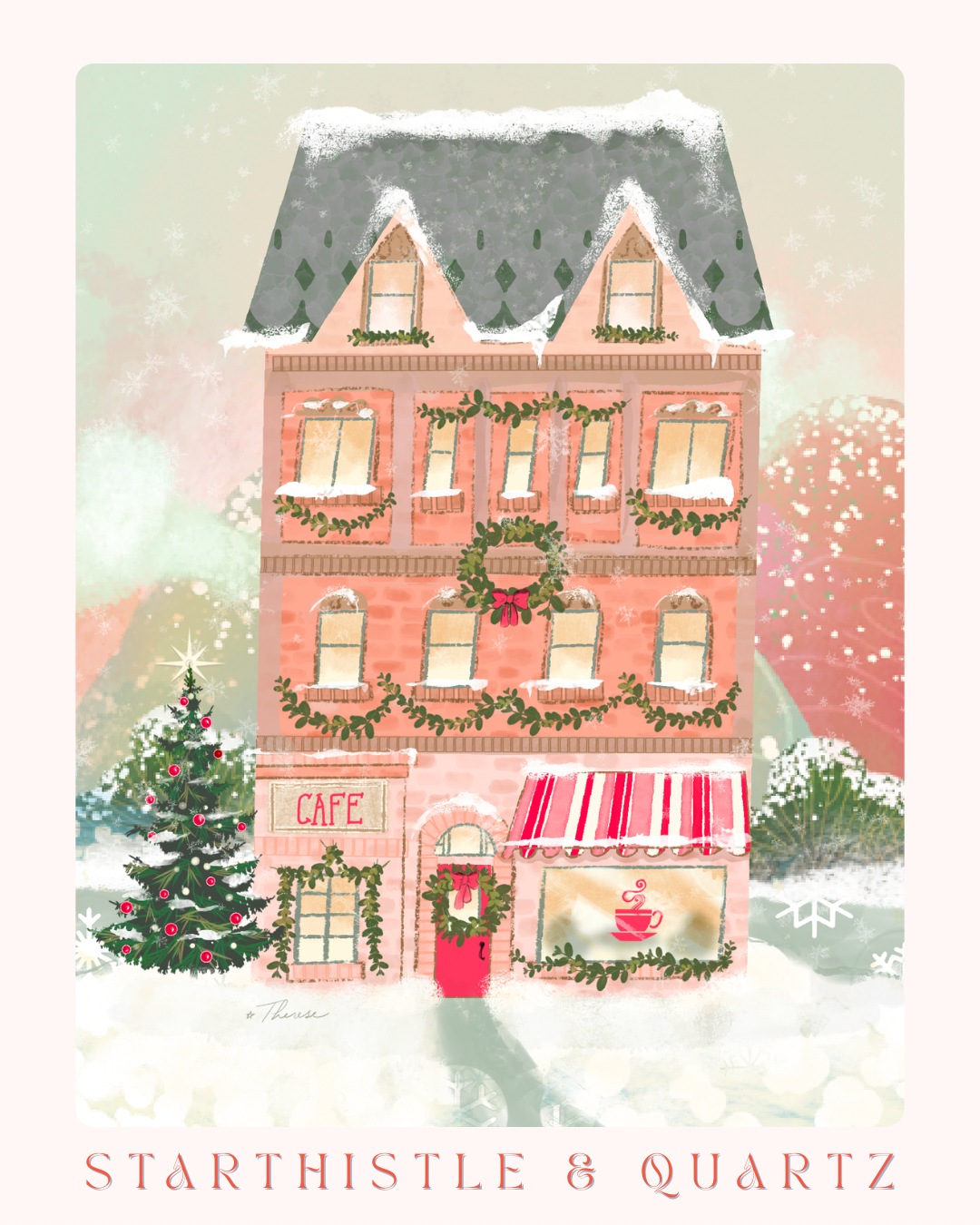
“Cocoa Cafe” by Therese Tucker for #tinseltown2025 challenge.
There’s a quiet revolution that happens when an artist shifts from asking, “Am I good enough?” to asking, “How can I grow from this?” That’s the difference a growth mindset can make. In this post, I want to share what this shift looks like in real time: the messy, hopeful, vulnerable truth about creating art when your inner critic is loud, your skills are evolving, and your dreams are huge.
Whether you're in a season of expansion or frustration, I hope these thoughts will help you reconnect to your creative path and keep walking it with love.
1. What a Growth Mindset Looks Like in Real Life
For me, a growth mindset as an artist means deeply believing that my skills, talents, and voice aren’t fixed. They’re alive and expanding with every brushstroke, sketch, or creative decision I make.
Even when a piece doesn’t turn out how I hoped, I’ve learned to trust that each session sharpens my hand and my eye, and takes me one step closer to the artist I’m becoming.
2. What It Feels Like When I’m Stuck in a Fixed Mindset
Every time my inner critic flares up, I know I’m brushing up against a fixed mindset. It’s that harsh, “reasonable-sounding” voice that tells me my work isn’t good enough, or that someone else’s style or polish means I should just quit trying.
Recently, while working on the #TinselTown2025 challenge, a cozy Christmas village illustration series, my self-doubt came in fast. I love this style of work, but I don’t feel confident in it yet, and my inner critic had a lot to say about how “wrong” it all looked.
Fixed mindset thinking makes you feel like you’re trapped in a box, with only one “right” way to make art. And that’s a lie.
3. How I Shift Back into Growth Mode
When I catch myself spiraling, I remind myself: This is just one piece. It’s not the defining moment of my career. It’s one brushstroke in a much bigger picture.
I also work with my nervous system with a few deep breaths, a body shake, a little movement to get my energy flowing again. I remind myself that moving the body helps move the mind.
Growth lives in motion, not perfection.
4. A Trick That Helps Me Regain Perspective
When things start feeling visually or emotionally “off,” I give myself permission to walk away. Distance softens the critical voice and resets your eyes.
Sometimes, I even invert my body by hanging my head over the edge of the bed upside down or do a stretch to literally shift my view. It sounds simple, but changing how you look at your work helps you feel differently about it too.
5. To the Artist Who’s Feeling Behind…
Have compassion for yourself. You feel this way because you care deeply. That’s a beautiful thing.
If your vision feels far away, know that most dreams are made up of tiny steps, not giant leaps. There are days when I can only sketch for 5 minutes. But that 5 minutes helps me feel my momentum.
If I showed up today, then I’m closer to my dream than I was yesterday. And so are you.
6. Want Support for Your Creative Growth?
If this post resonated, you might love some of the spaces I’ve created to support other sensitive creatives:
🎨 Follow my journey on Patreon — See my collections unfold, get exclusive access to stickers, postcards, behind-the-scenes process, and more.
🌠 Try the free Dream Lab — My guided tool to help you clarify your soul-aligned “North Star” so you can turn big dreams into grounded direction.
🌙 Join the Epic Year Workshop — This workshop turns your soul-aligned dream into a 12-month creative strategy rooted in nervous system alignment, numerology + your progressed moon.
Final Thoughts
You don’t need to be perfect to be powerful. You don’t need to be the most polished to be on your path. You just need to keep showing up.
If you’ve been looking for a sign to keep going — this is it.
Why I Believe My Art Has a Soul Mission
Some art is made to impress. Some to provoke.
Mine is here to connect souls.
For years now, I’ve been aware that my art has a deeper purpose. Not every piece starts with a grand spiritual idea—in fact, many of them begin with a simple sketch, a playful moment, or a color I can’t stop thinking about. But time and time again, when a piece makes its way out into the world, I end up having an experience that reminds me: this art is a vessel for something much bigger than me.
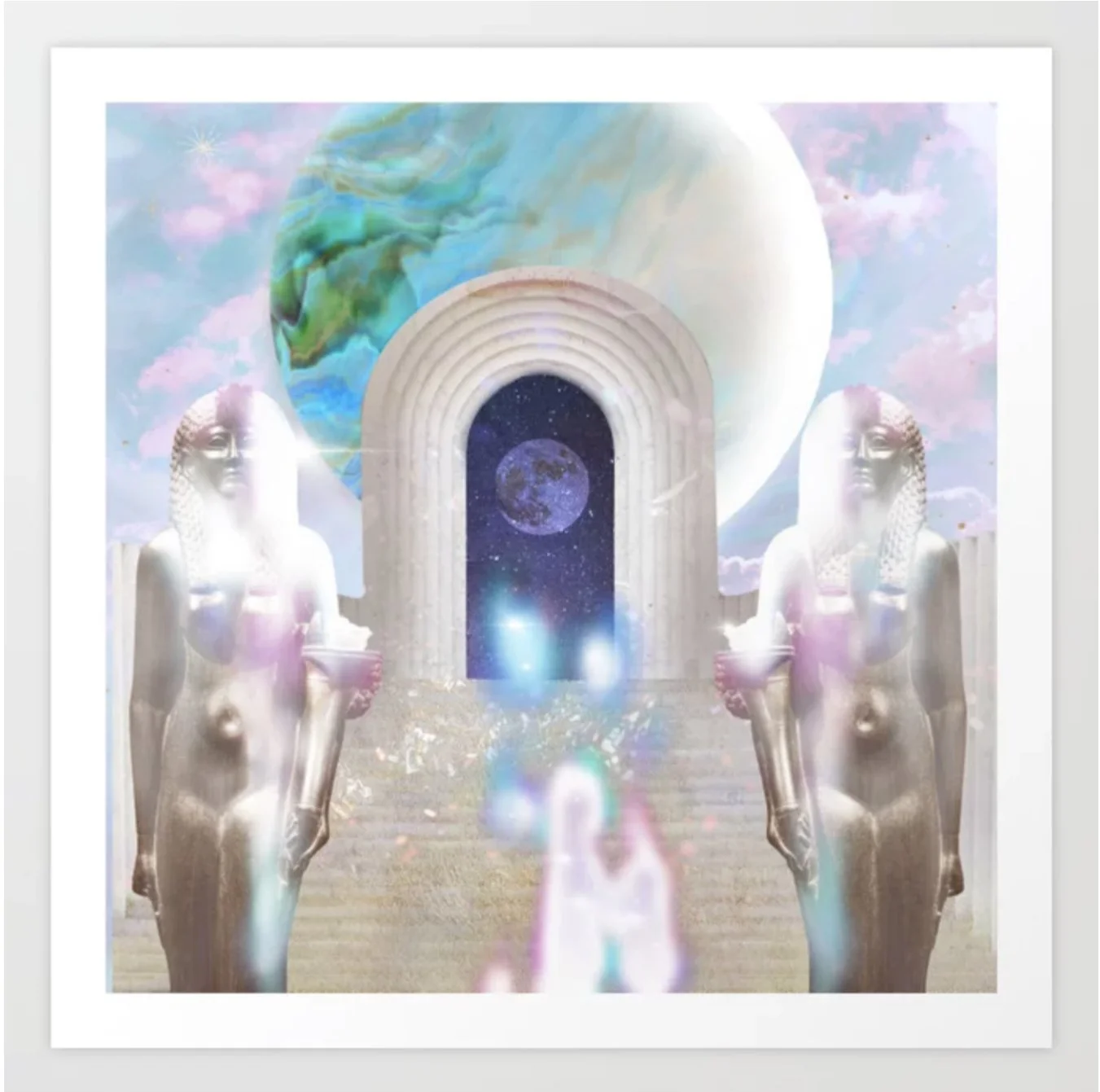
“Ascension to New Earth” fly Therese Tucker rom my 2020 Ascension Collection.
Some art is made to impress. Some to provoke.
Mine is here to connect souls.
For years now, I’ve been aware that my art has a deeper purpose. Not every piece starts with a grand spiritual idea, in fact, many of them begin with a simple sketch, a playful moment, or a color I can’t stop thinking about. But time and time again, when a piece makes its way out into the world, I end up having an experience that reminds me: this art is a vessel for something much bigger than me.
One of the most vivid examples of this was back in 2013, when I released a collection called Oceana. Every painting in that collection carried a channeled message, hidden in a sealed envelope, meant only for the person who would one day own the piece. Those messages weren’t written with marketing in mind. They were direct transmissions from Source energy, and the people who received them were deeply moved. Some said they felt like soul family had spoken directly to them through the painting.
That’s when I really understood:
my art is a bridge between the physical and non-physical.
A portal for remembering. A tool for reawakening something sacred.
What My Art Is Really Here to Do
I believe the deeper mission of my art is to create connection between the viewer and their higher self, between this world and the unseen world, between us and the soul family we may not even know we’re missing.
Sometimes the pieces carry soothing energy.
Sometimes they spark contemplation.
Sometimes they feel like a transmission or a quiet download from beyond the veil.
Whatever the reaction, I hope people feel a sense of grounding, beauty, and divine presence through what I make. Even if I’m just painting a fox or an otter, my hope is that it acts like a tuning fork, helping the viewer shift into a slightly higher frequency.
I Am Not the Source of My Art—I Am the Channel
My process is deeply intuitive. I often feel like I’m just the brush being held by something greater. Characters arrive in dreams. Composition ideas download in meditation. Sometimes I even receive step-by-step tutorials in my dream state, and once, I asked my higher self to rewind and slow down the dream so I could follow along—and it worked.
This co-creative experience is something I trust implicitly now. Even when I don’t understand why I’m painting what I’m painting, I’ve come to learn that it always finds its right home, with the right message, for the right person.
What Others Reflect Back to Me
One of the most beautiful parts of sharing my art is hearing what people see or feel when they experience it. Sometimes they’ll tell me that the colors I used hold spiritual significance for them. Other times, they’ll tell me the piece reminded them of a dream they had or a loved one who passed.
That kind of resonance isn’t logical. It’s energetic.
It’s proof that art can hold frequency.
What Art Has Given Me
For me, art has always been a sacred self-regulating tool. When I make art, it feels like a brain massage and a way to soothe my nervous system, calm the inner critic, and reconnect with what matters most. It’s helped me process grief. It’s helped me feel joy when I thought I had forgotten how.
Art is where my spirit and body come back into alignment.
The Characters That Are Finding Me
Lately, I’ve been drawn to woodland animals as well cats, otters, swans and I know I’m on the edge of discovering a whole new mythical world through them. I don’t think I’m meant to draw creatures that already exist in mythology. I think I’m here to channel new ones. Creatures that feel ancient and familiar, but entirely my own.
That world is starting to populate in the background. I can feel it. It’s coming.
I Believe We Are All Creator Beings
We were made in the image of Source… not just physically, but energetically. That means we were born to create. Whether we make art, gardens, music, meals, or homes, we are vessels for divine expression.
When I remind myself that I am a channel, not the source, I relax. I let go of ego and fear. I open. And from that place, the most meaningful work flows through.
How I Support Other Artists & Dreamers
If you’re reading this and you feel like you have a big dream but can’t quite reach it, or if you feel like something sacred is trying to express through you, but you’re not sure how to begin, I want to invite you into the spaces I’ve created for that exact purpose:
💫 The Starlight Dream Lab — A free tool to help you distill your big soul-aligned dream and receive your North Star.
🪐 Patreon — Follow along with my art journey in real time. See how my mythical world takes shape, and get early access to exclusive prints, stickers, and behind-the-scenes shares.
🌟 Epic Year Express — A self-paced version of my Epic Year Workshop, helping you turn your soul-aligned dream into a practical, step-by-step strategy rooted in your personal frequency.
Final Thought: If You Feel It, It’s Already Real
If you’re an artist, or a creative of any kind, and you’ve ever felt like your work might have a mission, I want to say this to you:
If you can feel it… it’s real.
If you’ve seen it in your mind… it’s meant for you.
If you’re doubting it, it means you care deeply.
And if you need support? I’m here.
Let’s build soul-led dreams together.
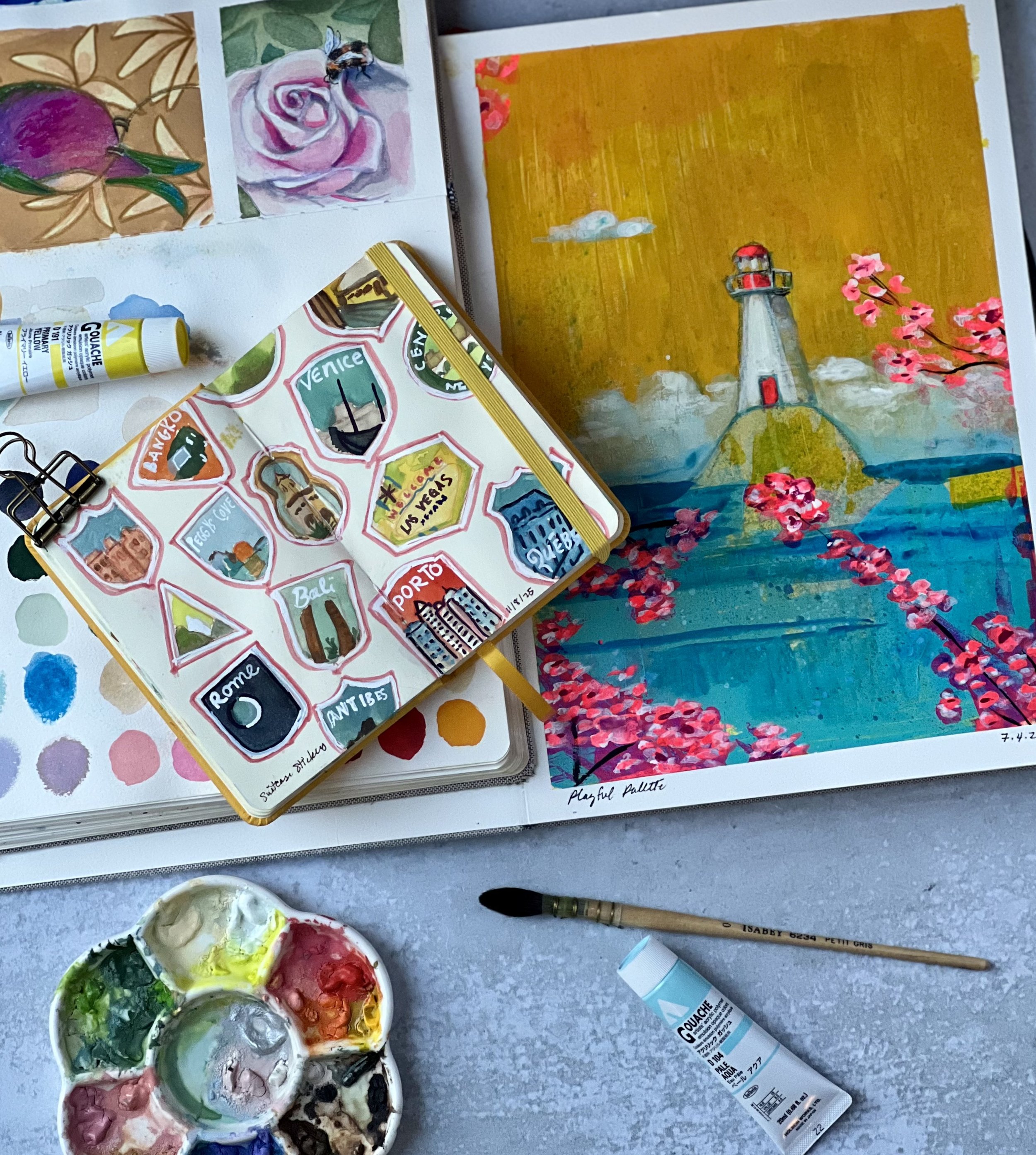
When Self-Doubt Creeps In: What I’m Learning as an Artist in Progress
Every artist I know, no matter how accomplished or confident they may appear, wrestles with self-doubt from time to time. I’m in one of those moments right now.
And I want to talk about it—not because I need advice or rescue, but because I think it’s important that we normalize what it’s like to be a sensitive creative in the middle of the becoming.
My Tiny Sketchbook of Rage and my studio assistant, Mia (the spicy meatball).
Every artist I know, no matter how accomplished or confident they may appear, wrestles with self-doubt from time to time. I’m in one of those moments right now.
And I want to talk about it—not because I need advice or rescue, but because I think it’s important that we normalize what it’s like to be a sensitive creative in the middle of the becoming.
The Voice of Doubt
My self-doubt doesn’t shout. It’s not dramatic. It’s quiet, calculated, and uncomfortably reasonable. It says things like:
“Your work doesn’t look like it’s getting better. How will this ever become something someone would license?”
“Wow, Artist X has such great command of color, composition, and line. Yours looks muddy and clumsy in comparison.”
It always sounds so factual. So educated. Like it’s simply stating the truth—and that’s the part that stings.
But I’m learning to pause and notice that voice. I’m learning to respond rather than react. Because what I’ve discovered is that self-doubt is just a thought. It’s not the truth.
The Illusion of “Not Ready Yet”
My self-doubt tells me that it’s trying to protect me. It wants me to be “ready” before I put my work out there. It wants me to hit some invisible benchmark—some vague, undefined version of perfection—before I take up space.
But here’s the truth: I’ve been making art my whole life. I didn’t wait for someone to give me permission. I didn’t wait for an art degree. I chose to learn. I’ve committed to growth. I show up for this work, and I take it seriously. That’s what makes me a professional artist—not some imaginary milestone of mastery.
The Comparison Trap
I sometimes find myself scrolling and thinking:
“I’m so far behind. I didn’t go to art school. I haven’t studied like they have. There’s so much I don’t know.”
But then I remember: we don’t all arrive at the same destination through the same doorway. Some of us are walking sideways. Some of us are climbing in through windows. That doesn’t mean we’re behind—it just means we’re taking the scenic route.
And honestly? The scenic route has a better view.
The Practice That’s Helping Me Right Now
Every night, I’m doing quick studies in what I lovingly call my “Sketchbook of Rage.” It’s tiny. The paper is thin. The format annoys me. I bought it on purpose to break perfectionism’s grip. It’s a space where bad art is allowed—expected, even.
The irony? Some of the sketches I’ve made in that sketchbook are the most cohesive and charming work I’ve done in a while. It’s proof that when we take the pressure off, creativity can surprise us.
This blog has also become a place where I sort myself out. Writing these thoughts down—seeing them in black and white—helps me realize that most of my doubts are just ideas I don’t even believe in. They’re like steam. Once they’re released, the pressure dissolves.
If You’re In This Too
If you’re feeling lost or unsure or behind, I just want to say: I see you. I’d give you a big hug if I could. These thoughts don’t mean you’re failing. They mean you care. They mean your inner artist wants more from you, and is maybe afraid it’s not possible.
But I promise you: you’re not behind. You’re in process.
Speak the doubt out loud. Let it show you where you’re hungry for validation, support, or more self-trust. Then get back into the studio. Make something messy. Make something strange. Make something anyway.
Because the only thing between here and the artist you want to become… is not giving up.
Want to Follow My Creative Journey?
Here are a few ways to stay connected:
🌟 Join me on Patreon – see my work unfold in real time, vote on upcoming rewards, and support the long-term vision.
🎨 Download the Art + Soul Journal – 365 days of prompts to help you get out of your head and back into your art.
🌀 Get the Dream Distiller – a free tool I created to help you uncover your North Star, from the inside out.
💌 Say hi on Instagram – I’d love to hear if this post resonated with you.

Dreaming While Creating: How I’m Grounding My Art Practice in Big Vision Season
As I prepare to host the Epic Year Workshop inside my other business, Blythe Starlight, I’ve been reflecting on how much energy it takes to hold a big dream while also staying present in my art.
I turned some quick ice sketches into this quick digital piece recently.
As I prepare to host the Epic Year Workshop inside my other business, Blythe Starlight, I’ve been reflecting on how much energy it takes to hold a big dream while also staying present in my art.
Big dreams stretch you. They ask more from you. And yet, this season, I’ve found ways to stay grounded even while navigating behind-the-scenes projects, emotional ebbs and flows, and the natural tension of expansion.
I wanted to share a few of those ways with you today because maybe you’re also trying to hold a big vision while tending your art and your sensitive, creative soul.
1. Letting Practice Be Simple—But Consistent
Right now, I’m sketching every night. Nothing fancy or precious, just showing up. I’m using a tiny sketchbook I call my “Sketchbook of Rage” because of how annoying its shape and paper are. That’s the point. It forces me to let go of perfectionism and just draw quickly, freely, and repetitively.
I’m using a set color palette and experimenting with turning quick sketches into digital versions, trying to bridge the gap between my traditional and digital style. Some of it works. Some of it doesn’t. But it’s moving me forward, which matters more than perfect results.
2. Dreaming Into the Future (With a Plan I Can Feel)
I’ve also selected my Big Dream Statement for 2026 using the Starlight Dream Lab, a free tool that helps you find your North Star by working with your nervous system, symbols, and body-based knowing.
Instead of starting with strategy, it starts with how you want to feel. Then we anchor that feeling into a future memory that you can recall right away to reconnect to your expansion and purpose. This process gave me a vision that still lights me up every time I think about it.
And that’s the energy I’m bringing into the Epic Year Workshop (read more about that here) where we turn that soul vision into a personalized, practical strategy.
3. Gentle Reminder: Creatives Need a New Kind of Strategy
If you’re a sensitive creative like me, chances are you’ve struggled to turn your dreams into steps. Traditional strategy can feel too rigid or overly masculine. That’s why I designed The Epic Year: to guide intuitive dreamers in building a plan that’s soul-aligned, cyclical, and actually exciting to follow.
Because dreaming doesn’t stop when you start creating. It evolves. And the more grounded you feel, the more powerful your work becomes.
Want to Join Me?
✨ If you’re curious about your own North Star and want a gentle tool to explore it, download the Starlight Dream Lab here (it’s free.)
🎨 Want to watch how my Big Dream unfolds through art? Follow me over on Patreon where I share behind-the-scenes sketches, polls, rewards, and process.
🌠 And if you’re ready to map your own creative dream with a somatic, strategic container join me for the Epic Year 2026 Workshop. We start soon.

The Stories Inside the Frame
If you've been following me on Instagram, you may have seen my recent pieces for the #scaryandsweet2025 art challenge. What started as a fun, seasonal prompt list has unexpectedly turned into something more—a themed collection, rich with character, storytelling, and creative healing.

How an Instagram challenge sparked a collection—and helped me through a tough week
If you've been following me on Instagram, you may have seen my recent pieces for the #scaryandsweet2025 art challenge. What started as a fun, seasonal prompt list has unexpectedly turned into something more—a themed collection, rich with character, storytelling, and creative healing.
Initially, I didn’t plan for a collection to emerge. In fact, after my second prompt felt like a total flop, I went back and redid it in the same style as the first: a single framed character set against wallpaper. That was the “click.” Something about that format—one central figure, a bold Victorian frame, a background that hints at time and place—allowed my imagination to stretch.
Each new piece follows this structure:
🎨 The same vibrant Halloween color palette
🖼️ A recurring oval frame on wallpaper
🧚♀️ One central character with a name and backstory
Some of these stories are personal, like Knives Meow, featuring my own kitten, Mia, proudly baring her tiny claws. Others draw from literature or nostalgia—like Shelly, inspired by the playful ghost my kids and I believe haunts their bedroom Yoto speaker. (Is it really a ghost? I’ll never tell.)
Right now, I’m working on a piece called Periwinkle and Poison, loosely based on Tribulation Periwinkle, a Civil War nurse from Louisa May Alcott’s Hospital Sketches. She’s taking on an eerie, spectral quality reminiscent of Disneyland’s Haunted Mansion bride, and I can’t wait to see her come to life.

Periwinkle & Poison
My quick sketches of my next prompt.
But here's the deeper truth: creating this collection has helped me stay grounded through some hard emotional territory I’m navigating personally. Art doesn’t fix everything, but it gives me a way to keep hope alive, even when life feels heavy.
This challenge is also stretching my style in new directions. I’m working with a palette that’s brighter than my usual comfort zone, and experimenting with how far I can push the balance between "cute" and "creepy." Some pieces miss the mark (Crab Louie, I'm looking at you), but others, like Inky the Octopus and Shelly, feel like they might be keepers.
What's Next?
💌 If you’d like to follow along and help shape this evolving collection, I’m sharing sketches and voting polls over on Patreon. My patrons will receive two exclusive rewards from this collection—likely a sticker and a postcard featuring the fan favorites.
📸 You can also catch the creative process in real time on Instagram: @starthistle.and.quartz
💬 I’d love to hear from you: which piece from this collection is your favorite? What character would you dream up for a prompt like “Ghosts and Gardens” or “Periwinkle and Poison”?
Want to join the challenge?
The #scaryandsweet2025 challenge is hosted by a wonderfully spooky and sweet group of creatives:
@roymeister
@heathermuellerdesign
@heyalissandra
@jenprocreates
@jessmillerdraws

5 Things Keeping Me Creatively Grounded Right Now
Lately, I’ve been holding a lot—artistically, emotionally, and energetically. With big creative goals, active art challenges, a coaching practice, and my daily life in full swing, I’ve realized how important it is to have grounding practices that keep me connected to the joy and purpose of creating.
These aren’t complicated or “productivity hacks.” They’re small, soulful things that bring me back to center—and I want to share them in case you need that too.
“Love Potion” by Therese Tucker.
Lately, I’ve been holding a lot—artistically, emotionally, and energetically. With big creative goals, active art challenges, a coaching practice, and my daily life in full swing, I’ve realized how important it is to have grounding practices that keep me connected to the joy and purpose of creating.
These aren’t complicated or “productivity hacks.” They’re small, soulful things that bring me back to center—and I want to share them in case you need that too.
1. A Warm Mug While I Work
Whether it’s a favorite tea blend or my evening magnesium hot chocolate, having a cozy, comforting drink by my side while I work makes the whole experience feel more intentional. It’s a small ritual, but it turns my art practice into a moment I look forward to.
2. Mantras That Unlock Flow
When I’m feeling uncertain or overwhelmed, I remind myself:
“I can do this.”
That simple phrase helps soften my shoulders, unlock my wrists, and let me drop back into flow. It pulls me out of worrying about outcomes and into enjoying the process.
3. Artist Challenges & Creative Kinship
Participating in artist challenges—like the #scaryandsweet2025 challenge—has been such a grounding force. Seeing how other artists interpret the same prompt reminds me we’re all connected, and it makes creating feel like a conversation instead of a solo act. It's also where I've been sharing and developing a new collection—surprising even myself!
4. Letting Color Lead
Color is always the first place I start. When I lock in a palette—whether it’s deep Prussian blue, warm vermilions, or glowing golds—I feel lit up and excited to keep going. I often joke it’s like eating the frosting before the cake, and honestly? It is.
5. Visioning Instead of Rushing
I’ve started journaling more intentionally—not just to log my days, but to listen. To ask questions like:
– What kind of art do I want to make?
– What am I trying to say with my work?
– What would it feel like to create from a deep sense of purpose?
Right now, I feel like I’m holding a world in my hands—something not fully formed, but alive. It’s not just a collection. It’s a world that wants to come through. And I’m learning to treat that world gently... like a cat that might jump into your lap if you give it space and time.
You’re Not Behind, You’re Becoming
If you’re also in the middle of something—if you’re trying to make sense of your art, or your purpose, or the direction that calls you—this is your reminder that it’s okay not to have all the answers yet.
The knowing will come.
The art will come.
Your direction will reveal itself in its own rhythm.
💌 Come Along For the Journey
I’m sharing my creative evolution—my collections in progress, sketchbook flips, challenges, and monthly art rewards—on Patreon. I’d love for you to join me there if you want a closer look behind the scenes. 💖
And if you’re seeking daily inspiration, you can always download my Art + Soul Journal—a year-long prompt guide for connecting more deeply to your creative self.

When the Collection Finds You
Every October, the art world lights up with prompt challenges. From #Inktober to #Peachtober to smaller niche lists, the community energy is high—and this year, I joined the #ScaryandSweet2025 challenge on Instagram (hosted by @roymeister, @heathermuellerdesign, @heyalissandra, @jenprocreates, and @jessmillerdraws). I entered with one small intention: use a single color palette for the month.
Meet “Knives Meow” from my Scary + Sweet Collection.
Reflections on unexpected inspiration, “ugly” sketchbooks, and letting the art take the lead
Every October, the art world lights up with prompt challenges. From #Inktober to #Peachtober to smaller niche lists, the community energy is high—and this year, I joined the #ScaryandSweet2025 challenge on Instagram (hosted by @roymeister, @heathermuellerdesign, @heyalissandra, @jenprocreates, and @jessmillerdraws). I entered with one small intention: use a single color palette for the month.
That’s it. No plan, no vision, just show up and make art.
And then… something happened.
After creating my first prompt piece ("sweet + sharp"—a kitten baring its claws, framed in Victorian wallpaper), I took a totally different approach with my second. It fell flat. It didn’t feel like me. So I reworked it using the same structure as the first—and suddenly, something clicked.
A collection had quietly started forming without my permission.


Every piece since then has followed the same loose format: a wallpapered background, a central frame, and a character. Each one rooted in the theme of the prompt, but shaped more by feeling than logic. I’m not even usually drawn to spooky or Halloween-inspired art, but working with these themes has given me more creative freedom than I expected. I’m chasing texture. I’m sketching in a deliberately “ugly” sketchbook. I’m letting go.
And more than anything—I’m letting the art tell me what it wants to become.
Growing Out Loud
There’s something awkward about evolving your style in public. I look back on old work and sometimes feel disconnected. Some pieces still feel true. Others feel like echoes of another artist—or like I was just following a tutorial. There’s pride, sure, but there’s also cringey vulnerability.
Still—I’m glad I kept sharing.
I believe art that truly moves people doesn’t come from strategy. It comes from surrender. From being the channel. When you let go of the outcome and simply prepare the space—your art will meet you there.
💌 Want to See the Collection?
You can view the first 5 pieces of this evolving series over on Instagram at @starthistle.and.quartz. Want to help me vote on which piece becomes the October Patreon reward? Come join me on Patreon where this collection is unfolding in real time—postcards, stickers, and behind-the-scenes process videos included.

Finding My Art Niche: What If the Clarity Comes After the Choice?
For years, I’ve heard that in order to grow an audience and connect with collectors, clients, or art lovers, you have to niche down. Choose your palette. Choose your subject. Pick a medium. Make your path clear and consistent.
But here’s the thing no one talks about: what if you can feel the direction of your niche in your bones but can’t quite see the art that lives inside it yet?
“Tide Pool” by Therese Tucker
For years, I’ve heard that in order to grow an audience and connect with collectors, clients, or art lovers, you have to niche down. Choose your palette. Choose your subject. Pick a medium. Make your path clear and consistent.
But here’s the thing no one talks about: what if you can feel the direction of your niche in your bones but can’t quite see the art that lives inside it yet?
That’s where I am now.
My Niche Has a Shape—But Not a Face (Yet)
When I think of niching, I don’t just imagine a subject matter—I imagine a set of creative tools, a way of working, a tone of voice. Something like:
Children’s books with mythical, woodland characters in earthy tones mixed with brights—painted in gouache, neo color and ink, with organic shapes and varied line weights.
It’s close. I feel it. But then, the resistance kicks in.
Because... what if I make the wrong choice?
What if I get bored and abandon it later?
What if the characters I think I want to draw never actually arrive?
Overthinking is the Vortex, Not the Solution
I’ve done the research. I’ve studied my own portfolio. I’ve reflected on what mediums bring me joy. I’ve run pieces through both handmade and digital to see what matches my soul. I even turned to my AI collaborator for feedback.
But what I’ve realized is this: you cannot think your way into a niche.
You can only live your way into it.
So what do I do now?
I write.
I sketch.
I make the next piece.
Instead of waiting for the full cast of characters to arrive, I’m starting a journal. I’ll write down what I know: the setting, the mood, the tone. Maybe the characters will walk in through the side door once I stop demanding they show up on command.
And you know what? I’m inviting you to come with me as this niche unfolds.

“Witch’s Book Shop” pattern
These recent pieces are all part of different art challenges I have joined in October.
✨ Follow the Evolution in Real Time on Patreon
If you’re curious to see how this creative direction takes shape—what pieces get made, what sketches evolve into stories, and how style and subject continue to merge—you’ll find all of that over on my Patreon.
It’s where I share my works in progress, behind-the-scenes thoughts, sketchbook pages, and early releases of collections and illustrations. I’d love to have you there.
Because the truth is, the niche is finding me, too.
✨ Want to follow the story as it’s written?
Come join me on Patreon to watch my niche take shape in real time.