
How to Find Your Art Style When You Like Too Many Things
If you’ve ever thought, “I like too many things, I’ll never find my art style,” I want you to take a breath right now.
Because what if the problem isn’t that you like too many things…
What if the problem is that you’ve been taught the wrong order?
For a long time, I believed I needed to figure out my style first before I could put myself out into the world as an artist. Before I could show my work. Before I could pursue licensing, illustration, or meaningful opportunities.
And without realizing it, finding my style became a barrier between me and actually doing the work.
That belief quietly feeds perfectionism.
It delays momentum.
And it keeps artists endlessly “preparing” instead of participating.
If that sounds familiar, this post is for you.
(And Why Liking Many Things Is Not the Problem)

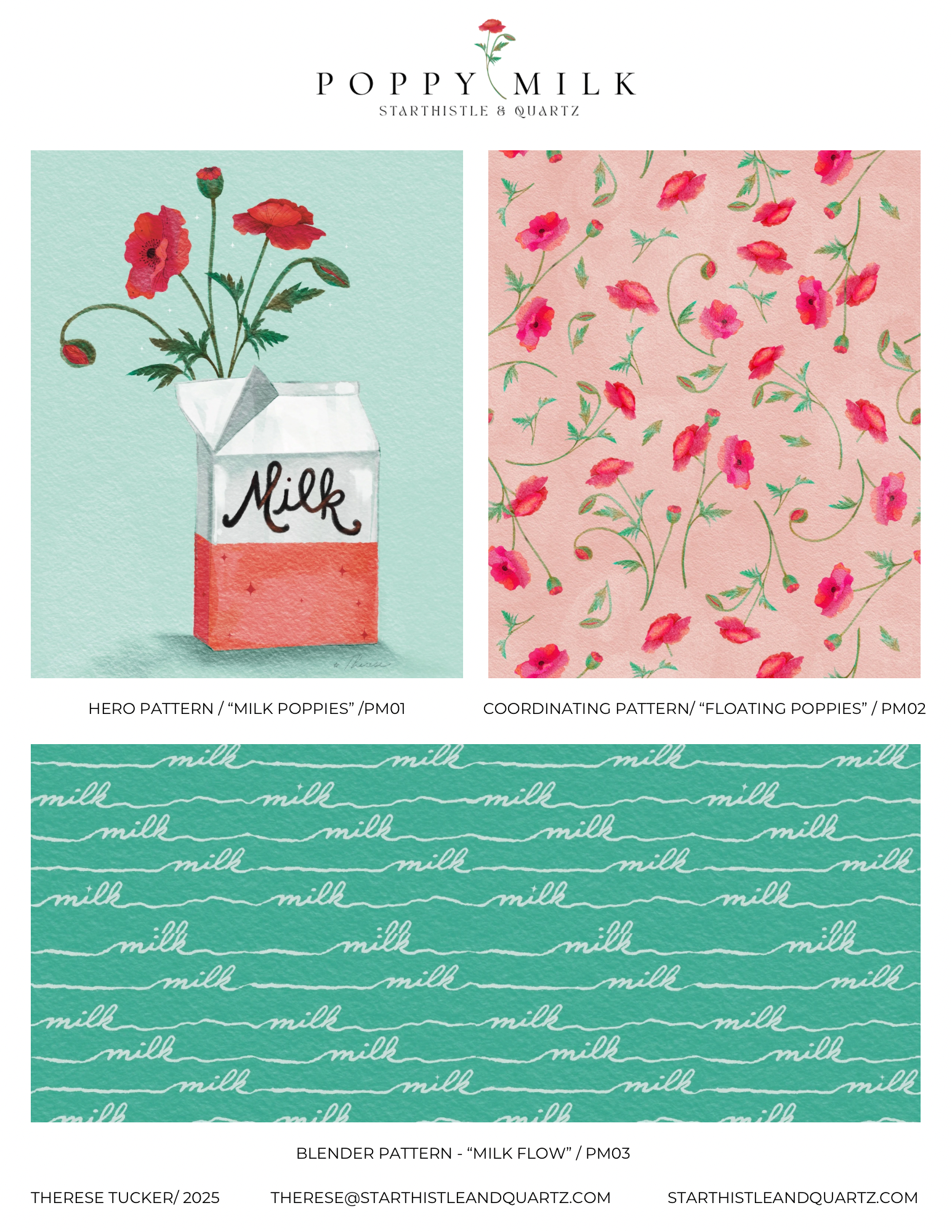
My “Poppy Milk” mini collection from 2025
If you’ve ever thought, “I like too many things , I guess I’ll never find my art style,” I want you to take a breath right now.
Because what if the problem isn’t that you like too many things…
What if the problem is that you’ve been taught the wrong order?
For a long time, I believed I needed to figure out my style first before I could put myself out into the world as an artist. Before I could show my work. Before I could pursue licensing, illustration, or meaningful opportunities.
And without realizing it, finding my style became a barrier between me and actually doing the work.
That belief quietly feeds perfectionism.
It delays momentum.
And it keeps artists endlessly “preparing” instead of participating.
If that sounds familiar, this post is for you.
When “Finding Your Style” Becomes a Trap
Here’s something I don’t hear talked about enough:
A huge part of discovering your style doesn’t happen in private.
It happens after you put your work out into the world.
It happens when:
You notice which pieces people respond to (and which they don’t)
You feel into what doesn’t feel aligned anymore
You receive feedback, even neutral or confusing feedback
You realize what’s missing from your portfolio
You see patterns in what you keep returning to
You can’t get that information by waiting until everything feels perfect.
And yet, many artists treat style like a gatekeeper:
“Once I figure this out, then I’ll be ready.”
In my experience, it’s the opposite.
Readiness comes from repetition, exposure, and choice, not certainty.
Liking Many Things Doesn’t Mean You’re Unfocused
For a long time, I interpreted my wide range of interests as a flaw.
I love:
Gouache and mixed media
Digital illustration and surface design
Animals, women, florals
Mythical, whimsical, storybook worlds
Minimal, chic aesthetics and rich, narrative depth
Children’s books and licensing art for everyday objects
At one point, all of that felt like evidence that I lacked direction.
Now I see it differently.
Liking many things usually means:
You have a wide field of vision
You’re sensitive to nuance
You’re capable of world-building, not just one-off images
You’re meant to work relationally, not narrowly
It doesn’t mean you lack direction.
It means you need cohesion, not restriction.
The Shift That Changed Everything: Working in Collections
The biggest breakthrough in my creative process came when I stopped asking:
“What is my style?”
And started asking:
“What story am I telling, and how can these pieces belong together?”
Working in collections changed everything.
Before that, I created mostly one-off pieces:
Intuitive bursts of inspiration
Beautiful moments, but disconnected
Little momentum
No clear throughline for my audience (or myself)
Once I began working in collections, clarity followed naturally.
Not because I forced a style, but because I made consistent choices.
My Current Framework (You Can Borrow This)
Here’s the simple framework I use now:
Theme → Constraints → Story → Exploration
Instead of waiting for inspiration to strike perfectly, I begin with structure that still allows play.
1. Start with a Theme
This might be:
A place (the woods, a village, the night)
A concept (time of day, seasons, mythology)
A feeling (quiet magic, nostalgia, wonder)
Right now, my Patreon collection Moonrise Menagerie is built around woodland settings, mythic animals, and the progression of time across a single day.
2. Add Constraints (This Is Where Style Begins)
Constraints reduce pressure and increase cohesion.
The things I consciously limit:
Color palette (this is always my doorway in)
Location or setting
Tools & materials (very limited brushes or media)
Motifs (animals, flowers, stars, repeated symbols)
Texture & line weight
When you remove infinite options, your preferences start to speak.
3. Let the Story Lead
Instead of asking, “Am I good enough?”
I ask, “What am I trying to give?”
That shift moves the focus:
Away from self-judgment
Toward connection
Toward the viewer’s experience
Story creates momentum. Style follows.
4. Keep Composition Flexible
I intentionally leave room for play.
I might have a loose idea, but I allow:
Accidents
Discoveries
Adjustments mid-process
Some of my strongest moments happen because I didn’t over-plan.
Why This Quietly Teaches You Your Style
Style isn’t a single decision.
It’s the accumulation of small preferences repeated consistently.
Over time, I noticed:
I reach for the same tools because my hand responds well to them
I layer color in a specific order
I return to warmth, softness, and gentle symbolism
Stars, woodland elements, and nurturing tones appear again and again
I didn’t force these choices.
They emerged because I stayed with the work longer.
That’s the real secret.
What Changed Emotionally When I Stopped “Picking the Right Thing”
I became:
More relaxed
More confident
Less afraid of feedback
More willing to share imperfect work
Feedback became a friend, not a threat.
A “no” stopped feeling like rejection and started feeling like information.
And information builds discernment.
If You Love Too Many Things, Try This This Week
Here are a few gentle, practical starting points:
✨ Option 1: Split the Playground
Give each style its own container:
One sketchbook for minimalist/decorative work
One sketchbook for story-driven illustration
Let each space be cohesive on its own.
✨ Option 2: Repeat One Subject Three Times
Draw the same subject:
In three styles
Or with three color palettes
Or using three tools
Notice which version feels the most alive in your body.
✨ Option 3: Stay With One Piece Longer
Instead of starting something new:
Recreate it again
Adjust one variable
Refine, don’t abandon
Repetition builds confidence faster than novelty.
Style Is a Byproduct, Not the Starting Point
If there’s one thing I want you to remember, it’s this:
Style comes from consistent choices made in motion, not from waiting until you feel ready.
You don’t need to choose one love.
You need to choose a container.
And then let your preferences reveal themselves.
Want to Watch This Process Unfold in Real Time?
Inside my Patreon, I’m currently building an ongoing collection called Moonrise Menagerie: a year-long series exploring woodland worlds, mythic animals, and the subtle magic of time passing.
If you join before the end of February, you’ll receive:
The February postcard and/or sticker
Behind-the-scenes process
How I make cohesive choices without forcing style
If you love woods, magic, and watching a world come together piece by piece, you’ll feel right at home.
Building Tinsel Town: How a Christmas Village Helped Me Step into My Style
There’s something magical about creating a world from scratch.
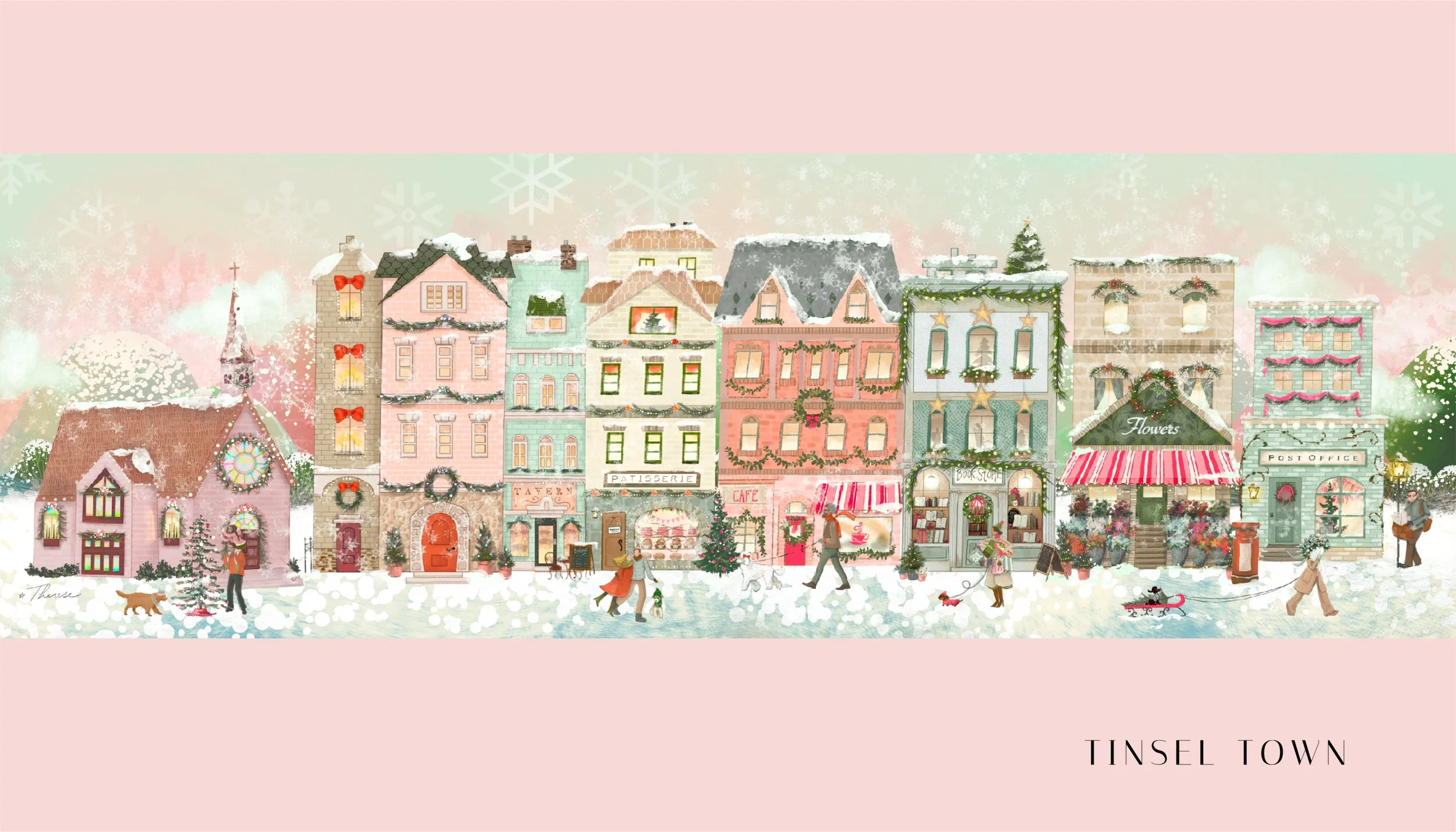
This December, I joined the #TinselTown2025 challenge on Instagram, hosted by a wonderful group of illustrators (listed below), and something clicked. I love drawing and painting brownstones, so the idea of building my own illustrated Christmas village? It was an instant yes.
“Gumdrop Village” by Therese Tucker for the #tinseltown2025 art challenge.
There’s something magical about creating a world from scratch.
This December, I joined the #TinselTown2025 challenge on Instagram, hosted by a wonderful group of illustrators (listed below), and something clicked. I love drawing and painting brownstones, so the idea of building my own illustrated Christmas village? It was an instant yes.
At the start, my only real plan was to fill my village with beautiful brownstones. That was it. No master strategy. Just a desire to follow my joy.
🎨 Inspired by Brooklyn (and a Little Wes Anderson Magic)
My time living near Park Slope in Brooklyn gave me all the nostalgic material I needed: snowy walks with my husband, beautifully lit windows, wreaths on front doors, and the hum of cozy cafes tucked between brownstones. I also pulled color inspiration from The Grand Budapest Hotel (Wes Anderson's genius never fails me). I chose a palette that felt slightly vintage, slightly sweet, and full of charm and I stuck to it all the way through.
Each piece was drawn digitally in Procreate using gouache, ink, and pencil brushes. I gave every building its own personality and a canine companion because every great town deserves dogs. 🐾
📚 My Favorite Building? The Bookstore.
While I loved every part of this piece, the bookstore became my favorite. It was inspired by a real memory — visiting the Barnes & Noble in Union Square ( though this version is purely imagined.) There’s something about the elegant arches, the stone columns, and the woman standing outside holding her packages that feels like me. She’s done shopping... but she’s still looking for the perfect book.
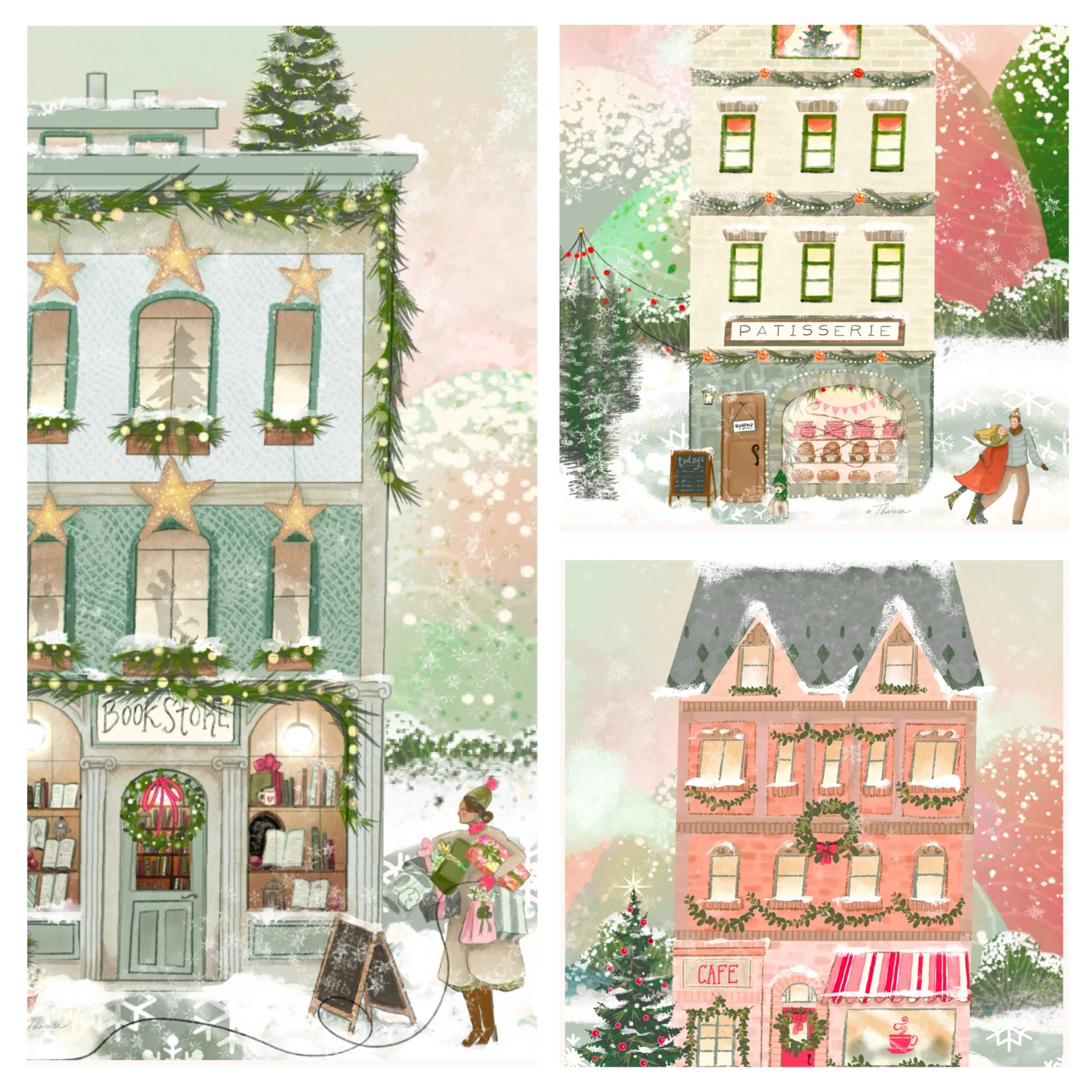
It was hard to choose a favorite…
In the end, the bookstore won my heart from the star ornaments, to the little details of books, pots of ink and presents.
It was little vignettes like that one that ended up surprising me most.
🧠 What I Learned While Building Tinsel Town
I’m better at storytelling than I realized. Creating each building felt like writing a short scene.
My style is getting more cohesive, my linework is more delicate and intentional.
I love working with a limited color palette. It makes decisions easier and results stronger.
I found a workflow that works for me: blocking in shapes before sketching feels natural and satisfying.
I want to start documenting my creative process like a recipe. That’s now on my to-do list.
And even though I didn’t get to paint every building I hoped to (time was tight!), I’m genuinely proud of what came through. Sharing a horizontal panoramic piece on Instagram wasn’t seamless, but the kind response made it all worthwhile.
🧁 What I Hope You Feel When You See Tinsel Town
Whimsical nostalgia. That feeling you get when you watch a Wes Anderson film with everything in its place, gently charming, and a little bit dreamlike.
This village is my love letter to Brooklyn, to winter walks, to festive windows, and to the slow beauty of building something one brick at a time.
🧁 What’s Next + Where to Find More
🎁 Limited Edition Alert!
A print and sticker from my Tinsel Town collection will be available exclusively to my Patreon patrons for December. Join before December 31st and it’s yours too!
🎄 Want to see more of the process?
Follow me on Instagram @starthistle.and.quartz — I shared the buildings in real time over there.
❄️ Special Thanks
A big thank you to the hosts of the #TinselTown2025 challenge for inspiring this magical project:
The Artists Who Shaped My Style
If you look closely at my work, you’ll see a quiet trail leading back to some of the artists who shaped me—both consciously and unconsciously. Their fingerprints are all over my creative instincts, my sense of color, and the way I approach a blank page.

“Frog + Foxglove” by Therese Tucker 2025.
If you look closely at my work, you’ll see a quiet trail leading back to some of the artists who shaped me—both consciously and unconsciously. Their fingerprints are all over my creative instincts, my sense of color, and the way I approach a blank page.
My Early Artistic Influences
Before I ever called myself an artist, I was being shaped by art.
Beatrix Potter was one of my first companions. Her stories and illustrations lived on my porcelain dish set as a child, tucked into bedtime stories, and woven into the fabric of my earliest memories. I engaged with her every single day, and that gentle, English countryside whimsy still lives in my work. I didn’t choose her influence—it chose me.
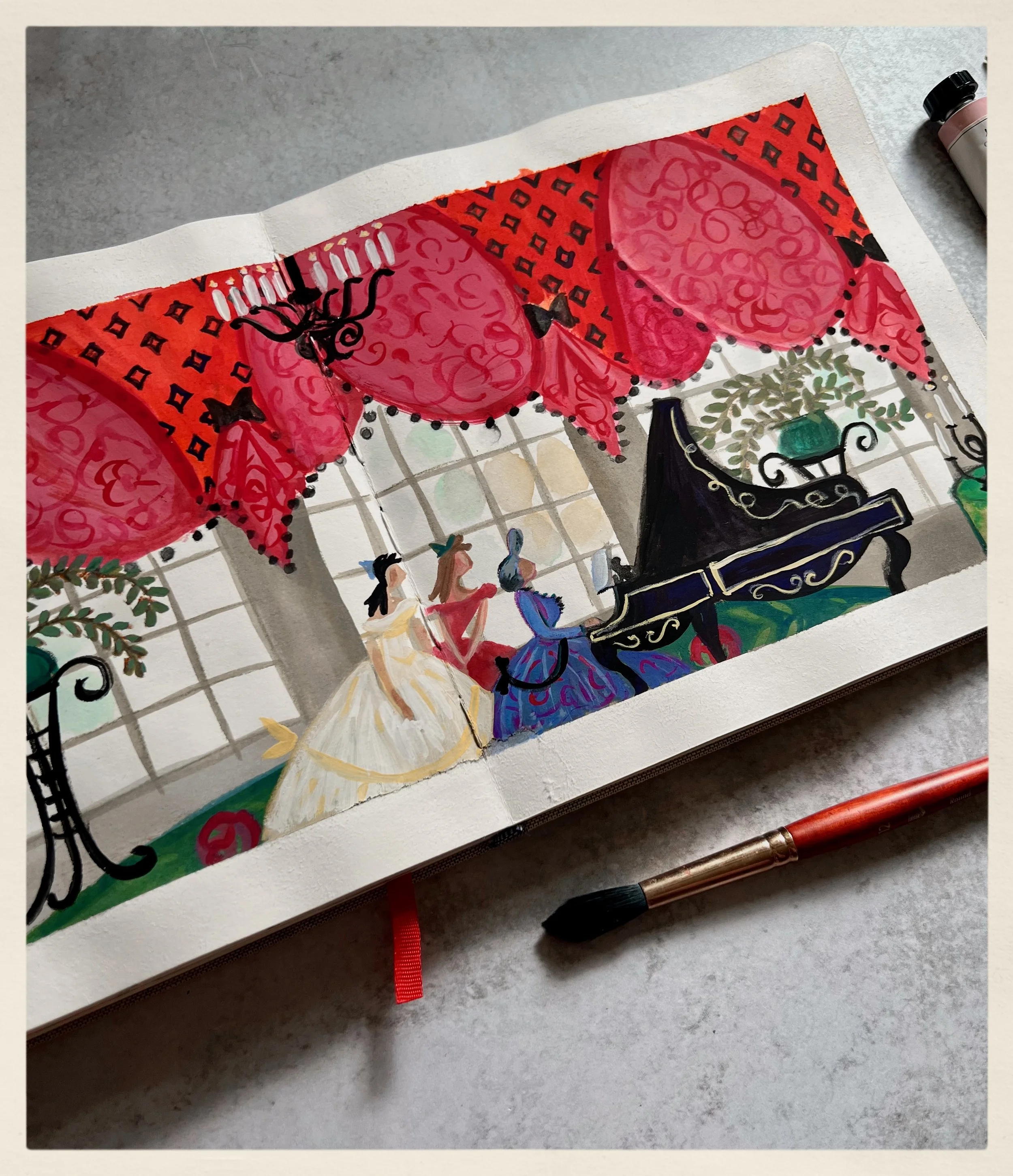
Then came Mary Blair. As a child, I didn’t know her name, but I knew the way Alice in Wonderland and Cinderellamade me feel. Later, I discovered that Mary was the visionary behind those concept sketches—the colors, the odd shapes, the bold whimsy—and I felt like I had found the heartbeat of something I had always known.
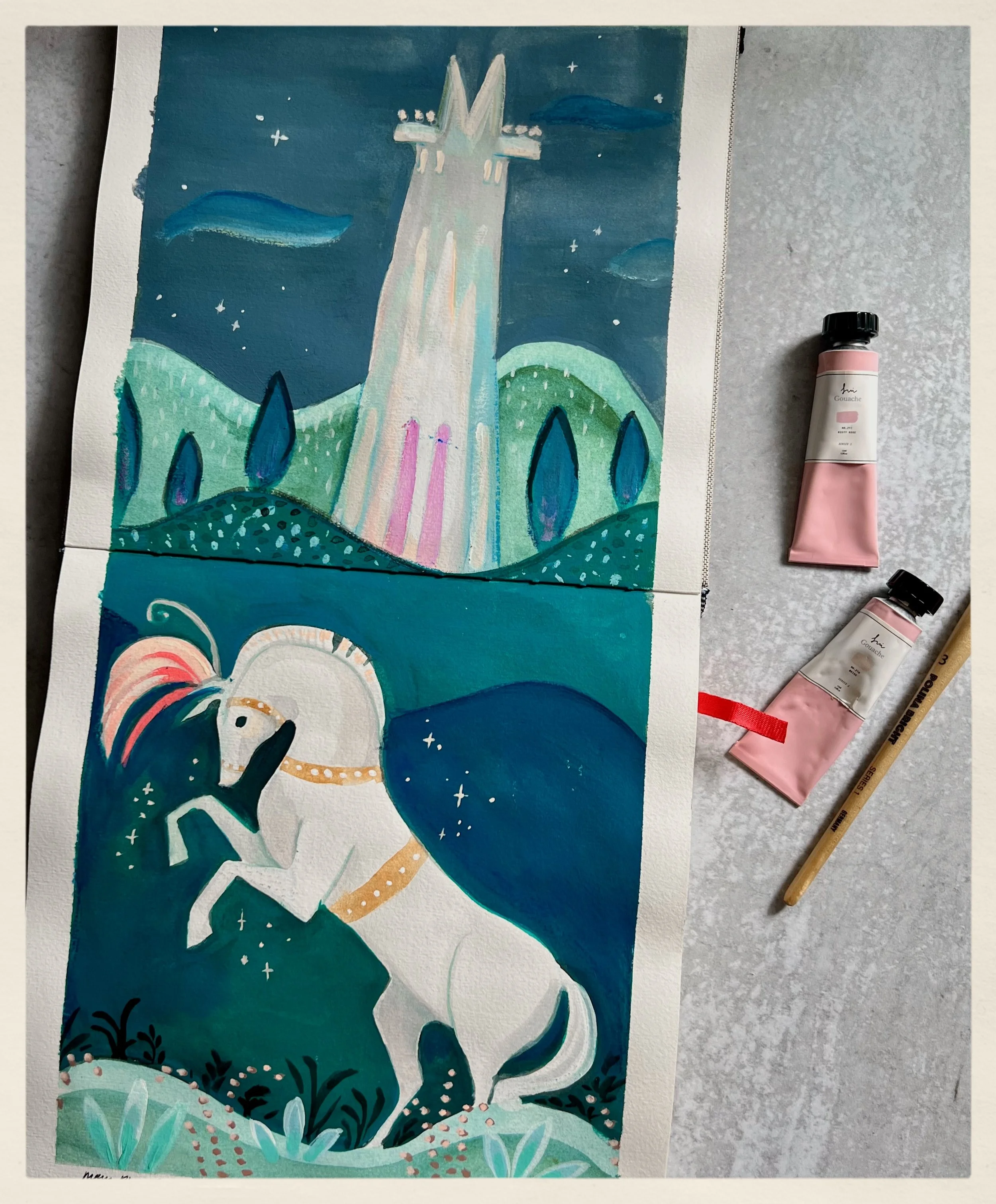

In my teenage years, I discovered Michael Parkes. I bought a poster of his surreal ballerina painting and hung it above my bed. His dreamlike imagery, celestial themes, and graceful women deeply influenced the way I imagined characters and movement. For years, he was the artist I aspired to emulate.
How Their Influence Shows Up in My Work
Today, you might not see them directly in my art—but I do.
From Beatrix, I inherited my love of animals, the woodland world, and a soft touch in my linework. From Mary, the ability to lean into odd color pairings, slightly skewed perspective, and playful storytelling. From Michael, the sense of elegance, flow, and emotion through figure and atmosphere.
Even when I can't see their presence clearly, other people do—especially recently as I’ve been creating work for the #botanicalsandbeasties2025 challenge. Multiple people have noted a vintage Disney quality in my illustrations. That’s Mary, peeking through. And when I’m leaning into tenderness, subtle colors, and soft character design? That’s Beatrix.
Letting Go to Make Space for My Own Voice
As I’ve grown, I’ve also started to notice which influences I’ve let go of. Michael Parkes used to be a main character in my visual world. But over time, I’ve drifted away from surrealism and toward something more grounded, gentle, and romantic. More woodland, less angelic. More storybook, less allegorical.
It’s been important for me to allow my influences to evolve with me. I no longer feel the need to imitate—now, I’m integrating.
What I Hope People Feel in My Work
I don’t necessarily want you to say, “Ah! Mary Blair!” or “This reminds me of Beatrix Potter!” What I hope you feel is a sense of comfort, serenity, and that there’s space for you in my work. I want my art to feel safe and tender—a kind of soft place to land.
I imagine it in children’s rooms, in quiet corners of the home, or gifted to someone who needs something gentle. I hope it inspires without overwhelming.
Want to See My Visual Inspirations?
If you’re curious about what lights me up creatively, you can explore my Mary Blair–inspired Pinterest board here and peek into the worlds that shape my imagination.
And if you want to start a creative practice of your own, check out my Art & Soul Journal, a year-long guide filled with 365 creative prompts to spark your imagination. It’s my gift to you.
➡️ Get the Art & Soul Journal here
🧁 What’s Next?
If this post resonates with you, I’d love for you to:
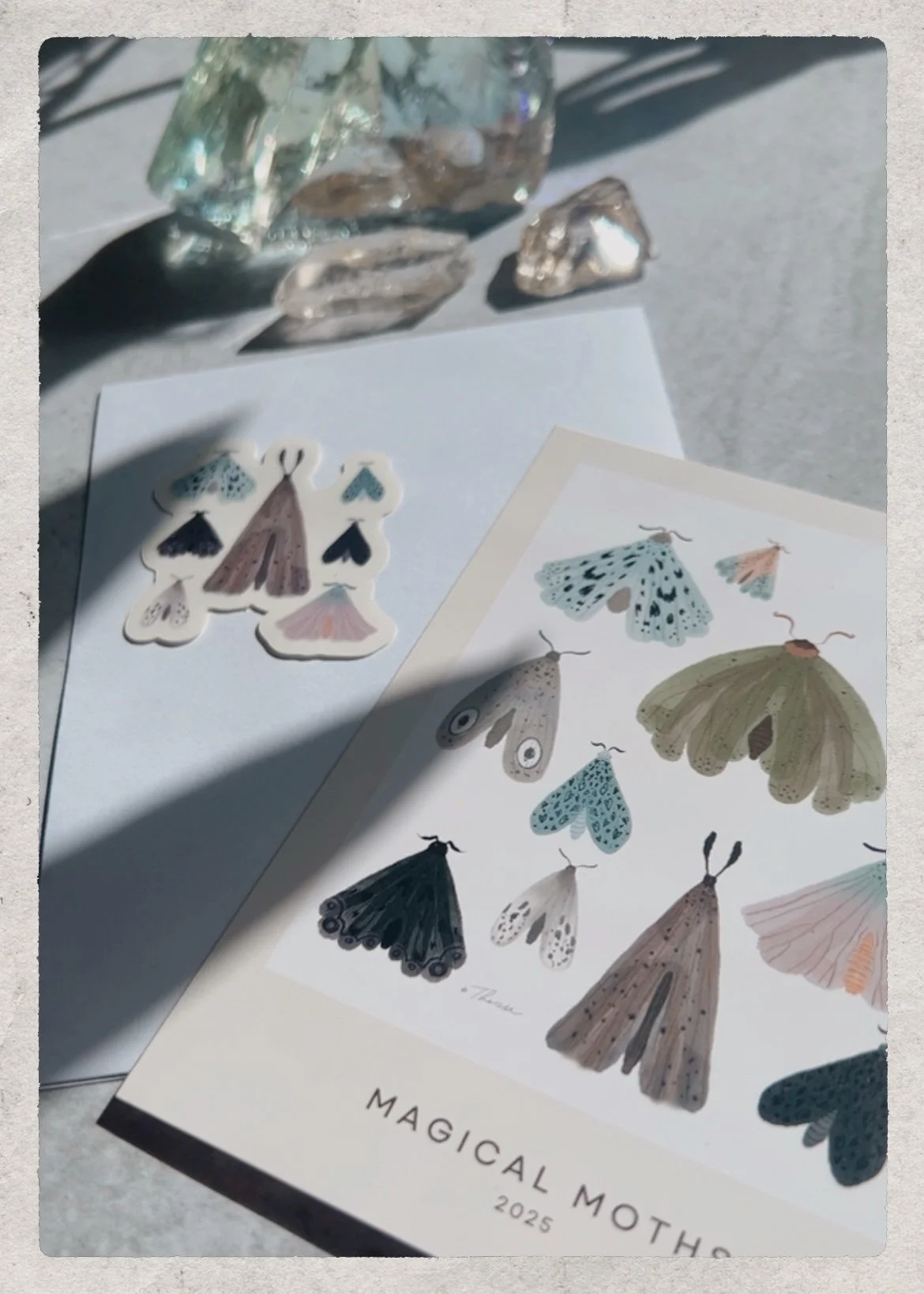
September 2025 Patreon Reward
Leave a comment and tell me who shaped your creative path.
Join me on Patreon to see which of my illustrations become postcards, stickers, and behind-the-scenes goodies.
Follow along on Instagram @starthistle.and.quartz to see the art as it’s created in real time.