
The Sneaky Way Procrastination Shows Up for Creative People (And Why It Has Nothing to Do With Laziness)
I never thought of myself as someone who procrastinates.
Honestly, the word never even applied to me in my mind. I am always doing something. My days are full, my mind is engaged, and I am constantly working on something related to my art. So the idea that I might be avoiding the work? It genuinely never crossed my mind.
Until one morning it did.
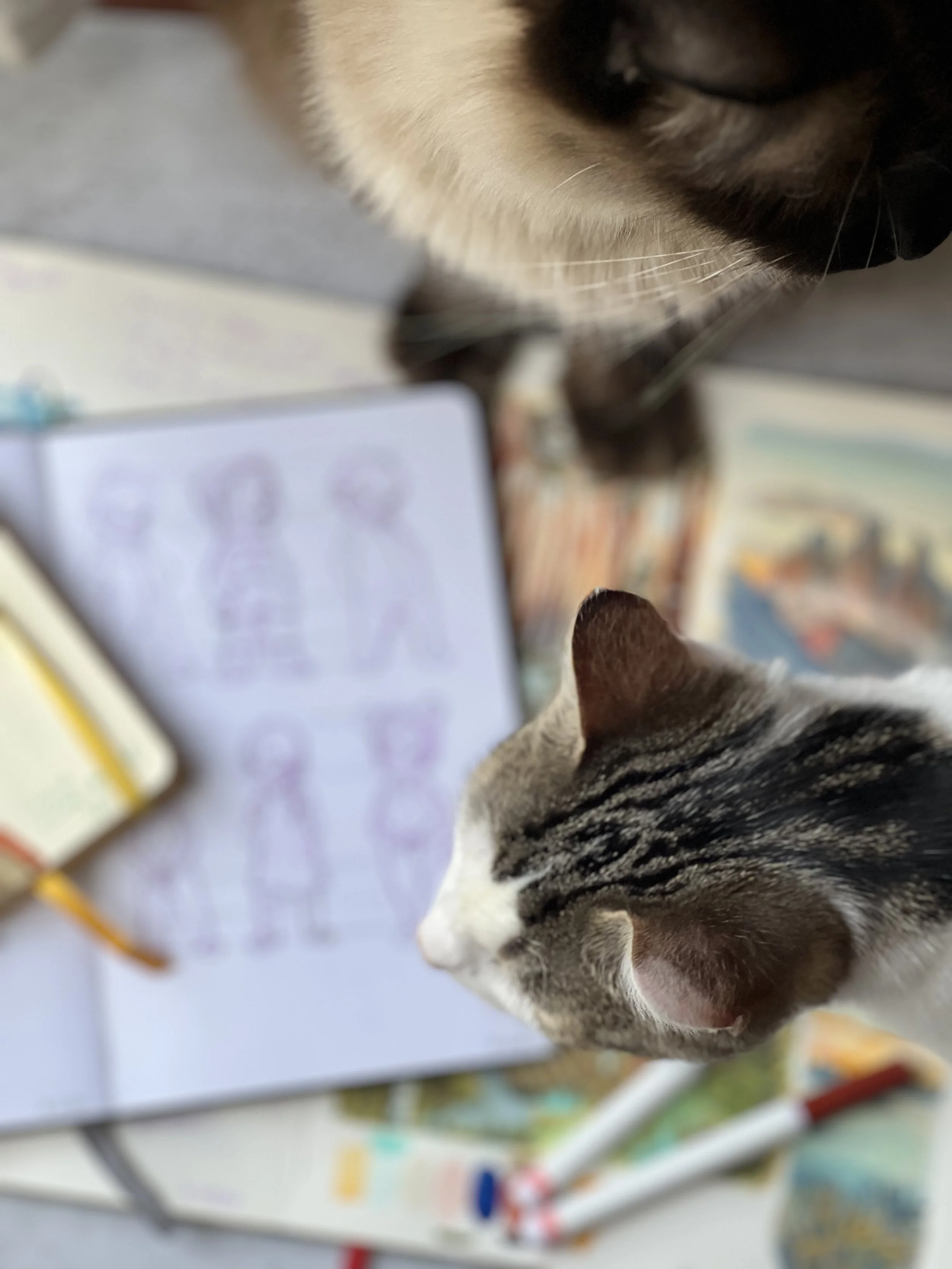
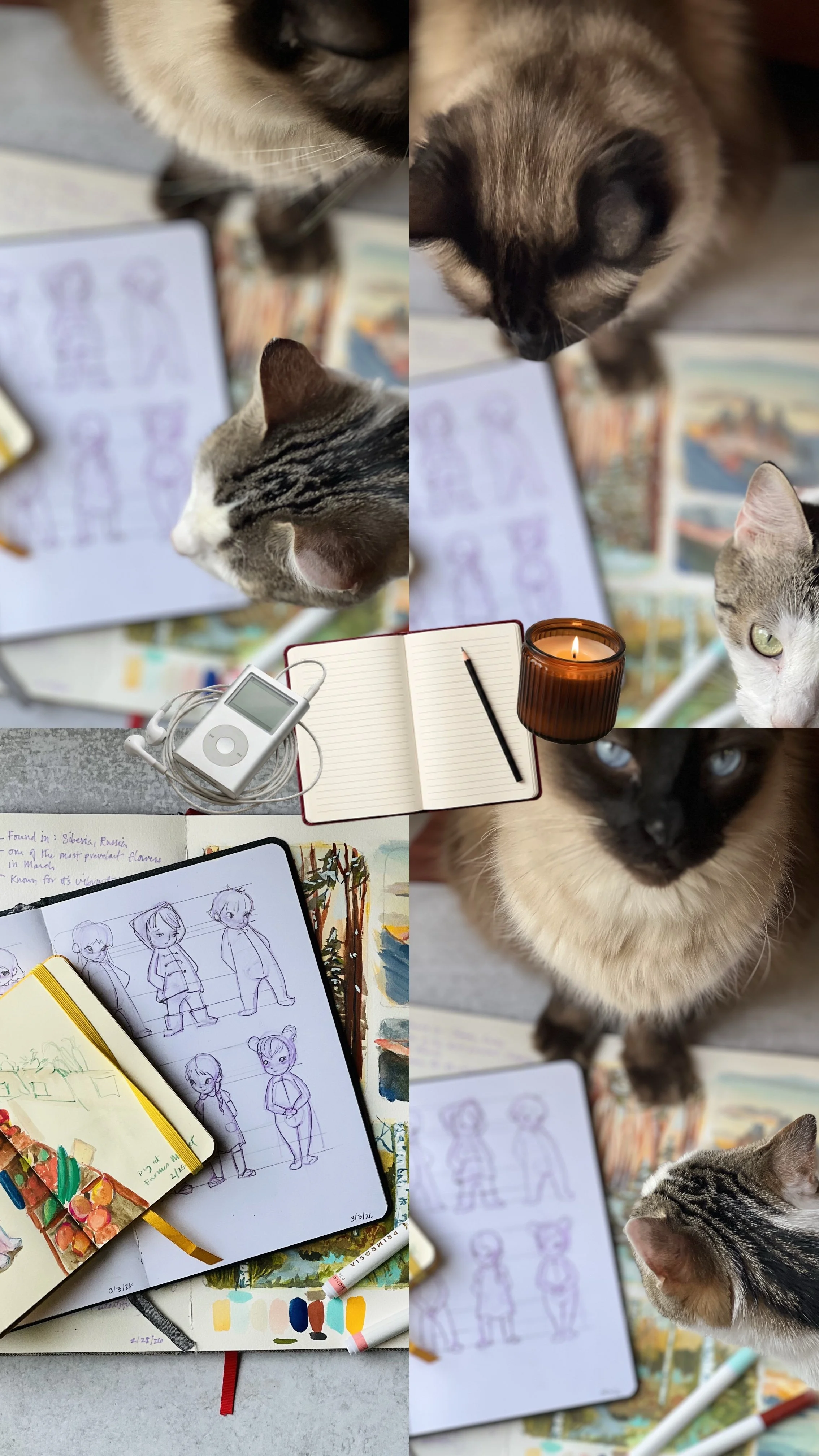
My studio assistants, Skippy & Mia, assessing my busy work.
I never thought of myself as someone who procrastinates.
Honestly, the word never even applied to me in my mind. I am always doing something. My days are full, my mind is engaged, and I am constantly working on something related to my art. So the idea that I might be avoiding the work? It genuinely never crossed my mind.
Until one morning it did.
I sat down to work on facial expressions for a character in my children's book illustration portfolio. I put in what felt like a solid hour of real work. It felt good. I felt productive. And then I stepped away, came back later that day, looked at what I'd made, and immediately hated it.
And that was it. That was the moment the spiral started.
Instead of pushing through, I went into full research paralysis. I started looking at other illustrators, other styles, trying to figure out what I liked more. I went to the bookstore a couple of times and just sat with children's books, making mental notes. And I never went back to the sketchbook. Not because I forgot. Because I felt like I had failed so hard that my own style wasn't good enough to keep going.
What I didn't realize at the time was that this wasn't an off day. This was productive procrastination. And it is so much sneakier than the regular kind.
When Avoiding the Work Looks Like Doing the Work
Here's what productive procrastination looked like for me in practice.
I knew exactly what I needed to add to my children's book portfolio. I knew the kinds of pieces art directors want to see. I had a direction. The next step was clear: sit down and make the pieces.
But instead of doing that, I kept circling around it. I would do practice runs. I would research illustration styles. I would find a class to take, and then while taking that class I would realize I needed to work on color values, so I would find a class on that. Then I would decide my light and shadow work needed improvement digitally, so I would look for a class on that too.
Every single step felt important. Every step felt like growth.
But at the end of the week, the portfolio pieces still didn't exist.
I was moving constantly. Just not forward.
And on top of that, I was also trying to build a surface design portfolio at the same time, because that also felt important and like it was going to lead somewhere. So now I had two directions pulling at me, and I was making very little real progress in either one.
Hamster wheel. Lots of motion, almost no traction.
The Fear Underneath the Busyness
When I finally sat down and journaled about what was actually happening, something uncomfortable became very clear.
My procrastination isn't laziness. It's perfectionism. And underneath the perfectionism is fear.
Here's the specific fear, the one I hadn't quite named yet: right now, I can hide behind an excuse. I've already been submitting myself for children's illustration work, and when I don't hear back, I can tell myself it's because my portfolio isn't quite presenting what art directors are looking for yet. That excuse is actually a comfort. It gives me somewhere to put the rejection that isn't about me.
But the moment I build the portfolio I know they want to see, the moment I truly put my best work forward, I lose that excuse. And then the answer becomes real. What if I do everything right, and they still don't hire me?
That is a vulnerable place to stand.
And so instead of standing there, I kept refining. I kept preparing. I kept waiting to be ready, even though "ready" didn't have a name or a face or a finish line. It was just this vague feeling of not good enough yet, and I kept chasing it.
The Moment I Caught Myself
What finally broke the cycle was journaling.
When I sat down and wrote honestly about what I had been doing with my time, it became very clear very fast. I could see the difference between real work and work that mimics real work. Research can look like progress. Classes can look like progress. Practice runs can look like progress. But at some point you have to stop preparing and start producing.
And what I saw in my journal was that I had been letting my inner critic decide when I was allowed to move forward. I was waiting for her to give me permission to be good enough, and she was never going to give it to me.
That realization landed hard. And it moved me immediately.
What I Do Once I See It
Once I recognize I'm in productive procrastination mode, I do two things right away.
First, I give myself a specific deadline. Not "sometime soon" but an actual date.
Second, I narrow the task down to one clear, concrete action. Not "work on my portfolio" but something like "create one piece showing character interaction in a children's book scene." That kind of specificity breaks the spell. The resistance starts to dissolve because the task is no longer this big shapeless scary thing. It's just one thing.
And I move into it.
One Question That Always Helps Me Reset
When I catch myself spinning in preparation mode, I ask myself this:
What is the real work I am avoiding right now?
Not the practice. Not the research. Not the preparation. The real work.
And once I answer that honestly, I always know exactly what to do next.
If this resonates with you, if you've been feeling busy but somehow stuck, you might not be procrastinating the way you think. You might just be circling the work you care about most. And that makes a lot of sense, because the work that matters most to us is also the work that makes us the most vulnerable.
You're not behind. You're not lazy. You might just be waiting for permission that only you can give yourself.
If You Want to Watch the Shaping in Real Time
I share this whole stage inside my Patreon, the works in progress, the portfolio building, the experimenting, the refining. It's not polished. It's honest. And if you're building something too, I think you'd feel right at home there.
And if you're feeling lost in the woods right now and need help reconnecting with your North Star, the Starlight Dream Lab is a beautiful place to begin. It's where we do the deeper work of remembering what you're actually building toward.
Keep going, beautiful soul.
How Creating Art in Collections Helps You Find Your Style (Without Forcing It)
For a long time, I thought my art style was something I was supposed to discover, like it was hiding somewhere just out of reach.
I believed that once I figured out my style, everything else would fall into place. The confidence. The clarity. The sense of direction. The feeling of finally knowing what I was doing.
But what I’ve learned, through years of creating, experimenting, doubting, recommitting, and showing up anyway, is that style isn’t something you find first. It’s something that forms while you’re busy making meaningful work.
And for me, the biggest shift didn’t come from trying harder to “define” my style.
It came when I started creating in collections.
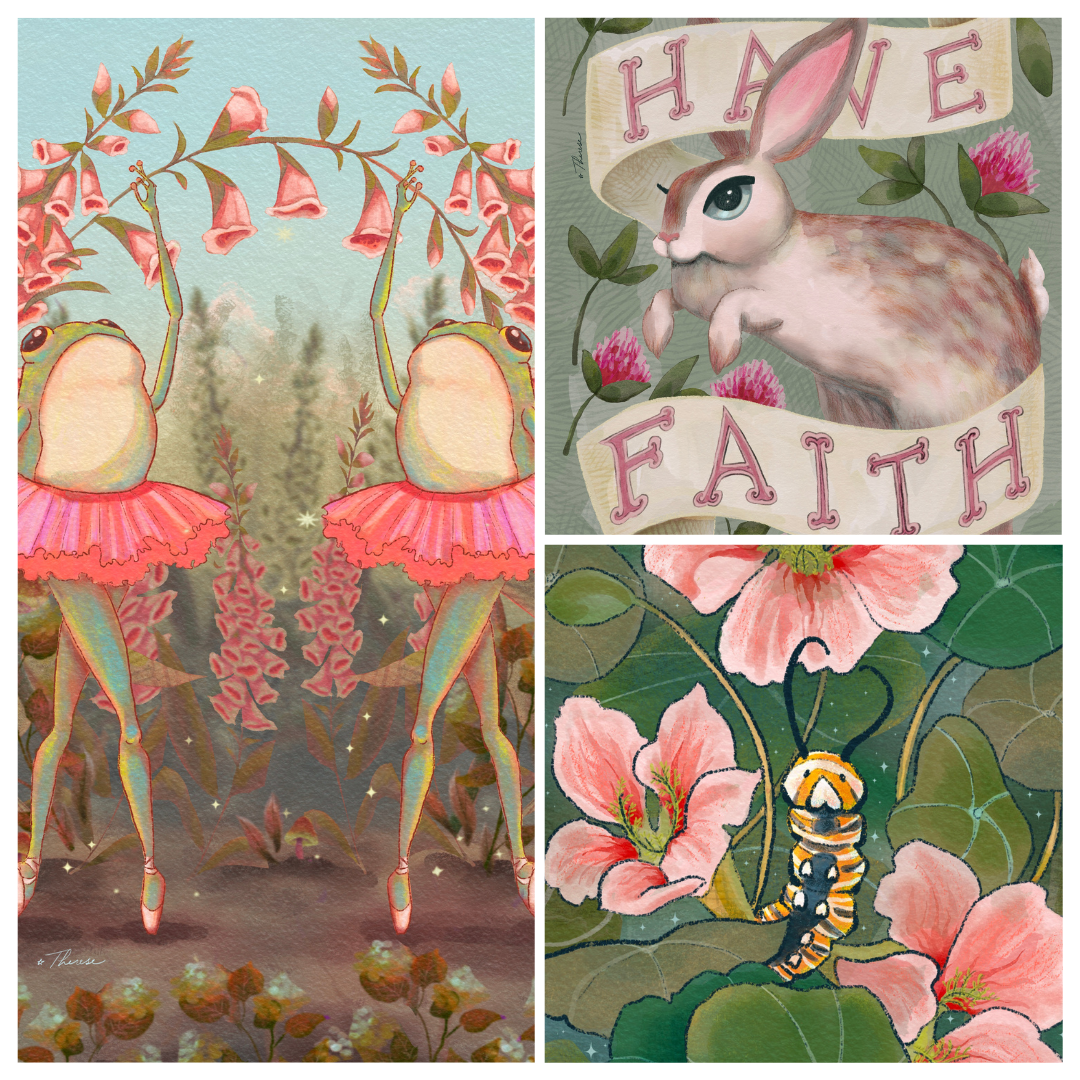
Pieces from my Botanical Beasties Collection 2025.
For a long time, I thought my art style was something I was supposed to discover like it was hiding somewhere just out of reach.
I believed that once I figured out my style, everything else would fall into place. That it would lead to my confidence, and clarity, giving me a sense of direction. I wanted the feeling of finally knowing what I was doing.
But what I’ve learned, through years of creating, experimenting, doubting, recommitting, and showing up anyway, is that style isn’t something you find first. It’s something that forms while you’re busy making meaningful work.
And for me, the biggest shift didn’t come from trying harder to “define” my style.
It came when I started creating in collections.
When Art Is Intuitive… but Scattered
Before I worked in collections, my creative process looked like this:
Inspiration would strike.
I’d make a piece.
I’d love the act of creating it.
Then I’d move on to the next idea.
As an intuitive, right-brained artist, this felt natural. Magical, even.
But over time, something felt off.
When I looked at my work as a whole, it felt scattered and disconnected. Like a series of beautiful moments that didn’t quite speak to each other.
And more importantly, I had no real sense of what my audience wanted from me.
It turned out, I didn’t lack creativity or even skill, I was actually lacking continuity.
Why Style Feels So Elusive When You’re Making One-Off Pieces
Here’s something I wish more artists talked about:
When you only create one-off pieces, you never stay with an idea long enough for your style to reveal itself.
Style doesn’t come from a single piece.
It comes from repeated choices.
When every artwork starts from scratch (with new colors, new tools, new moods, new methods) you don’t give your instincts time to deepen. You’re always beginning again.
Working in collections changed that for me completely.
What Creating Collections Gave Me (That I Didn’t Expect)
When I committed to telling a story over multiple pieces, something surprising happened:
I stopped obsessing over whether my work was “good enough.”
Instead, I started asking better questions:
What connects these pieces?
What feeling do I want someone to have when they see them together?
What choices need to stay consistent so the story makes sense?
And quietly, without forcing anything, my style began to emerge.
Not because I chased it, but because I stayed with something long enough to understand it.
Why Collections Reduce the Pressure of “Finding Your Style”
Here’s the revelatory part most artists don’t hear:
Style is a byproduct of consistency, not a prerequisite for it.
When you work in collections, your focus shifts from:
“What am I good at?”
to:
“What am I trying to give?”
You start by gathering:
a limited color palette
a recurring subject or motif
a setting or world
an emotional tone
a loose narrative arc
Suddenly, it’s no longer about proving yourself, instead It’s about serving the story.
And in serving the story, your preferences start to repeat themselves:
the same brushes
the same tools
the same layering order
the same line weight
the same kinds of shapes
the same color relationships
That repetition is style.
Style Is Not Just Something That Happens, It’s Also a Choice
This was another big realization for me:
Yes, style develops through practice.
But style also develops through decision-making.
Every time you choose:
which tools you use
which ones you don’t
which colors you return to
which processes feel natural to your hands
…you are actively shaping your style.
Working in collections made this visible.
Instead of experimenting endlessly, I started committing to a small set of choices and letting those choices teach me who I am as an artist.
My Doorway Into Every Collection: Color
Everyone has a doorway.
Mine is color.
Color is how I enter a story.
It’s how I feel my way forward.
Before I think about technique or polish, I ask:
What colors belong in this world?
Limiting my palette was the first thing that made my work feel cohesive.
If you’re just starting a collection, I always recommend this:
Choose 7 colors or fewer
Or even start with just 2–3
You’ll be amazed how quickly everything begins to speak the same language.
Real Examples From My Recent Collections
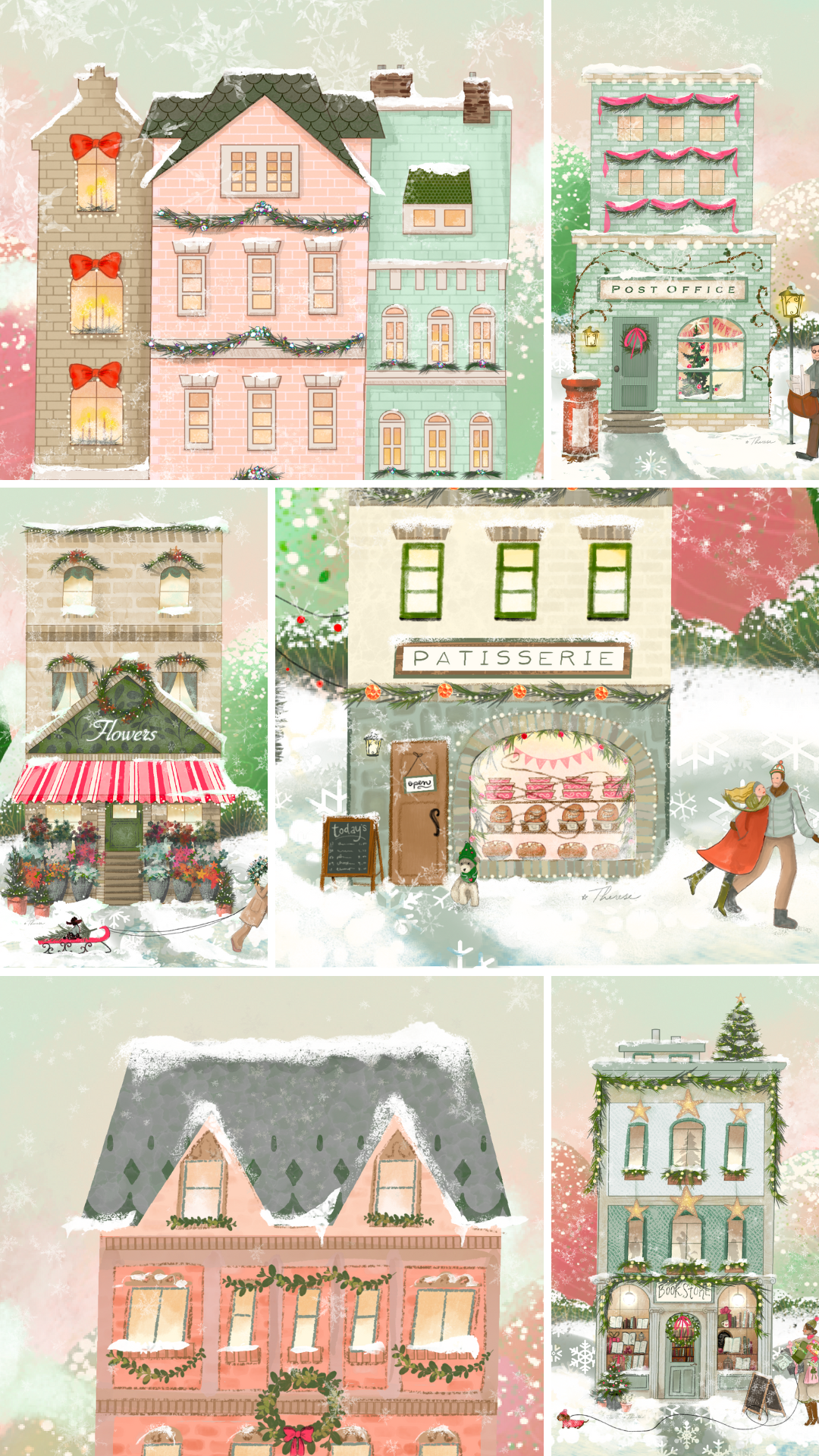
When I created my Christmas Village (Tinseltown 2025):
every building shared the same palette
every scene included people and dogs
the background texture was reused across pieces

With Scary & Sweet:
Victorian wallpaper
oval frames
named characters
a portrait-gallery feel (think Haunted Mansion)
And now with Moonrise Menagerie on Patreon:
woodland settings
animals + flowers
a mythic tone
and each piece representing a different time of day
Each collection taught me something new, not by accident, but by design.
One of the Biggest Gifts of Working in Collections
Here’s something I didn’t expect:
It made self-critique easier and kinder.
When a piece felt off, it was obvious why.
And because it was part of a larger whole, fixing it felt constructive instead of personal.
Collections turn criticism into curiosity.
They help you ask:
What does this piece need to belong here?
If You’re Struggling With Style, Start Here
If you remember only one thing from this post, let it be this:
Style is a byproduct. Not the starting point.
If you want to begin:
Start with a 3-piece mini collection
Choose one motif
Choose a limited color palette
Let repetition teach you
Consistency builds confidence.
Confidence builds clarity.
Clarity builds style.
Want to See This Process in Real Time?
Inside my Patreon, I’m currently creating a year-long collection called Moonrise Menagerie and sharing my decisions, missteps, revisions, and breakthroughs as they happen.
If you want to:
watch a collection unfold from the inside
understand how cohesive bodies of work are built
and see how style emerges through story
👉 Join me on Patreon and follow the journey from the very beginning.
How to Develop a Growth Mindset as an Artist (And Why It’s More Important Than Talent)
There’s a quiet revolution that happens when an artist shifts from asking, “Am I good enough?” to asking, “How can I grow from this?” That’s the difference a growth mindset can make. In this post, I want to share what this shift looks like in real time: the messy, hopeful, vulnerable truth about creating art when your inner critic is loud, your skills are evolving, and your dreams are huge.
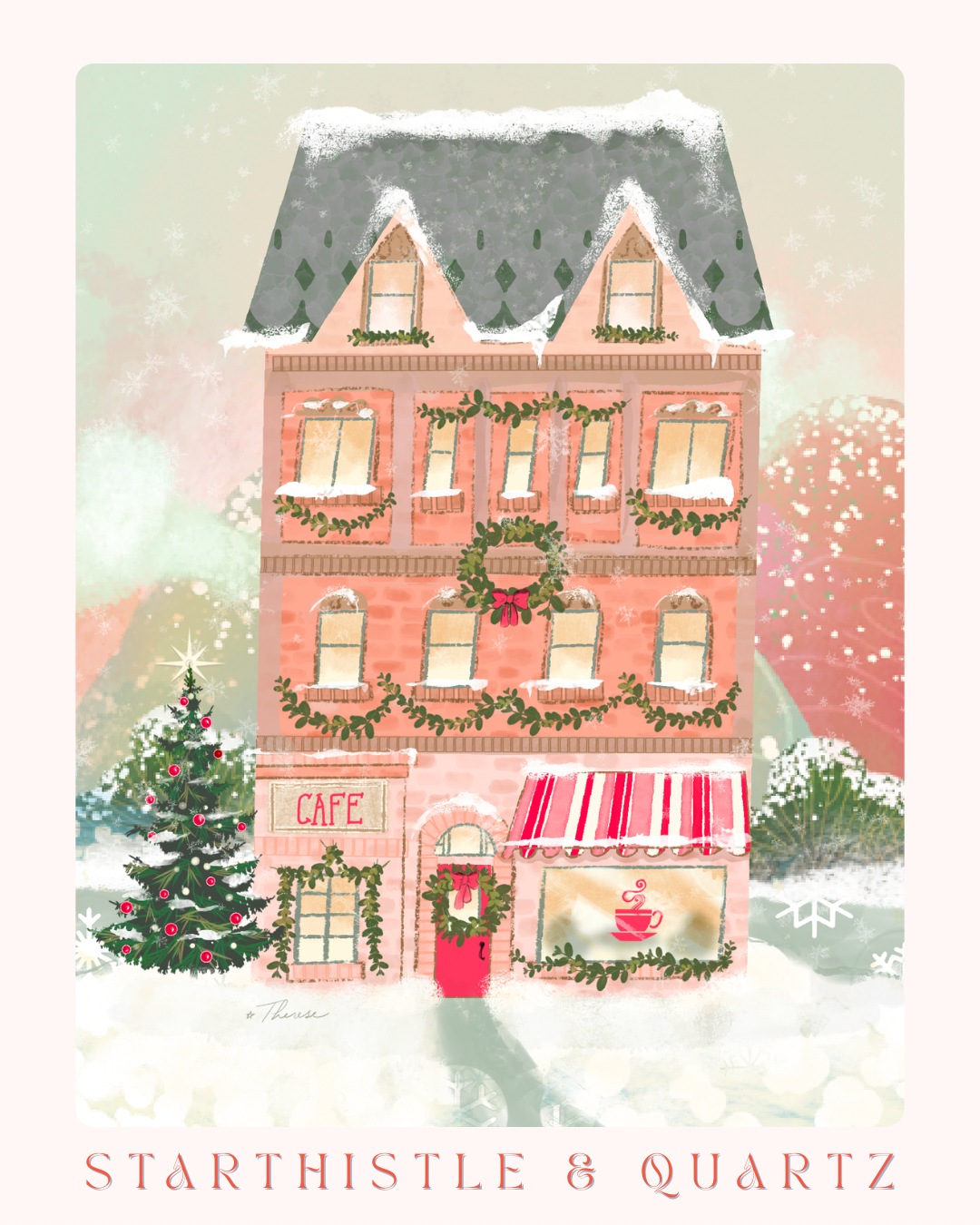
“Cocoa Cafe” by Therese Tucker for #tinseltown2025 challenge.
There’s a quiet revolution that happens when an artist shifts from asking, “Am I good enough?” to asking, “How can I grow from this?” That’s the difference a growth mindset can make. In this post, I want to share what this shift looks like in real time: the messy, hopeful, vulnerable truth about creating art when your inner critic is loud, your skills are evolving, and your dreams are huge.
Whether you're in a season of expansion or frustration, I hope these thoughts will help you reconnect to your creative path and keep walking it with love.
1. What a Growth Mindset Looks Like in Real Life
For me, a growth mindset as an artist means deeply believing that my skills, talents, and voice aren’t fixed. They’re alive and expanding with every brushstroke, sketch, or creative decision I make.
Even when a piece doesn’t turn out how I hoped, I’ve learned to trust that each session sharpens my hand and my eye, and takes me one step closer to the artist I’m becoming.
2. What It Feels Like When I’m Stuck in a Fixed Mindset
Every time my inner critic flares up, I know I’m brushing up against a fixed mindset. It’s that harsh, “reasonable-sounding” voice that tells me my work isn’t good enough, or that someone else’s style or polish means I should just quit trying.
Recently, while working on the #TinselTown2025 challenge, a cozy Christmas village illustration series, my self-doubt came in fast. I love this style of work, but I don’t feel confident in it yet, and my inner critic had a lot to say about how “wrong” it all looked.
Fixed mindset thinking makes you feel like you’re trapped in a box, with only one “right” way to make art. And that’s a lie.
3. How I Shift Back into Growth Mode
When I catch myself spiraling, I remind myself: This is just one piece. It’s not the defining moment of my career. It’s one brushstroke in a much bigger picture.
I also work with my nervous system with a few deep breaths, a body shake, a little movement to get my energy flowing again. I remind myself that moving the body helps move the mind.
Growth lives in motion, not perfection.
4. A Trick That Helps Me Regain Perspective
When things start feeling visually or emotionally “off,” I give myself permission to walk away. Distance softens the critical voice and resets your eyes.
Sometimes, I even invert my body by hanging my head over the edge of the bed upside down or do a stretch to literally shift my view. It sounds simple, but changing how you look at your work helps you feel differently about it too.
5. To the Artist Who’s Feeling Behind…
Have compassion for yourself. You feel this way because you care deeply. That’s a beautiful thing.
If your vision feels far away, know that most dreams are made up of tiny steps, not giant leaps. There are days when I can only sketch for 5 minutes. But that 5 minutes helps me feel my momentum.
If I showed up today, then I’m closer to my dream than I was yesterday. And so are you.
6. Want Support for Your Creative Growth?
If this post resonated, you might love some of the spaces I’ve created to support other sensitive creatives:
🎨 Follow my journey on Patreon — See my collections unfold, get exclusive access to stickers, postcards, behind-the-scenes process, and more.
🌠 Try the free Dream Lab — My guided tool to help you clarify your soul-aligned “North Star” so you can turn big dreams into grounded direction.
🌙 Join the Epic Year Workshop — This workshop turns your soul-aligned dream into a 12-month creative strategy rooted in nervous system alignment, numerology + your progressed moon.
Final Thoughts
You don’t need to be perfect to be powerful. You don’t need to be the most polished to be on your path. You just need to keep showing up.
If you’ve been looking for a sign to keep going — this is it.
When Self-Doubt Creeps In: What I’m Learning as an Artist in Progress
Every artist I know, no matter how accomplished or confident they may appear, wrestles with self-doubt from time to time. I’m in one of those moments right now.
And I want to talk about it—not because I need advice or rescue, but because I think it’s important that we normalize what it’s like to be a sensitive creative in the middle of the becoming.
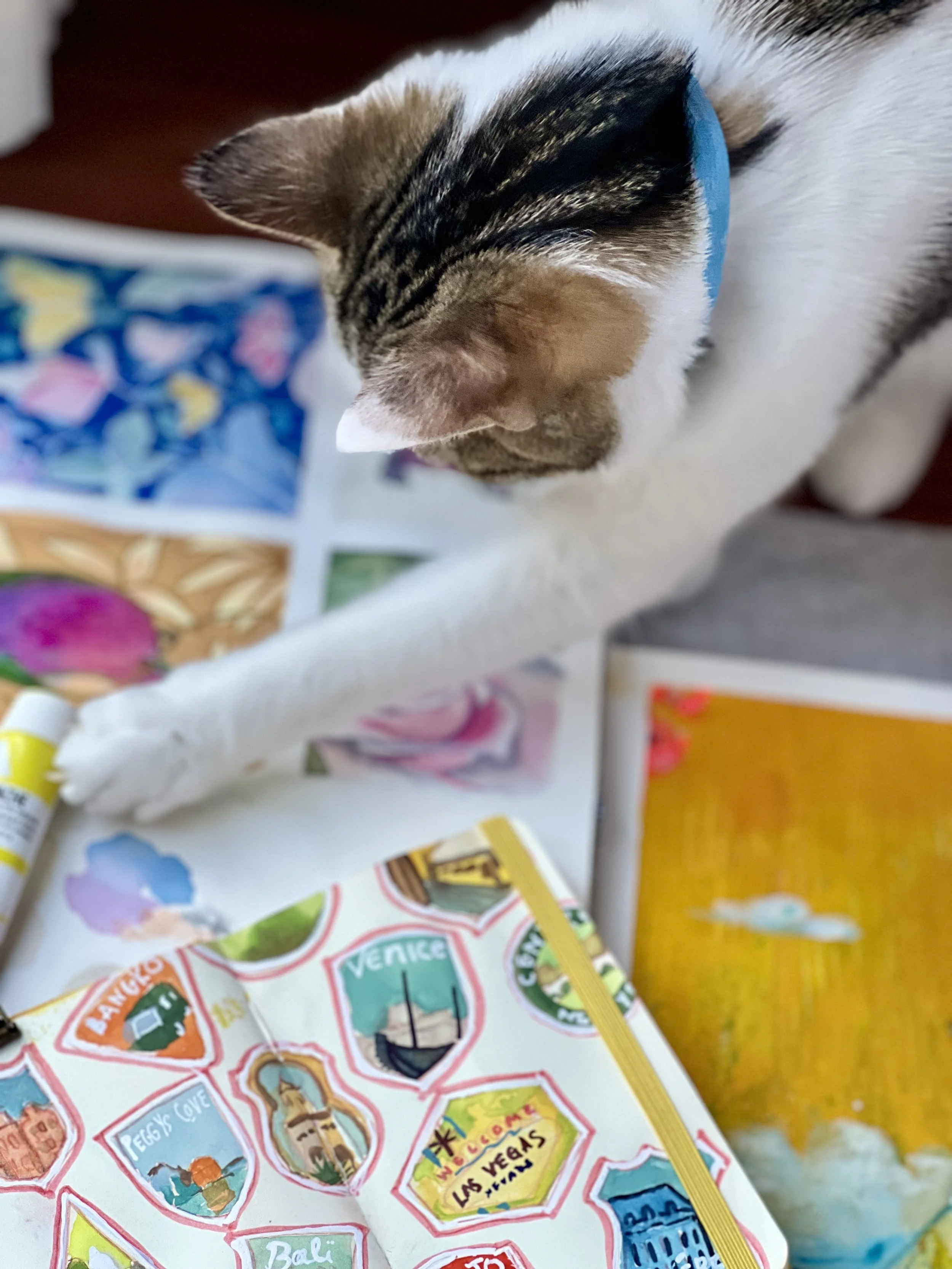
My Tiny Sketchbook of Rage and my studio assistant, Mia (the spicy meatball).
Every artist I know, no matter how accomplished or confident they may appear, wrestles with self-doubt from time to time. I’m in one of those moments right now.
And I want to talk about it—not because I need advice or rescue, but because I think it’s important that we normalize what it’s like to be a sensitive creative in the middle of the becoming.
The Voice of Doubt
My self-doubt doesn’t shout. It’s not dramatic. It’s quiet, calculated, and uncomfortably reasonable. It says things like:
“Your work doesn’t look like it’s getting better. How will this ever become something someone would license?”
“Wow, Artist X has such great command of color, composition, and line. Yours looks muddy and clumsy in comparison.”
It always sounds so factual. So educated. Like it’s simply stating the truth—and that’s the part that stings.
But I’m learning to pause and notice that voice. I’m learning to respond rather than react. Because what I’ve discovered is that self-doubt is just a thought. It’s not the truth.
The Illusion of “Not Ready Yet”
My self-doubt tells me that it’s trying to protect me. It wants me to be “ready” before I put my work out there. It wants me to hit some invisible benchmark—some vague, undefined version of perfection—before I take up space.
But here’s the truth: I’ve been making art my whole life. I didn’t wait for someone to give me permission. I didn’t wait for an art degree. I chose to learn. I’ve committed to growth. I show up for this work, and I take it seriously. That’s what makes me a professional artist—not some imaginary milestone of mastery.
The Comparison Trap
I sometimes find myself scrolling and thinking:
“I’m so far behind. I didn’t go to art school. I haven’t studied like they have. There’s so much I don’t know.”
But then I remember: we don’t all arrive at the same destination through the same doorway. Some of us are walking sideways. Some of us are climbing in through windows. That doesn’t mean we’re behind—it just means we’re taking the scenic route.
And honestly? The scenic route has a better view.
The Practice That’s Helping Me Right Now
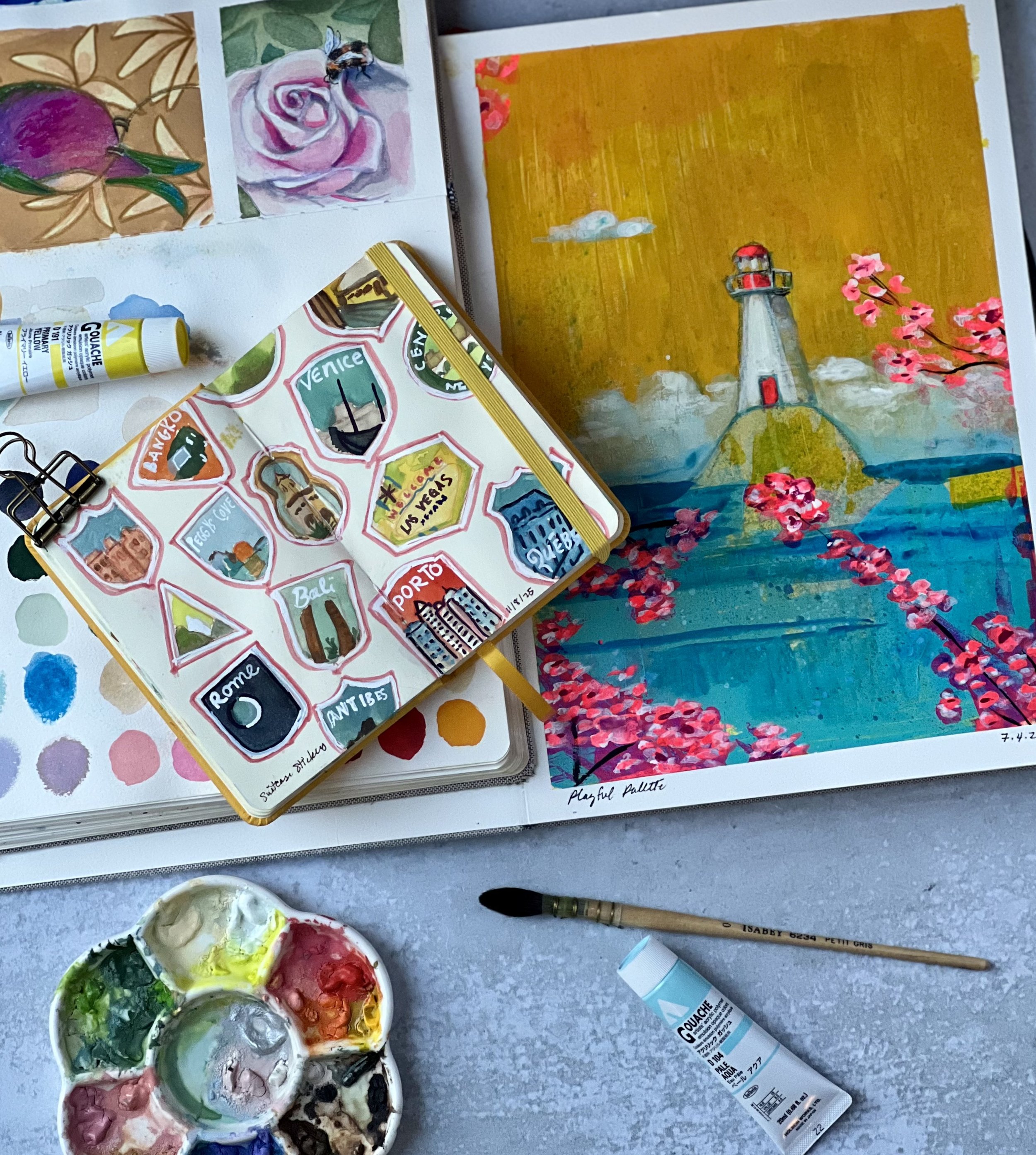
Every night, I’m doing quick studies in what I lovingly call my “Sketchbook of Rage.” It’s tiny. The paper is thin. The format annoys me. I bought it on purpose to break perfectionism’s grip. It’s a space where bad art is allowed—expected, even.
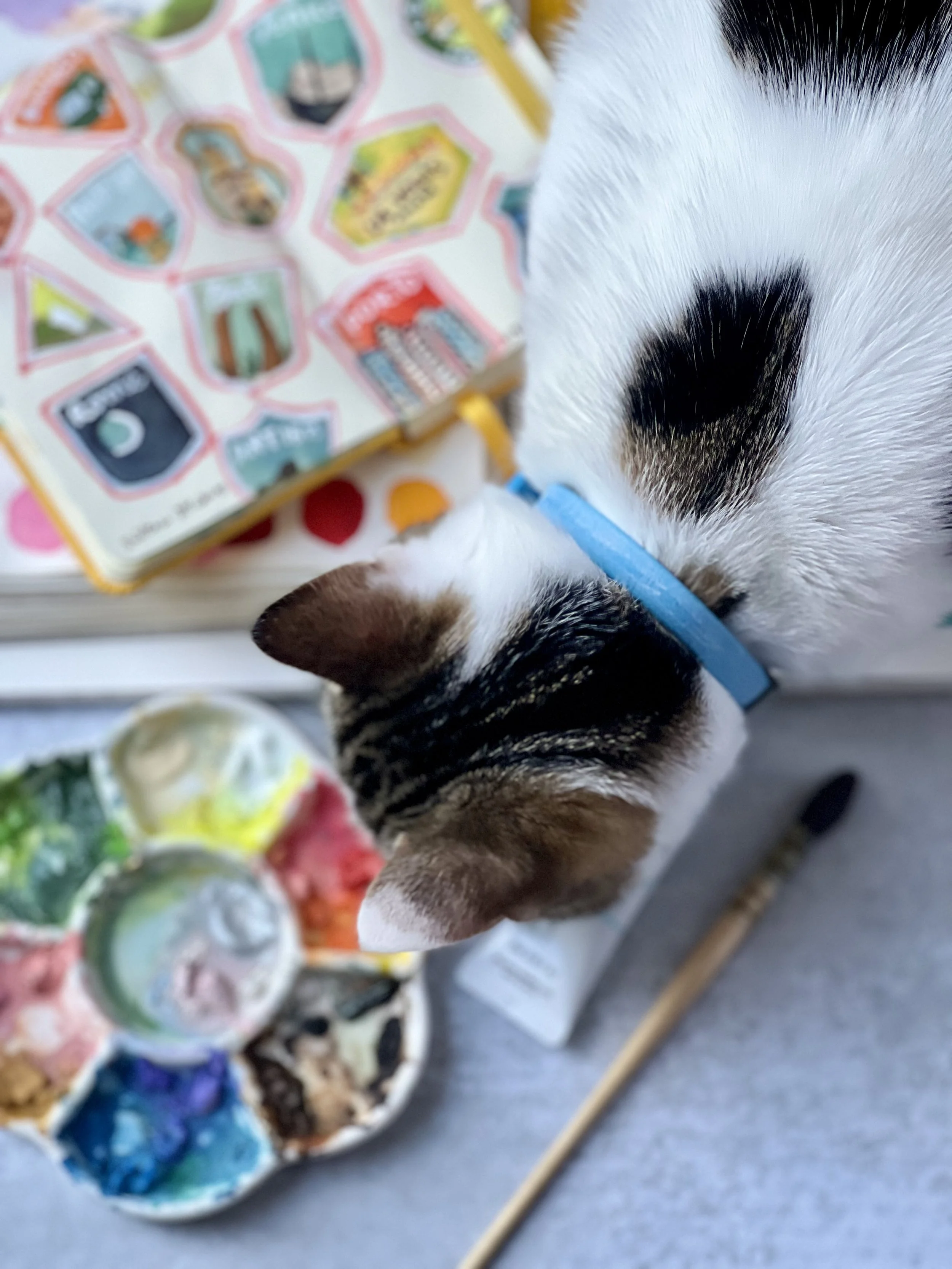
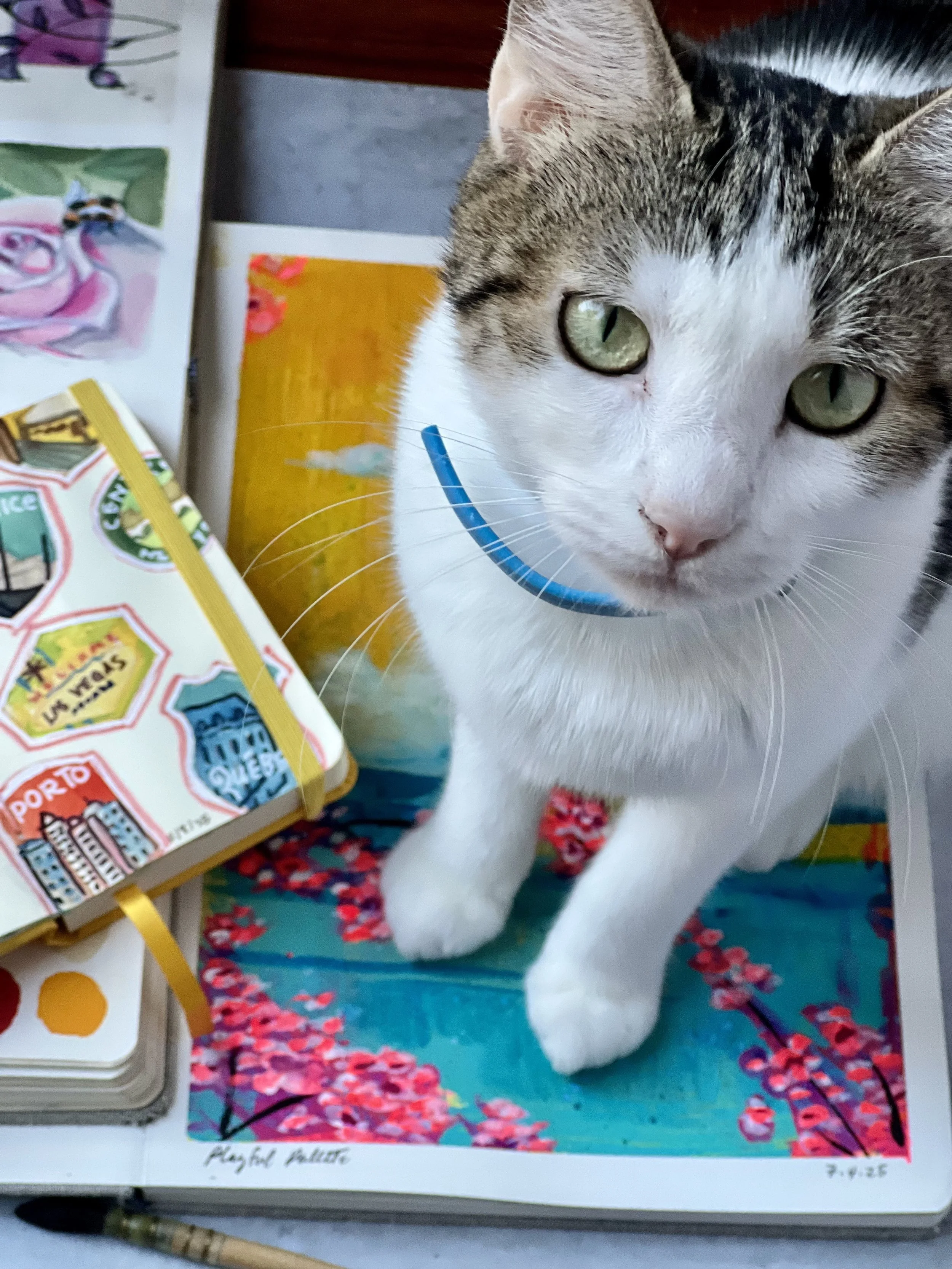
The irony? Some of the sketches I’ve made in that sketchbook are the most cohesive and charming work I’ve done in a while. It’s proof that when we take the pressure off, creativity can surprise us.
This blog has also become a place where I sort myself out. Writing these thoughts down—seeing them in black and white—helps me realize that most of my doubts are just ideas I don’t even believe in. They’re like steam. Once they’re released, the pressure dissolves.
If You’re In This Too
If you’re feeling lost or unsure or behind, I just want to say: I see you. I’d give you a big hug if I could. These thoughts don’t mean you’re failing. They mean you care. They mean your inner artist wants more from you, and is maybe afraid it’s not possible.
But I promise you: you’re not behind. You’re in process.
Speak the doubt out loud. Let it show you where you’re hungry for validation, support, or more self-trust. Then get back into the studio. Make something messy. Make something strange. Make something anyway.
Because the only thing between here and the artist you want to become… is not giving up.
Want to Follow My Creative Journey?
Here are a few ways to stay connected:
🌟 Join me on Patreon – see my work unfold in real time, vote on upcoming rewards, and support the long-term vision.
🎨 Download the Art + Soul Journal – 365 days of prompts to help you get out of your head and back into your art.
🌀 Get the Dream Distiller – a free tool I created to help you uncover your North Star, from the inside out.
💌 Say hi on Instagram – I’d love to hear if this post resonated with you.